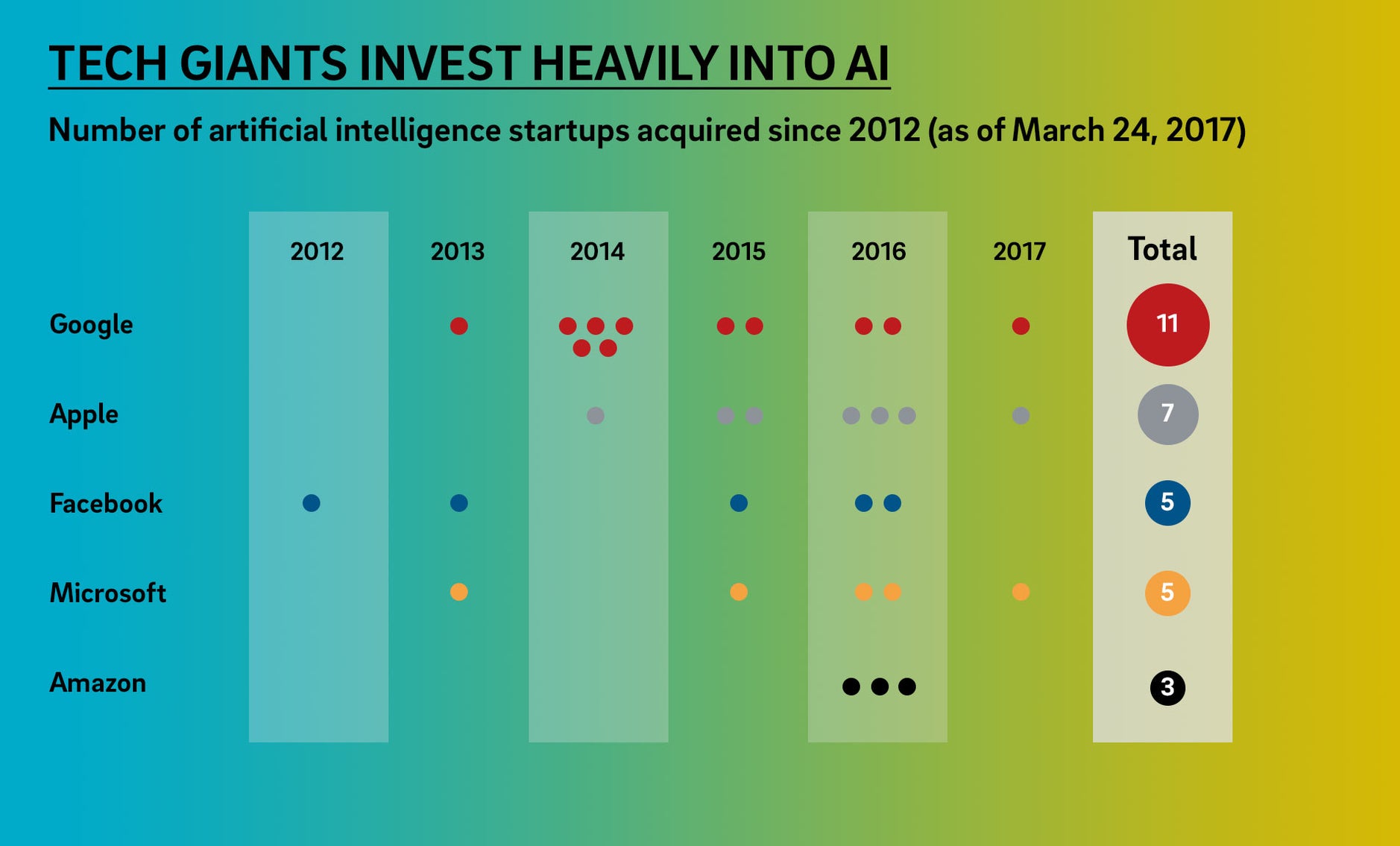
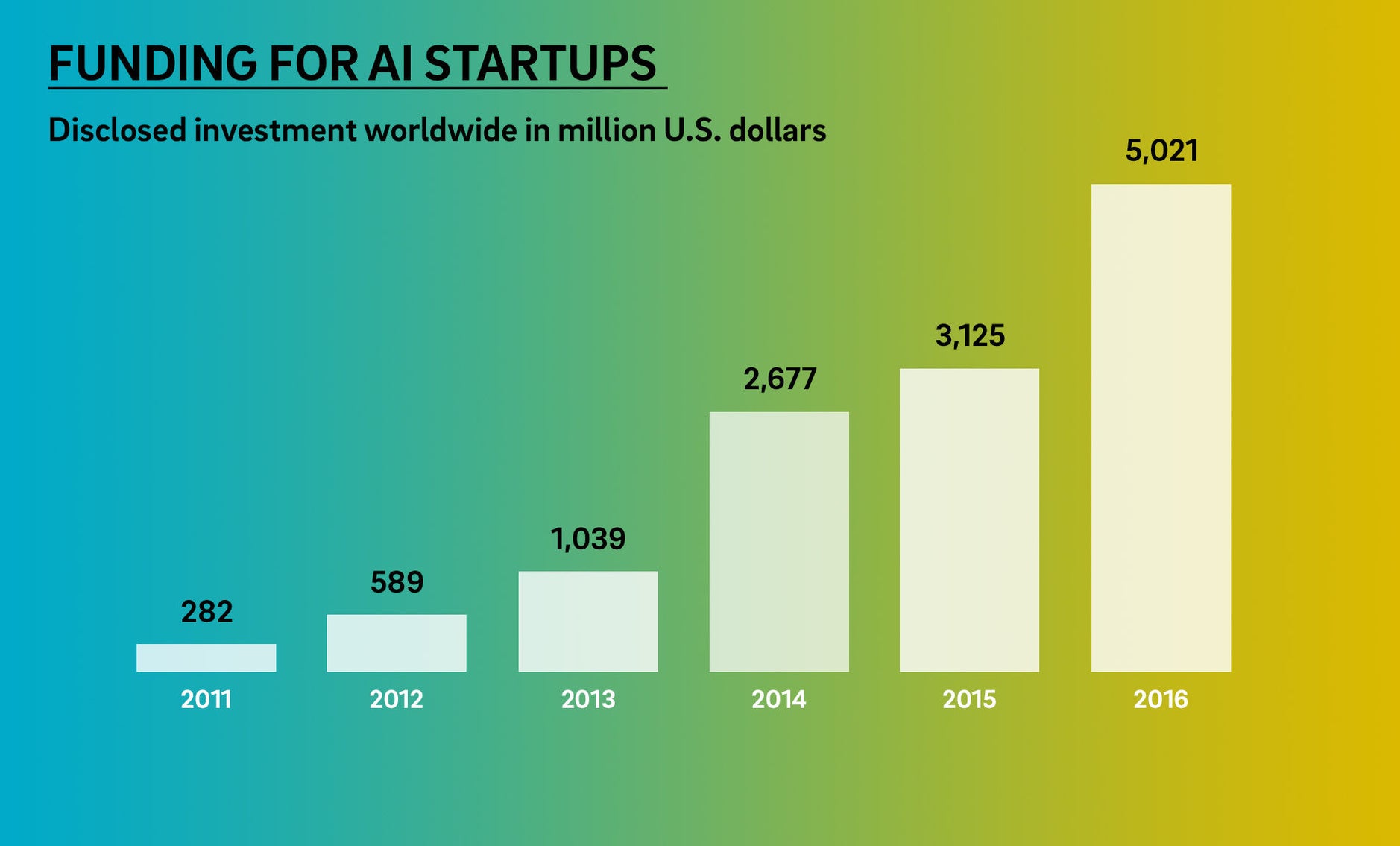
At this year's developer conference Google announced a shift from mobile first to AI first. Not only that, its second generation Tensor Processing Unit chips are outperforming the world's leading commercially available computer chips when it comes to AI tasks. In line with Google, all other leading tech giants leverage AI through their product portfolio and have heavily increased investment in AI.
The massive increase of available data and computing power over the last decade enables companies today to automate processes that until now required high levels of expertise and long working hours. For example, AI can automate the reading and interpreting of commercial loan agreements in a matter of seconds - while making fewer mistakes than lawyers. Meanwhile in medicine, AI can provide ventricle segmentation based on conventional cardiac magnetic resonance imaging in no more than 15 seconds – a task which usually takes physicians between 30 and 60 minutes. Moreover, AI has the potential to improve cancer diagnoses rates to more than 90 percent – compared to the 70 percent achieved by a human pathologist.
AI is increasingly being used within companies to speed up administration processes, for example to set up meetings. It also has the potential to improve customer service and HR processes – for example to screen applications and to predict employee performance.
Not only that, AI is revolutionizing predictive maintenance, can make fully autonomous purchasing decisions with better results than humans, and can be leveraged by CEO's to help steer their companies and get fact-based second opinions in addition to the often politically biased reports from top executives.