Private equity firms are increasingly buying up listed companies. But once the transaction is complete, too many fail to prioritize value creation, compromising the new company's growth. Roland Berger offers a solution.
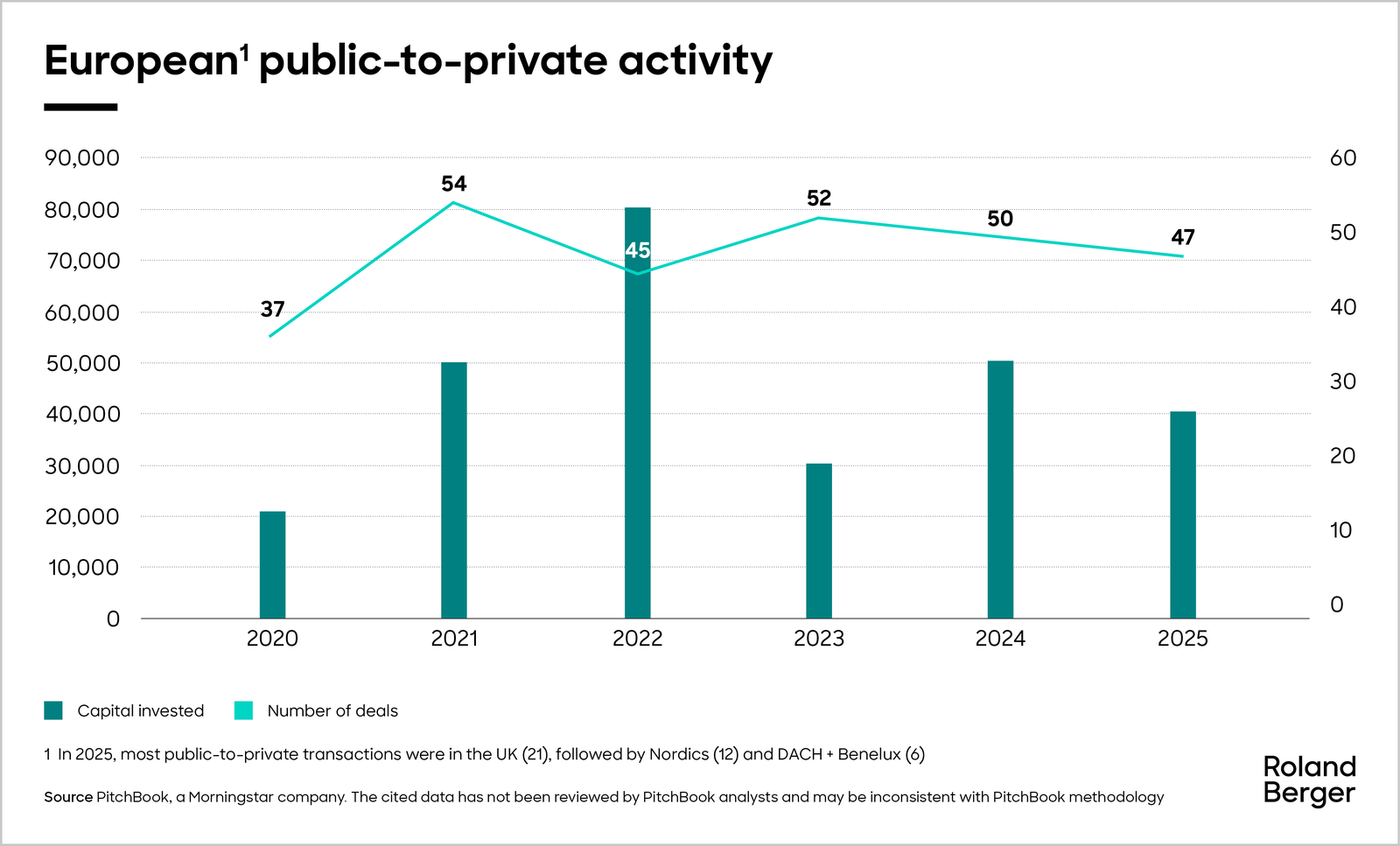
Taking public companies private has always been a strong strategic option for investors seeking growth, profits, or market leadership. But in the past few years, activity has accelerated significantly, especially in Europe. The number of take-private transactions in Europe jumped by almost 50% between 2020 and 2021, hitting a record 54 with a volume of USD 52 billion (EUR 45.6 billion). The figure has remained roughly stable since then.
The reasons for the uptick? The combination of market pressures, strategic considerations, and increasing interest from
private equity
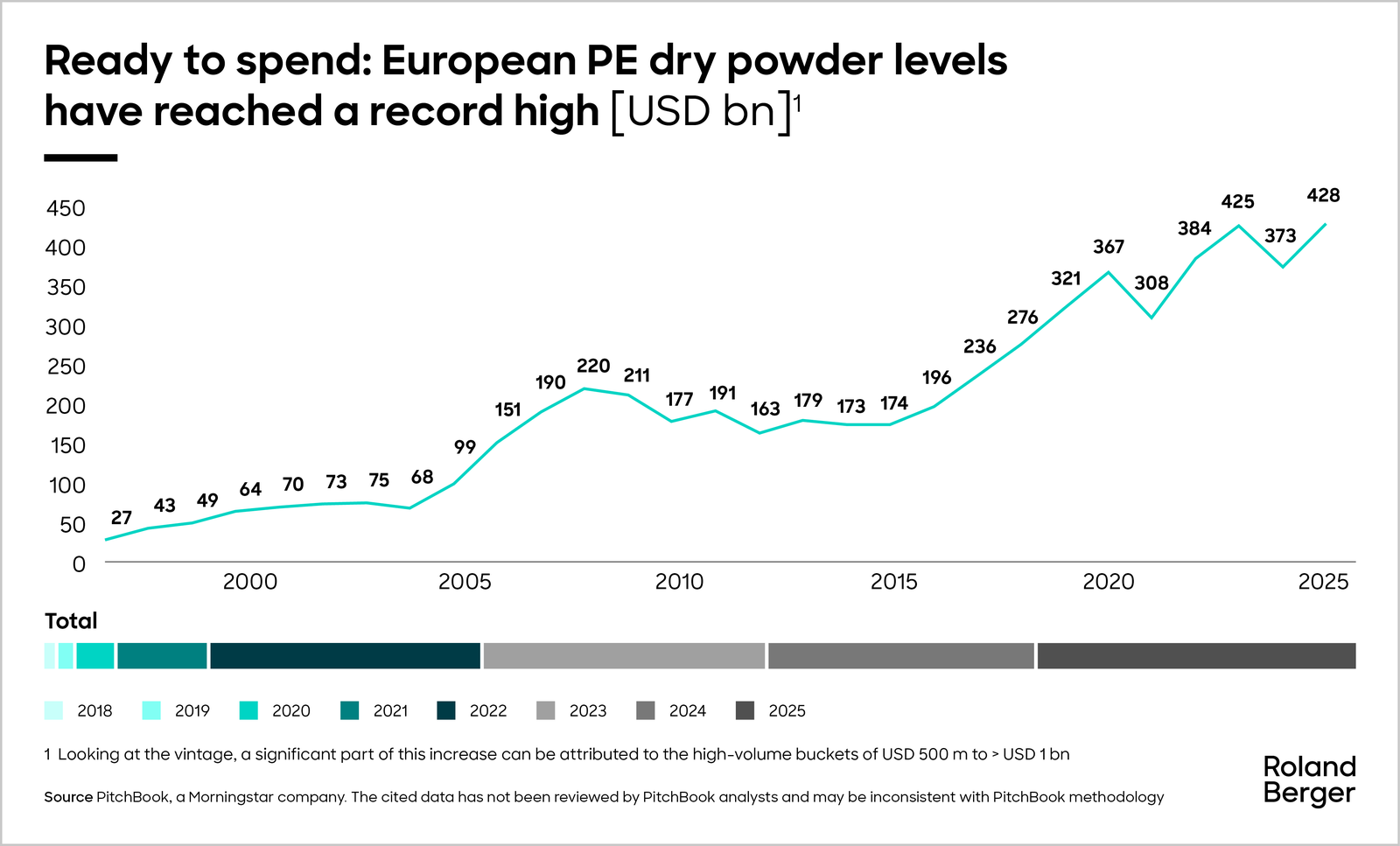
(PE) provided the impetus. Success, meanwhile, helped drive the trend – indicative figures show that companies recently taken private by PE firms achieved around twice the revenue and EBITDA growth of comparable listed peers. With market valuations currently depressed and PE firms holding significant cash reserves, the uptick is only likely to continue.
The truth is, however, that most take-privates could do even better. Put simply, they fail to realize the huge untapped potential for post-deal value creation. While managing short-term shareholder expectations, company leaders overlook long-term value creation measures such as strategic planning, reducing costs, or pre-empting market disruption. It can prove a costly mistake.
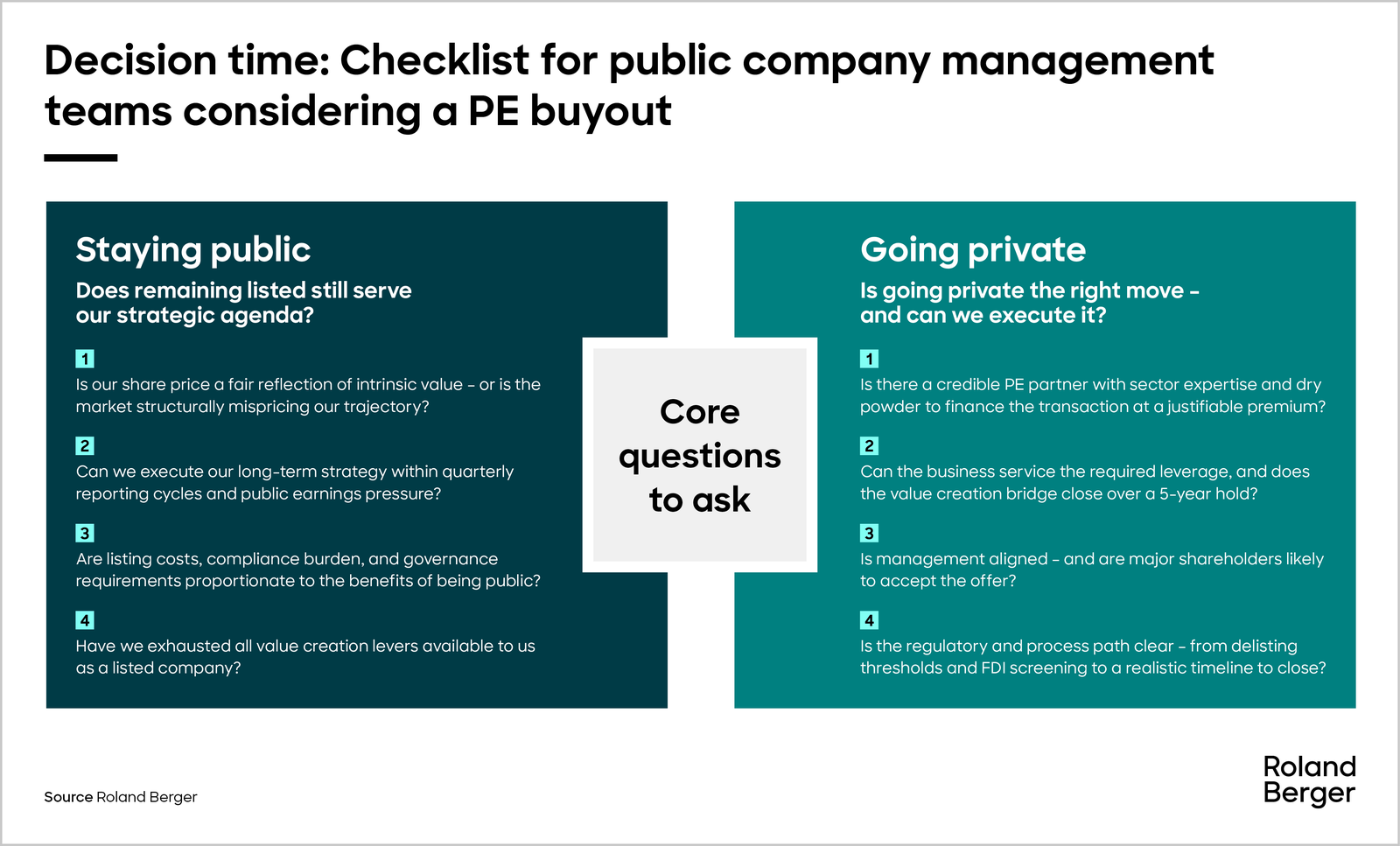
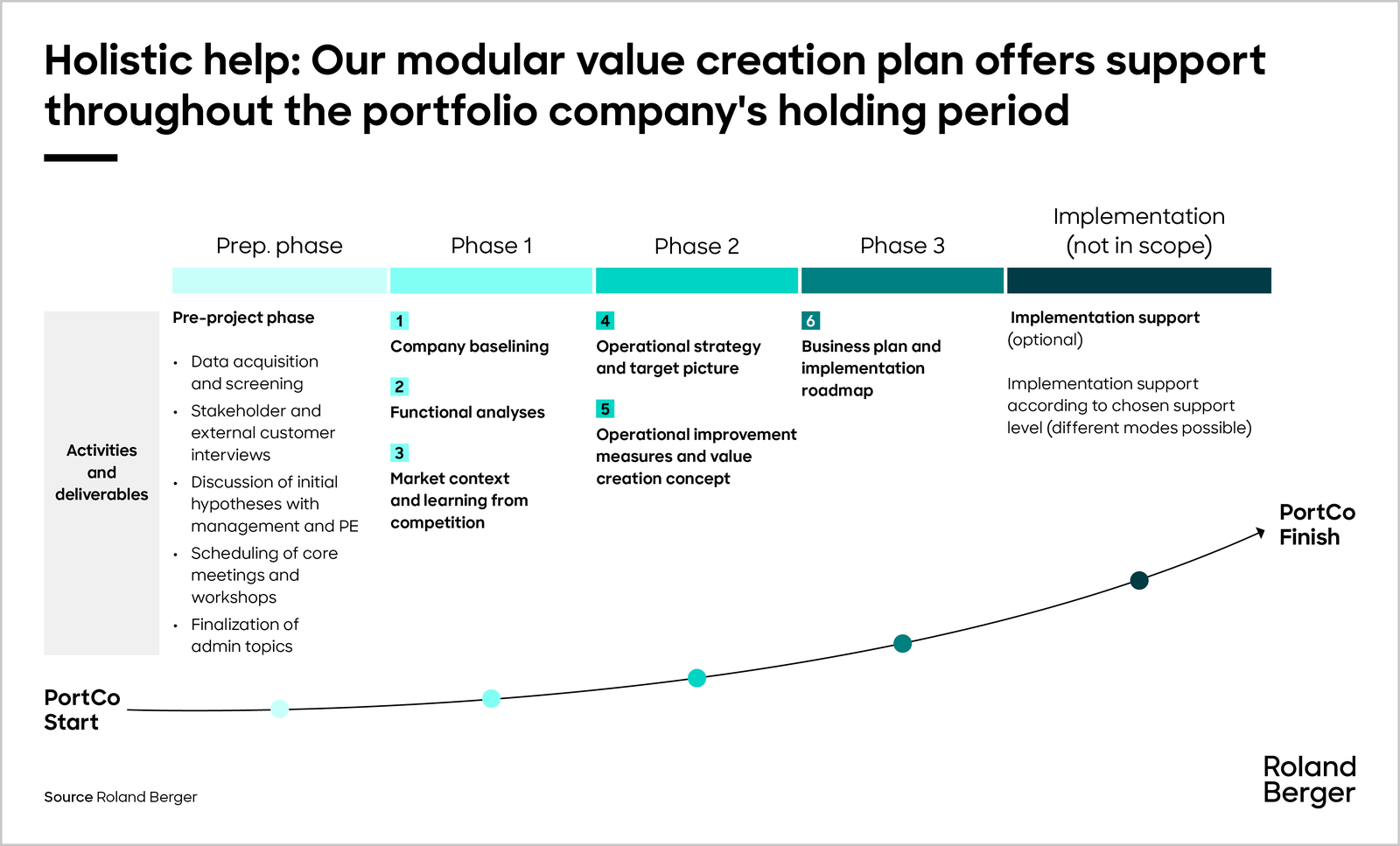
The purpose of this article is to ensure take-privates optimize value creation and fulfill the untapped potential. Aimed at both PE buyers and companies considering delisting, it first assesses the advantages and disadvantages of staying public and going private, looks at the drivers behind the current trend for public-to-private (P2P) deals, and defines key success factors for transactions. Drawing on our particular value-add expertise in the post-deal part of the delisting process, it then outlines Roland Berger's value creation approach and tools. These cover the entire holding period and include strategies to stress-test the operating model, streamline the cash-flow profile, and establish transparent reporting.
The result is a clear set of answers for PE firms and public company leaders on the key P2P questions: what should we do to maximize post-deal value, when, and how?