How procurement can be a true partner to the business
Procurement has come a long way since the days of faxed purchase orders, but it still has some steep learning curves in front of it as it moves into a more strategic role.
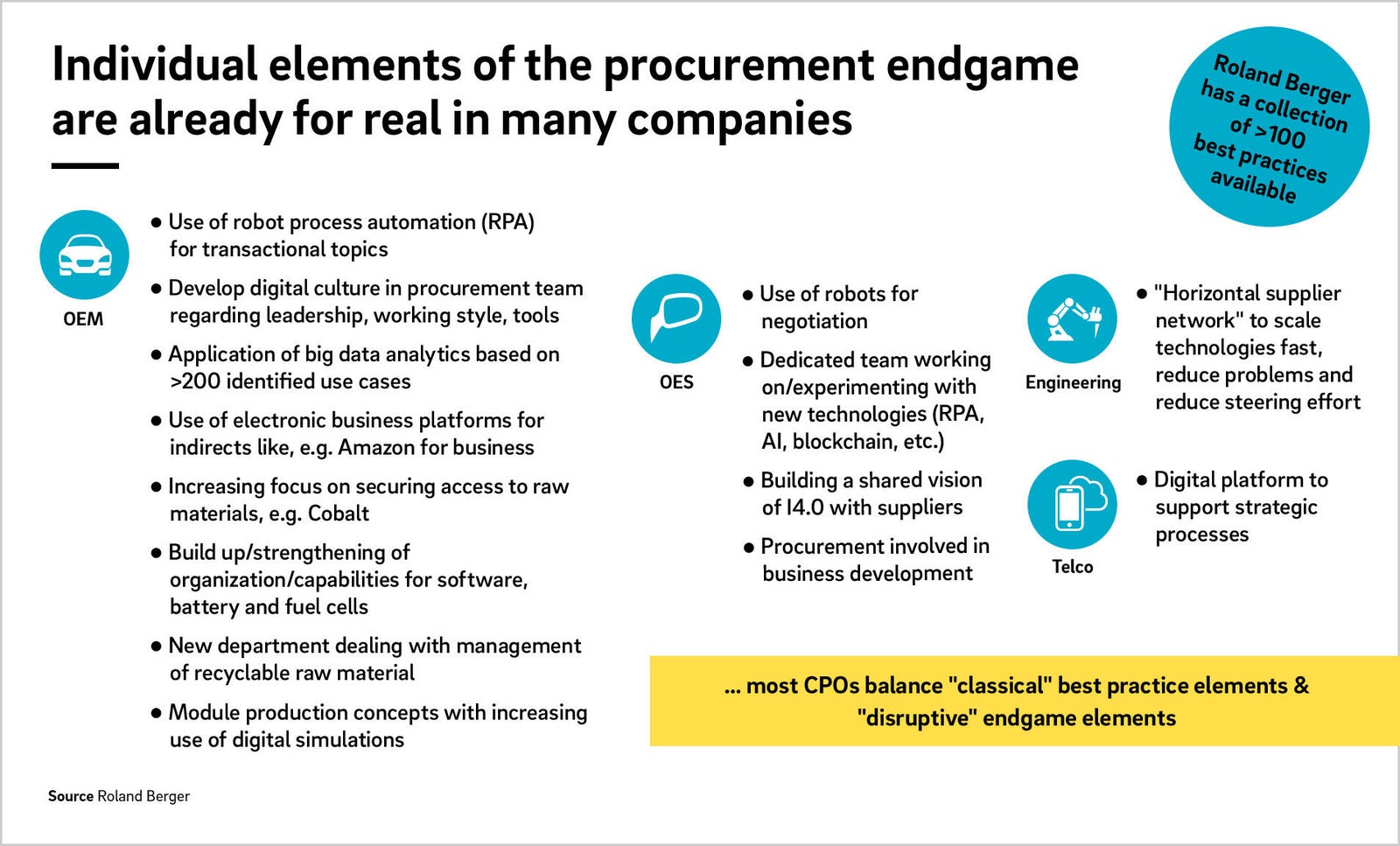
That’s because procurement is in new territory. In the automotive industry, procurement needs to find solutions to help it handle new and evolving value chains that may still remain elusive. For instance, many procurement professionals may not be fully accustomed to purchasing embedded software, payment solutions or entertainment content. Then there’s the matter of securing long-term access to raw materials under different contracting conditions than in the past, such as those needed for cobalt. These are just two examples.
To get a handle on such challenges, and to understand how to use the endgame to your own advantage, automotive procurement can examine the situation through four lenses: the future
required performance
of procurement; how to create value with procurement technologies; what others in the industry are already doing; and current company-specific pain points and priorities.
Lens 1: What is the future required performance of procurement in automotive?
For the first lens, consider what will be needed from automotive procurement in the years to come. For instance, how will companies buy commodities and services, and what are the new expectations regarding cost and efficiency?
As the industry moves to electric vehicles, the way commodities and services are bought, and which ones are needed, is becoming far more complex than in the past. Companies need to understand the new, evolving value chains, cost structures and pricing models, for instance for sophisticated software solutions for autonomous driving, for embedded software, or for high-tech parts, such as sensors and radar.
They also face complex systems decisions, for instance those about batteries or alternative drives. This is whole new terrain with high uncertainty. It also brings with it higher risks, since some of these items must be bought with very different, and sometimes very long-term, contracts.
Another area of change is the sourcing of content and solutions, e.g. payment solutions, which requires different sourcing strategies and new collaboration models with suppliers. It may even impact the company's revenue models and pricing strategies.
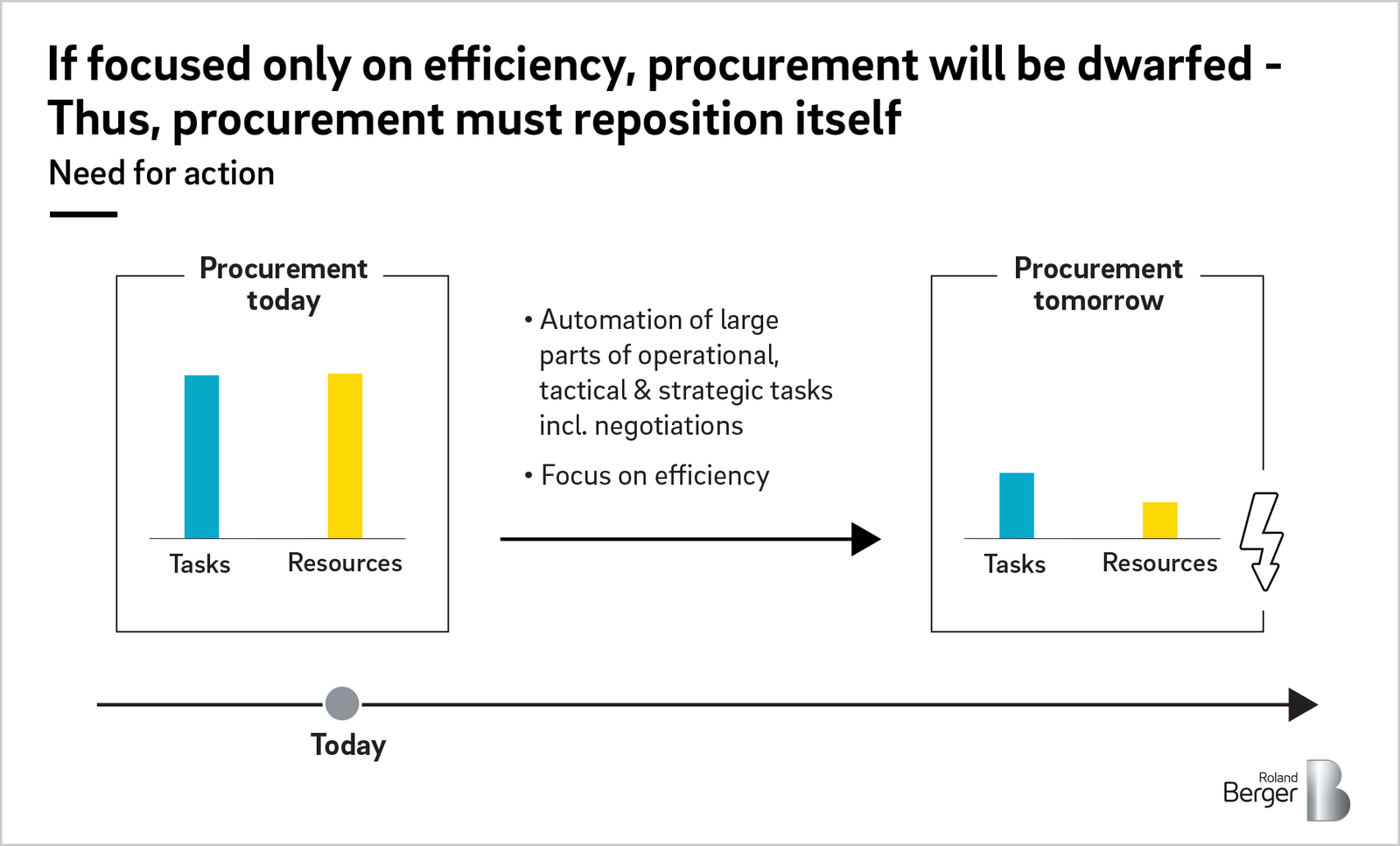
As if that’s not enough, procurement is also expected to deliver cost reductions and efficiency improvements, given the profit pressure in the industry. The pressure has been brought on in part by companies’ need to finance the transition to electric vehicles and digitalization, as well as pressures from large-scale efficiency improvement projects and company-wide mandates to reduce headcount.
All in all, it comes down to this for the required performance of procurement: Procurement must not only do more with less, but it must do a whole lot more with much, much less. Sometimes we call it the “do more with less² imperative.” Emphasis here is on the “squared.”
There’s more. Supply base disruption is right around the corner for automotive OEMs, as production moves to electric vehicles. It is just a matter of time until some components for gasoline-based vehicles are simply no longer available or become too expensive, as automotive suppliers adapt their own product mix for electric vehicles, or some go out of business for not having done so.
The big problem for OEMs is the pain that comes in the transition to electric vehicles as some “older” parts are simply not available anymore, or suppliers go out of business. This is a particularly destabilizing problem for the automotive industry that others are not necessarily facing to such a degree. Procurement will need to manage this transition with all its uncertainty and complexity. That will require new approaches for procurement, which may even involve some M&A.
Finally, another important thing to consider about the required performance of procurement going forward is the need for transparency and new ways of working.
As data volumes increase and networks become more complex, it falls on procurement to ensure transparency along the entire supply chain across the different supplier tiers. In addition, as internal and external business partners adopt new ways of working, like sprints or scrum, procurement will need to follow suit and adopt those ways of working as well. Otherwise, business partners will begin to shun procurement and label it slow and old-fashioned.