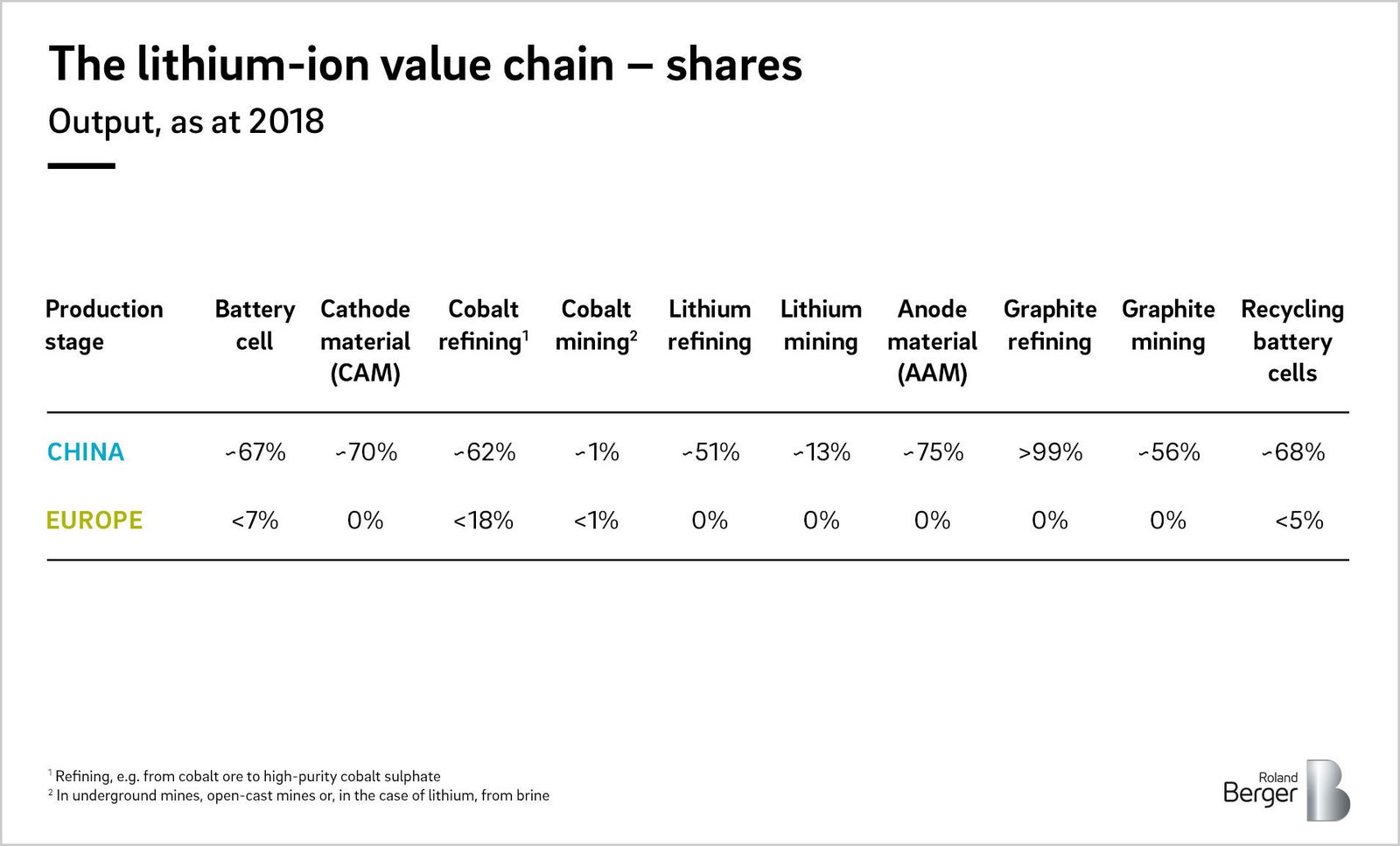
Chinese suppliers are at an advantage: They benefit from an already large market, enjoy extensive support from the state and have good access to recyclable materials. Manufacturers of electric vehicles must set up and standardize recycling facilities for batteries. These facilities are shared by manufacturers, battery manufacturers, scrap yards, integrated companies and others. The guidelines published by the Chinese Ministry of Industry and Information Technology (MIIT) at the beginning of November describe two types of recycling facilities that the industry has to set up as needed: smaller recycling centers are mainly used for interim storage and are limited to a total of 5 tons of batteries, larger "concentrated storage facilities" have a minimum capacity of 30 tons and are designed for long-term storage. Plant operators are also expected to use digital technologies to track, collect and share inventory data with producers. The latter must in turn report the recycling data "promptly". Existing plants have six months to meet the requirements of the guidelines.
With at least four "Gigafactories" in Germany and three more in Poland, Sweden, and Hungary planned or already in construction, there are good opportunities for Europe's industry to remain competitive.
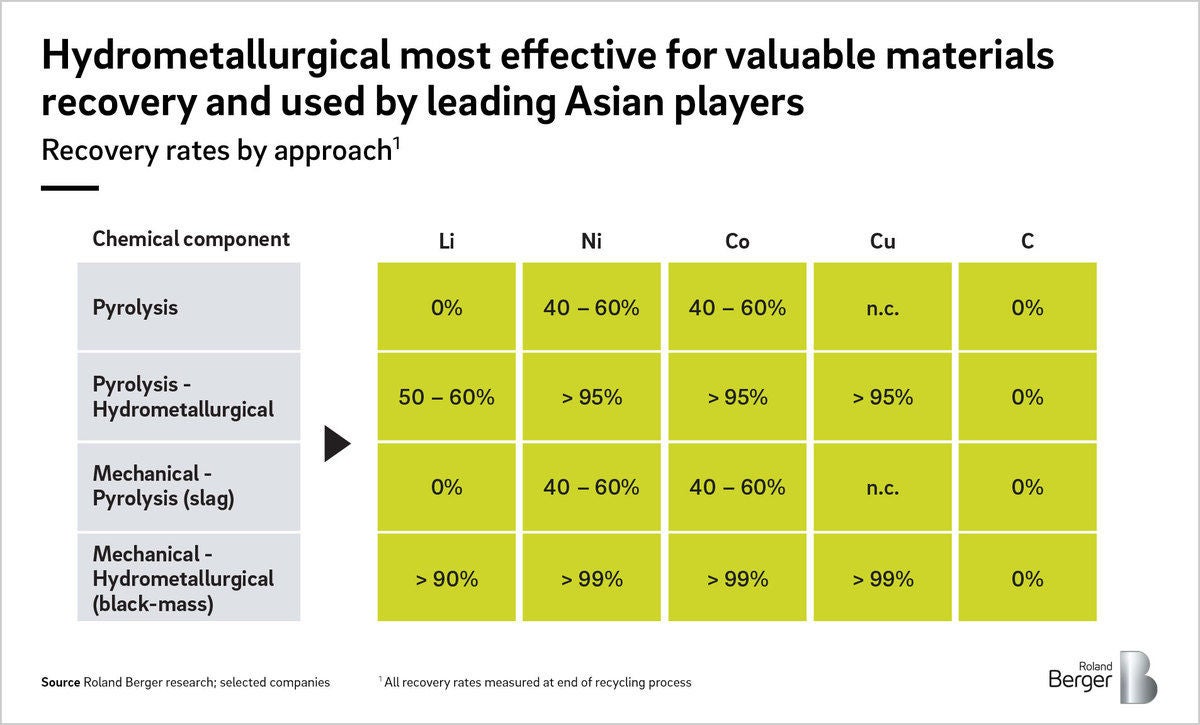
To do that, however, the industry needs a clear political framework within which to work. In addition to promoting basic research, which must go beyond the state-of-the-art already achieved in Asia, specifically when it comes to active materials recovery, policymakers need to set standards, for instance on machine-readable information on rechargeable batteries, in order to advance the level of automation in dismantling used batteries and to push the rapid industrialization of recycling processes. Track & trace mechanisms, which are already standard in China today, should be introduced as mandatory and, indeed, standard across Europe. As the European industry seeks to secure access to raw materials and move forward, it is important to consider whether there should be export restrictions on used batteries and active materials to be recycled (known as "black mass"). In order to offer planning security to companies in the industry, the transposition of the new EU Battery Directive into national law should also be dramatically accelerated and the scope for national modifications limited as far as possible. The task for
the industry
now is to build up the necessary capacities – before Asian competitors take this field, as they have others, and divide it up among themselves.