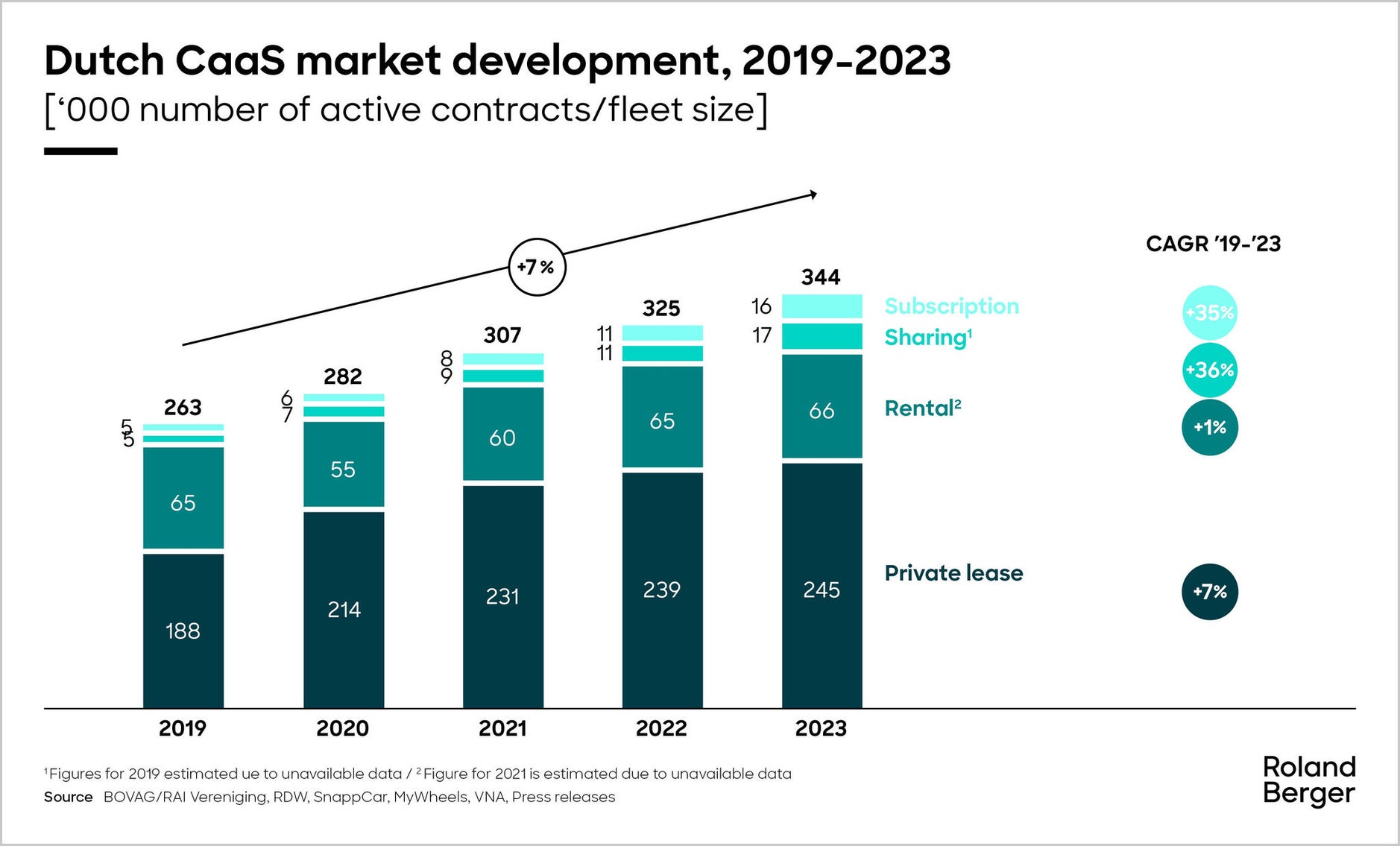
Private lease is not taking over all private sales. Private lease emerged as a game changer when it was introduced in 2012, quickly capturing a significant share of the market. By 2020, it accounted for 42% of all new private car registrations. Although the number of contracts increased by 7% p.a. between 2019-2023 to 245 k, its share of registrations dropped to 34% by 2023, driven by high inflation and rising interest rates from late 2021. These economic pressures weakened consumer confidence and purchasing power, making long-term, high-cost lease contracts less appealing.
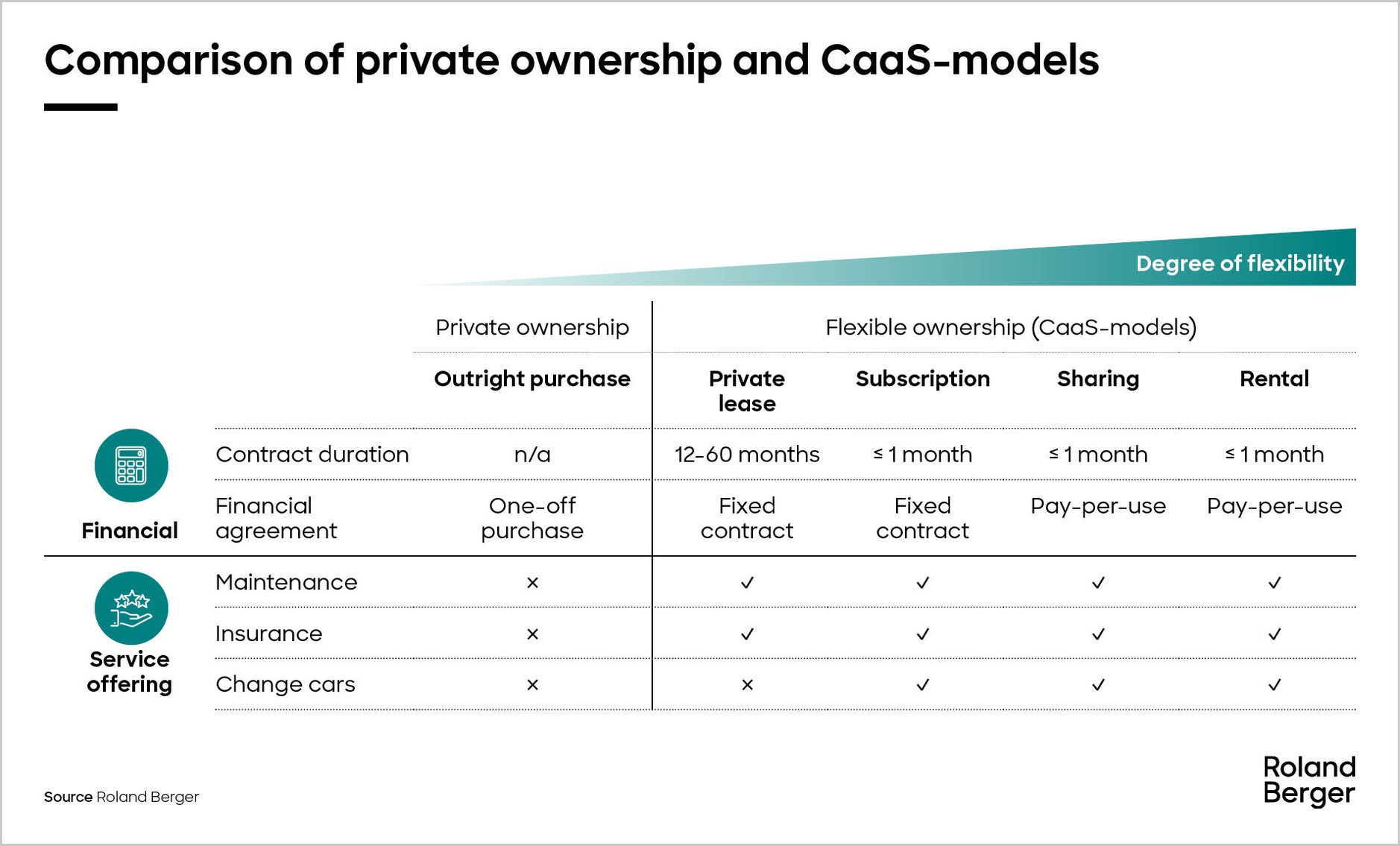
Subscription services have gained traction. Car subscriptions, which began around 2017, offer a flexible alternative to traditional leases with their shorter contracts, often allowing monthly cancellations. While there were about 16,000 active contracts in 2023, this model is set to grow and compete with private lease for market share.
Car sharing has grown exponentially but struggles with profitability. Car sharing, which includes B2C roundtrip, B2C free-floating, (keyless) P2P, and closed community models, has experienced exponential growth, achieving a compound annual growth rate of 36% since 2019. Despite this substantial increase, it is still a niche market with approximately 17,000 vehicles in operation as of 2023. Profitability continues to be a significant challenge, as no major participant has reached the necessary scale to report positive financial results.
Car rental remains a mature and well-established segment. Car rental is a mature market in the Netherlands, with ~65,000 passenger rental cars, predominantly and increasingly controlled by a few (international) companies. Before COVID-19, the market saw modest growth at ~2% p.a. between 2017-2019. After a 16% decline in 2020 due to COVID-19, the market fully rebounded by 2022. Going forward, demand for rental passenger cars is expected to rise, driven by an increase in tourism in the coming years on top of the same trends that apply for the above-mentioned models.