The new competitive map in Italy
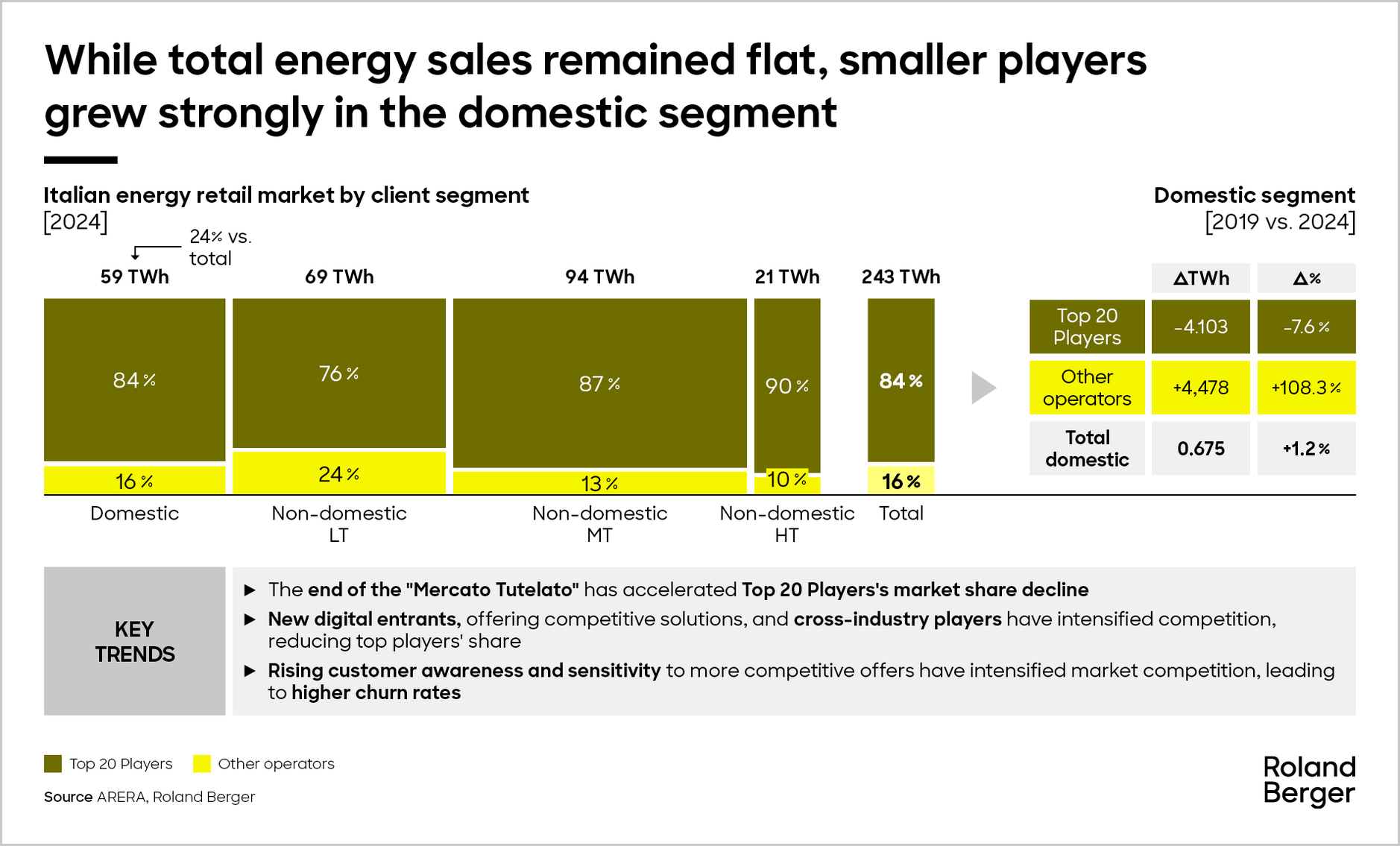
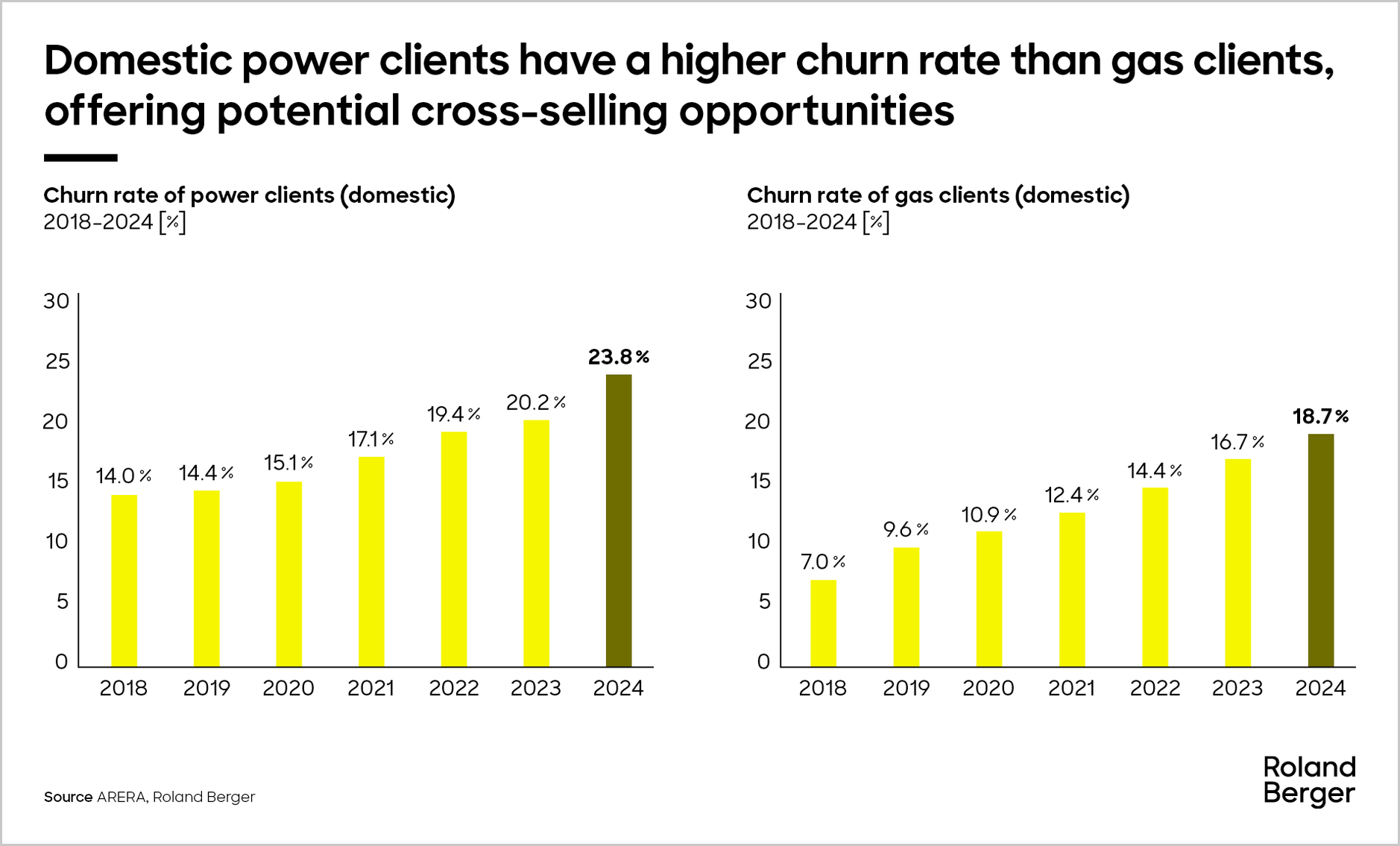
Across Italy, utilities retain their scale, brand, and local presence – but the ground under their feet is moving. Since 2019, the domestic market has seen both large diversified utilities and smaller challengers gain share, largely at the expense of the historical incumbent. The end of the tutela regimes has been a catalyst: Awareness is higher, comparisons are easier, and customers behave less like “accounts” and more like “subscribers” who evaluate value continuously.
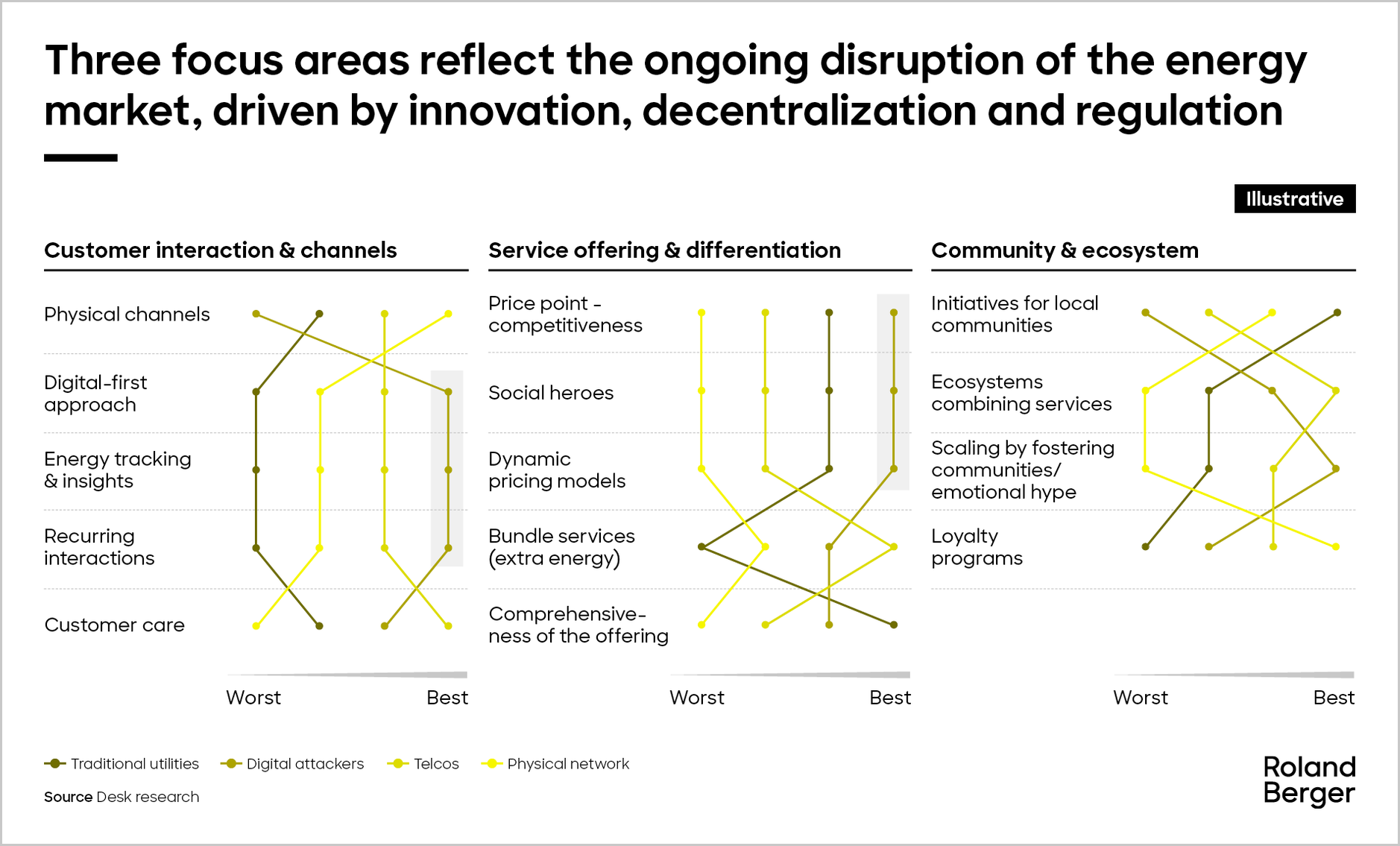
Three main areas are where we find the most disruption – and opportunity:
Customer interaction and channels. Digital attackers maximize low-friction, high-frequency touchpoints – apps, proactive notifications, micro-insights – turning energy into a daily experience rather than the subject of an annual renewal discussion. Entrants with existing customer care infrastructures are repurposing them to drive engagement and cross-sell. For utilities, closing the self-service gap and moving from reactive problem solving to anticipatory service is now table stakes.
Service offering and differentiation. Attackers compete with dynamic pricing, energy management features, and modular add-ons. Others differentiate through transparent bundles and a clear narrative about savings and sustainability. Utilities can and do differentiate on breadth – commodity, devices, services, and local delivery – but breadth must translate into clarity around “jobs to be done”: reduce bill volatility, decarbonize the home, simplify life. More does not equal more value unless customers instantly understand the “why.”
Community and ecosystem. New players build communities (digital and local), gamify savings, and reward flexibility. Utilities are already anchored to a place – municipal programs, cooperatives, local sponsorships. The next step is to connect this local credibility with platform economics: communities that are digitalized, scaled, and rewarded for flexibility as much as for spend.