Transparency – the key to resilience
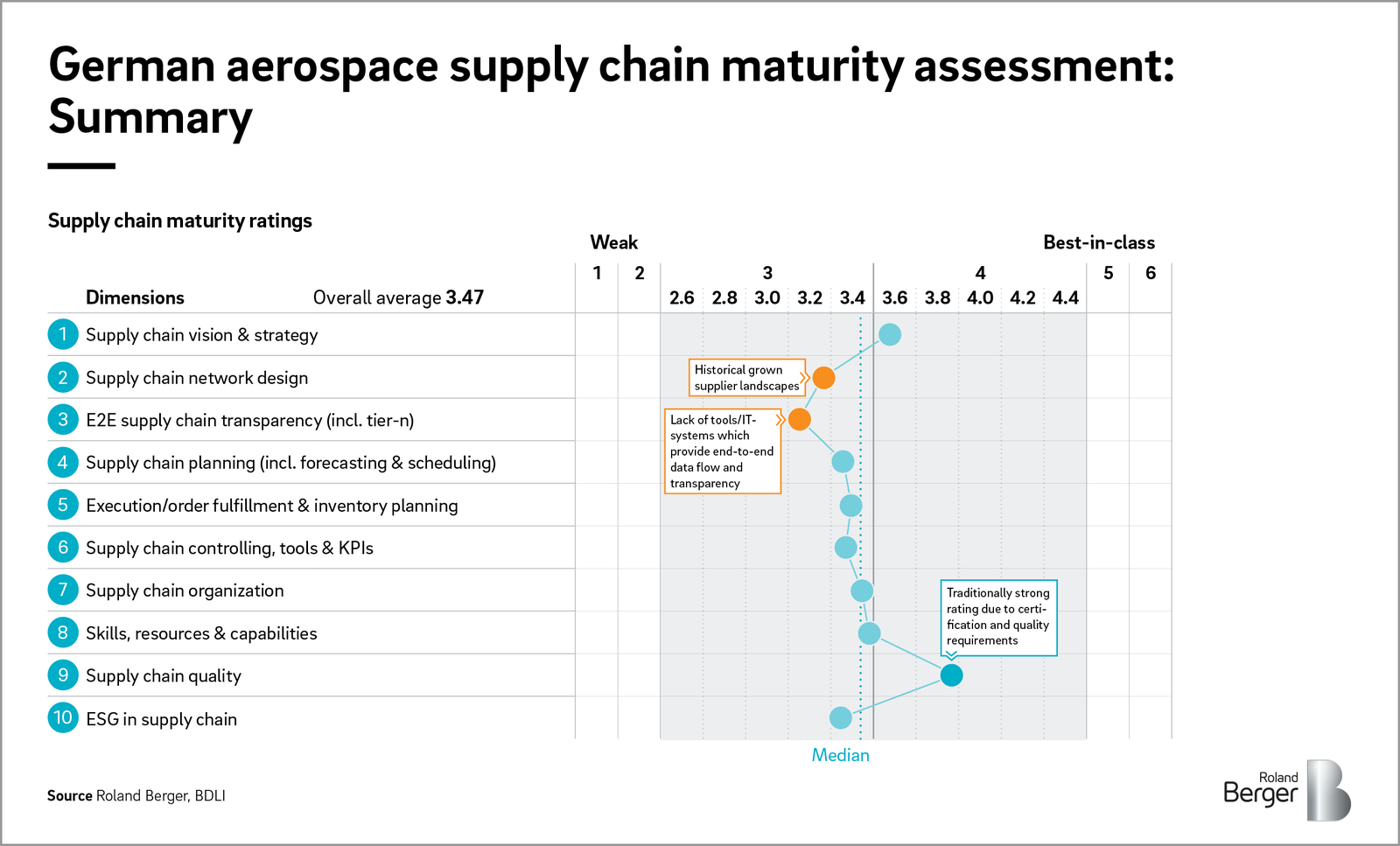
Individual companies are unlikely to be able to achieve our vision alone. Rather, a coordinated effort will be required, with suppliers undertaking joint initiatives with, as a minimum, their suppliers and customers. Improving supply-chain transparency to enable proactive management and mitigate crises is a key enabler here, and will help to address the main short-coming in A&D supply chain maturity. For more information on the other key area for improvement, network design, see our article on localization
here.
OEMs, suppliers and customers will need to work together and be more open to build transparency. For example, suppliers worry about giving away too much sensitive information to OEMs, such as on profitability drivers. OEMs therefore need to be more considered regarding the data they request, and to keep it to the minimum level required to achieve reasonable transparency. OEMs also need to develop, potentially jointly with other OEMs, agnostic solutions that allow seamless integration with all supplier tier levels.
Suppliers, meanwhile, should enhance the digital capabilities required to support necessary data exchange, for example by integrating their own planning tools, and roll out tools/IT systems to sub-tier suppliers.
In addition, both OEMs and suppliers need to work with customers to create a mindset and joint picture of how a transparent supply chain can work. To do this, OEMs needs to be system agnostic and acknowledge the multitude of supply-chain relationships, thereby ensuring that suppliers can easily exchange information with them and other customers. This shared transparency system could then be used for all demand and supply related information flows from customers via OEMs to suppliers (flow down of demand signal, configuration management, delivery dates, traceability etc.). This includes training employees on scheduling and planning.
To conclude, it is reasonable to expect that some disruption caused by the global and localized crises will continue in the foreseeable future. For the aerospace industry to proactively cope with the fallout and improve its supply-chain maturity, an understanding of their impact along the entire value chain is key to avoid disruptions, limit the impact of disruptions or be faster in solving them. This makes transparency a prerequisite for supply chain resilience. To begin, companies should ensure they develop a strong comprehension of their supply chain, especially the lower tiers, and then start pilots with network partners.
For more information, or to discuss any of the themes covered in this article, please contact one of our experts.
We would like to thank Klaas Klasen and the BDLI for their contribution to this publication.