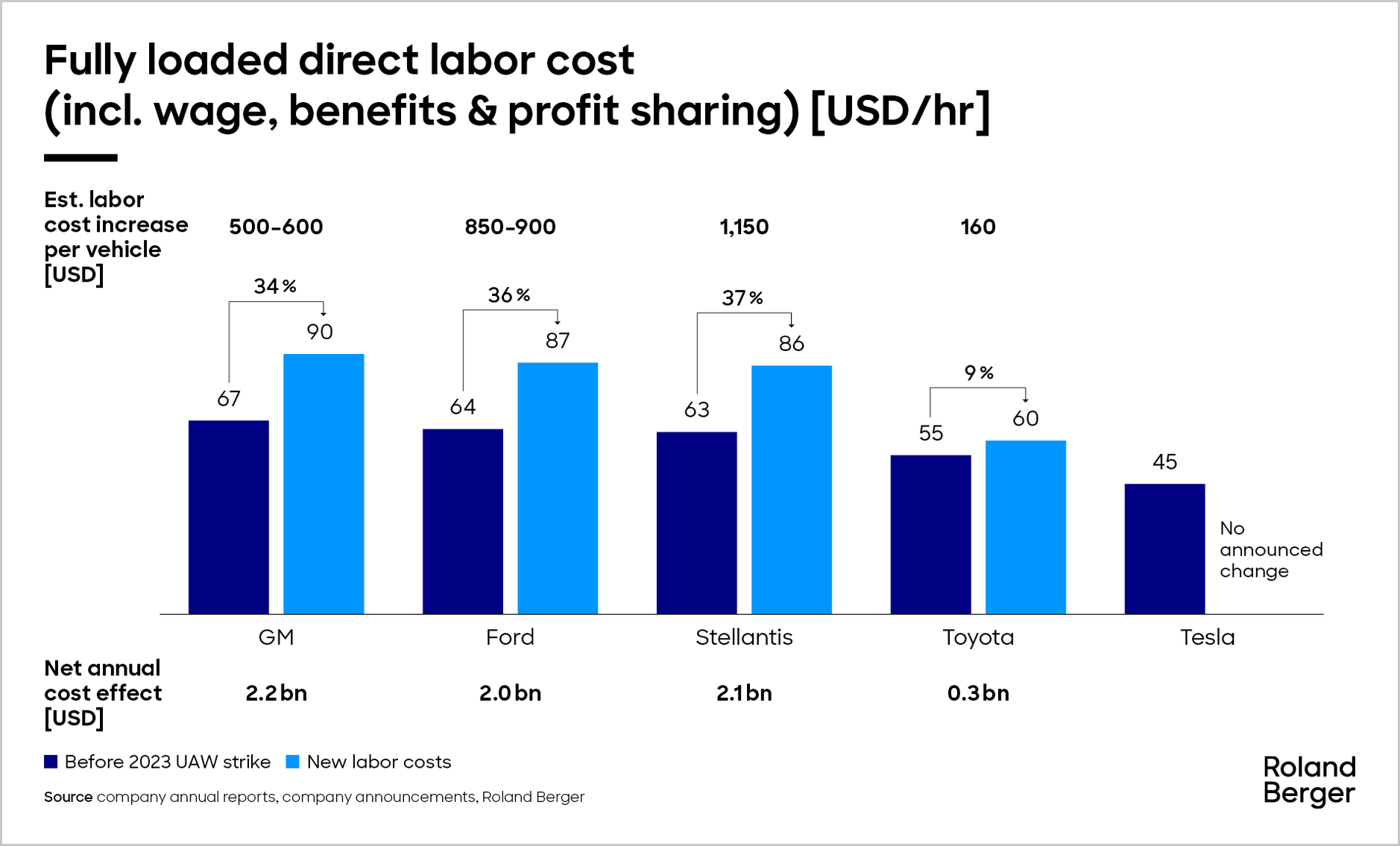
New union agreements will increase the cost of GM, Ford, and Stellantis vehicles by up to $1,150 each. Here’s everything auto execs need to know about the ripple effect, plus key recommendations, according to new Roland Berger research.
Introduction: Now the real work begins
The recent conclusion of the United Auto Workers strike has led to increased costs for General Motors (GM), Ford, and Stellantis vehicles, with labor agreements resulting in anywhere from $500 up to a $1,150 rise per vehicle. While, the U.S. car manufacturers have expressed confidence in handling a 33% wage increase for UAW members over five years, companies like Ford and GM still face challenges due to unfavorable capital markets. Electric vehicle investments are being delayed (albeit for lower consumer demand), and automotive suppliers are grappling with capacity and inventory issues.
What can the industry do to overcome these challenging cost conditions? How can the Detroit 3 stay competitive with non-union manufacturers that have increasingly grown their market share over the last several decades? And what levers can be pulled to move the needle on newfound growth, despite the considerable rise in labor costs?
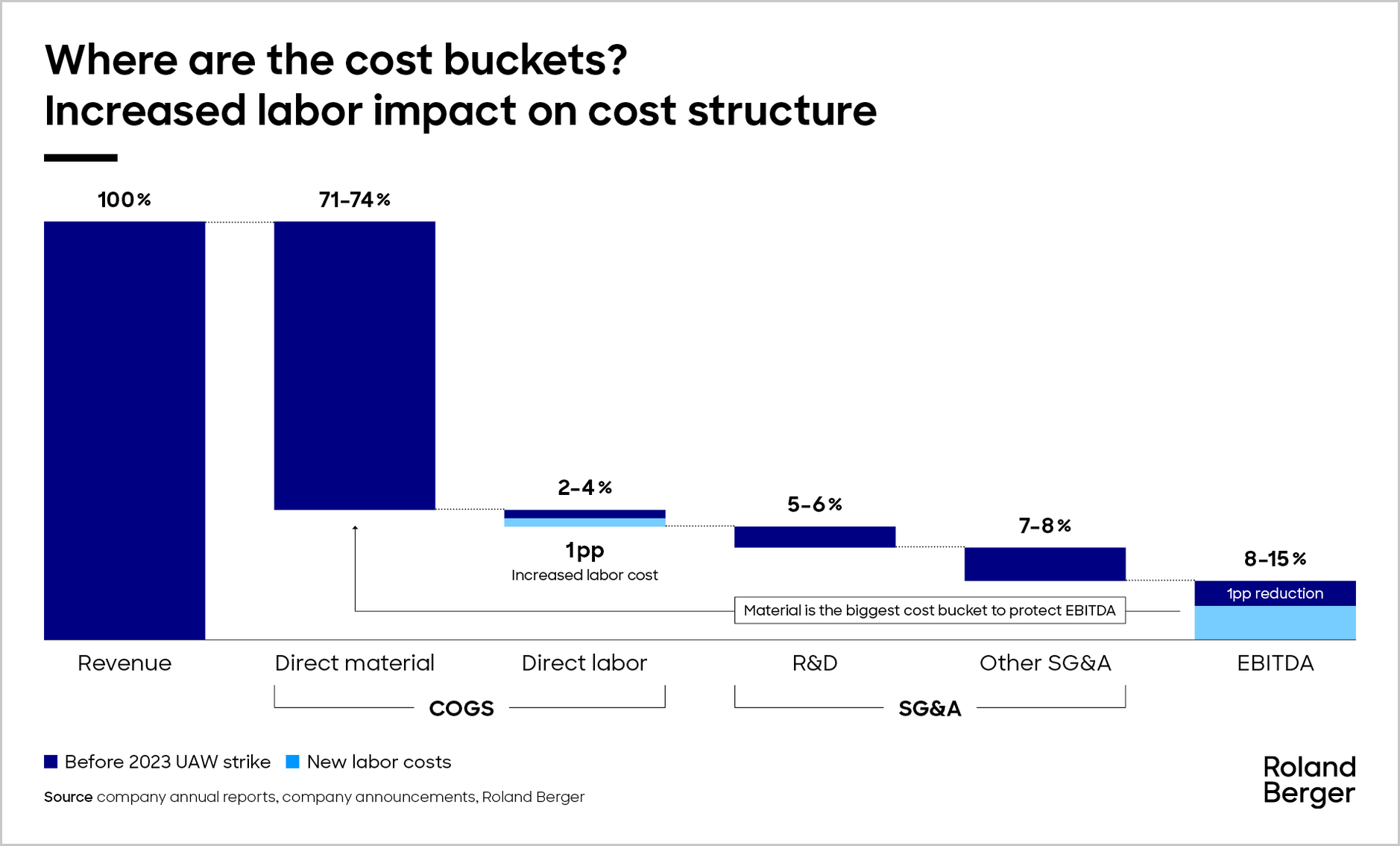
After researching these questions in depth recently, Roland Berger has found encouraging answers. The biggest finding is this: to stay competitive, GM, Ford, Stellantis, and their tier-1 suppliers must reduce their direct material costs, which account for 70-75% of total vehicle costs. To claw back lost margins and market valuations, the Detroit 3 must reexamine, reconfigure, and better manage their largest cost bucket—overall material costs along the entire supply chain. With the stakes this high and the latest auto strike thankfully coming to an end, here's how the Detroit 3 can overcome increased labor costs and succeed.