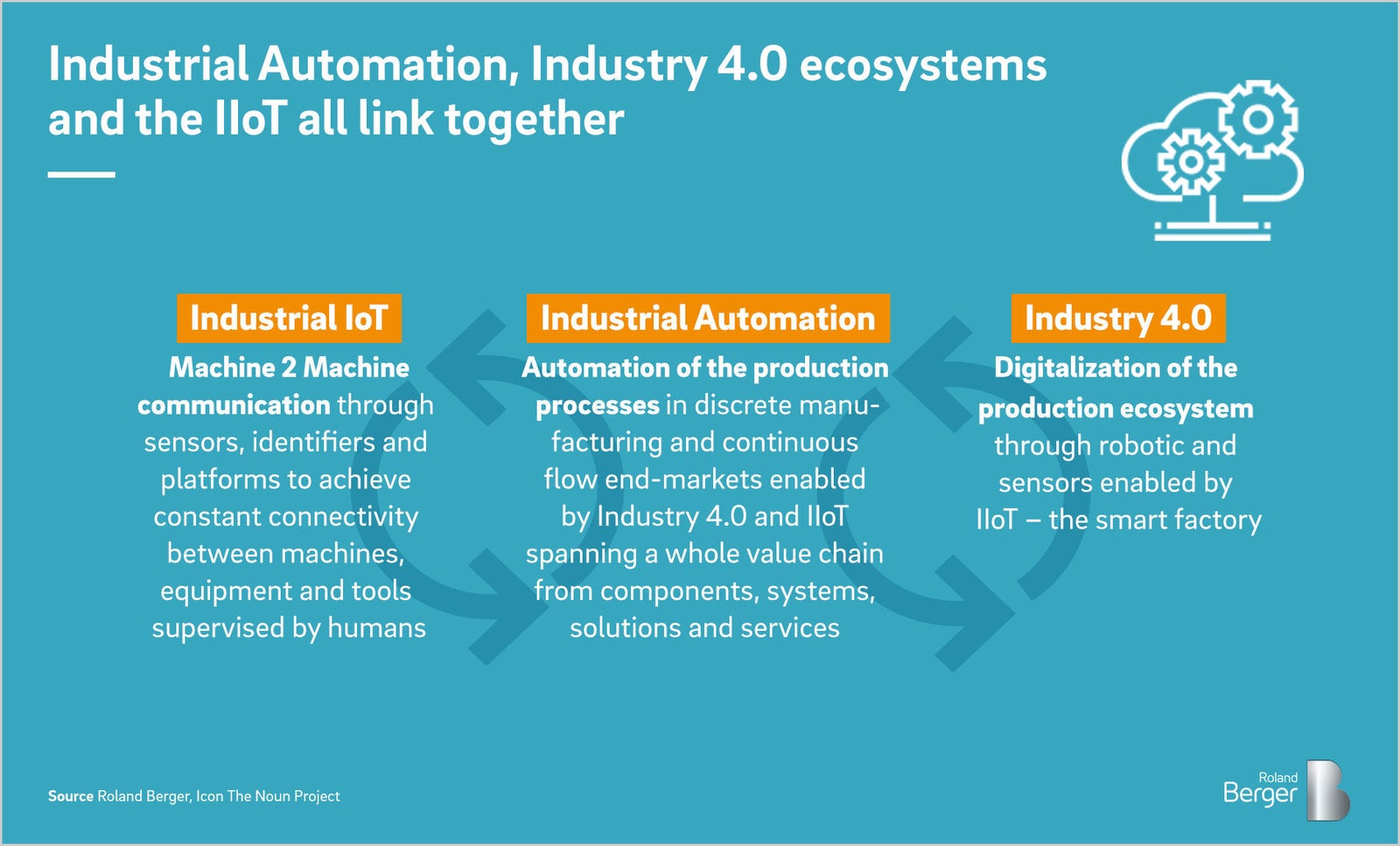
Disruptive technologies and autonomous factories
AI
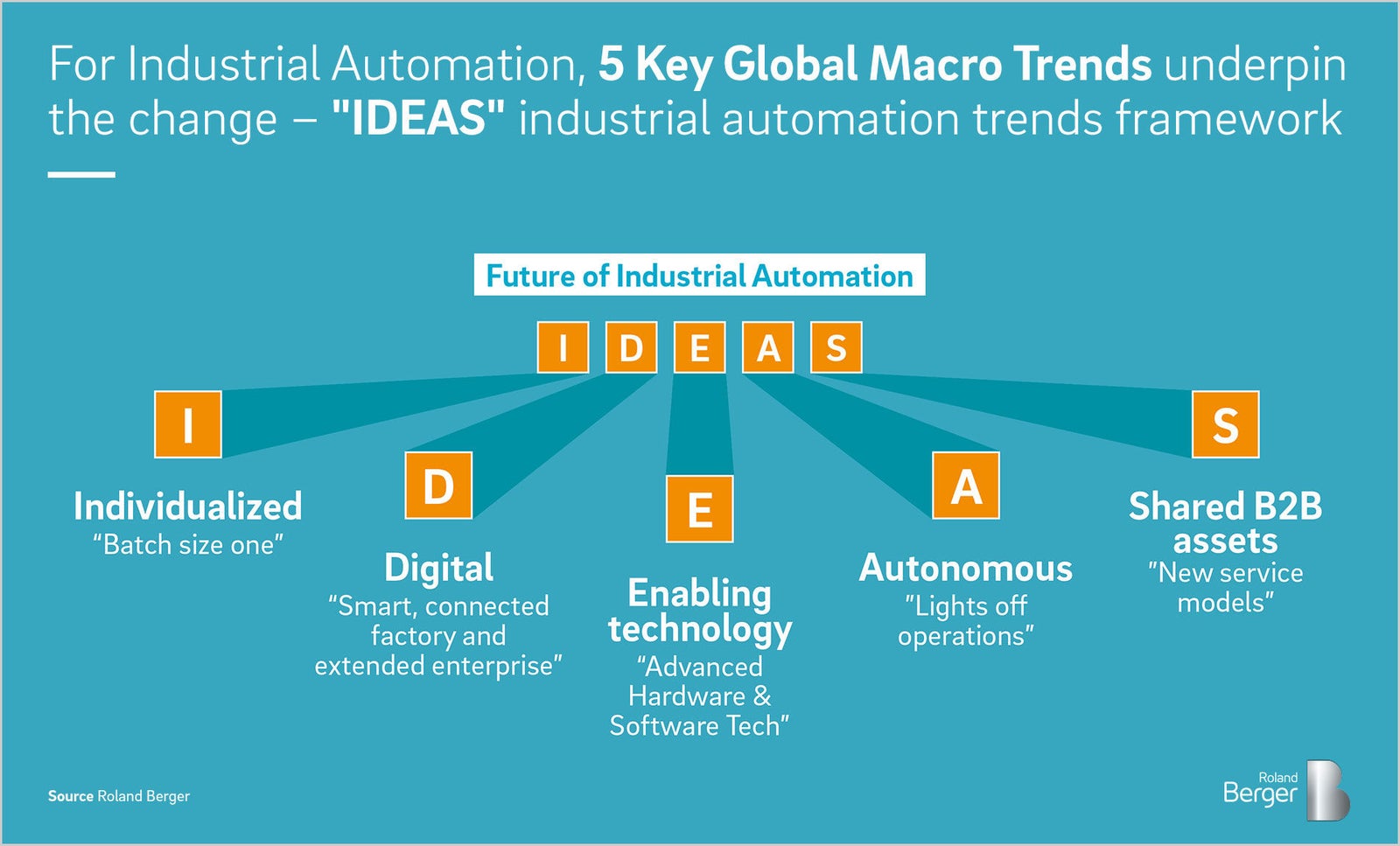
, 5G, advanced sensing, advanced materials and many other exponential technologies are already changing Industry 4.0 today. And of course, they will massively accelerate transformation processes in Industrial Automation tomorrow. The second major impact emerges from autonomy, especially the transition from the smart to the autonomous, fully automated "lights out factory". This future factory requires extensive automation and networking of the manufacturing processes. Advances in automation and the use of "enabling technologies", above all
AI
, bring this vision closer.
New markets and players
Besides discrete manufacturing companies, other industrial sectors around the world are increasingly turning to automated solutions as well. A lot of new and lucrative end markets are ready to be explored in areas such as the
chemical
, electronics, semiconductor and medical industries. These new markets promise growth – which also calls new players onto the scene. Startups and companies that were not previously considered typical Industrial Automation players are now part of the game. Industry incumbents, such as component, system and solution providers, conglomerates or the big players with their integrated solutions, must defend their markets. On the other hand, pure-play software companies are positioning themselves with their cloud technologies, software solutions and Software as a Service (SaaS) offerings or are connecting with platform providers.
Market consolidation and observations
Sooner or later, there will be a streamlining of the provider landscape. The current status quo with a highly fragmented provider structure, more than a thousand market players large and small, and a wide range of different products, services, digital expertise and strategies will experience an intensified wave of consolidation. At first, segment lines will be established and automation will penetrate deeper into mainstream production. Clearly, identifying the attractive "economic fortresses" or future "unicorns" among the thousands of different players is no mean feat. The fastest growing sectors are becoming more and more important in the wider context and not just in terms of attracting financial investors. Increasingly, companies in the market tend to go shopping by themselves and buy strategically in order to balance out their own deficits, to grow and, above all, to remain competitive.
Indeed,
mergers & acquisitions (M&A)
are typical of the industry. In 2016, robot manufacturer Kuka was acquired by the Chinese Midea Group; in 2017, ABB took over the Austrian controls manufacturer Bernecker & Rainer to close its historic gap in factory automation.
But the large M&As that make the news headlines are not the only type of transactions typical of the market. Many small, strategic and goal-oriented deals pepper the landscape as well. Between 2013 and 2018, approximately 60% of acquisitions were made by companies along the Industrial Automation value chain. Financial investors accounted for about 25% of the acquisitions, strategists or financial investors from China made up another 10% and at least 5% were end customers keen to expand their manufacturing expertise.
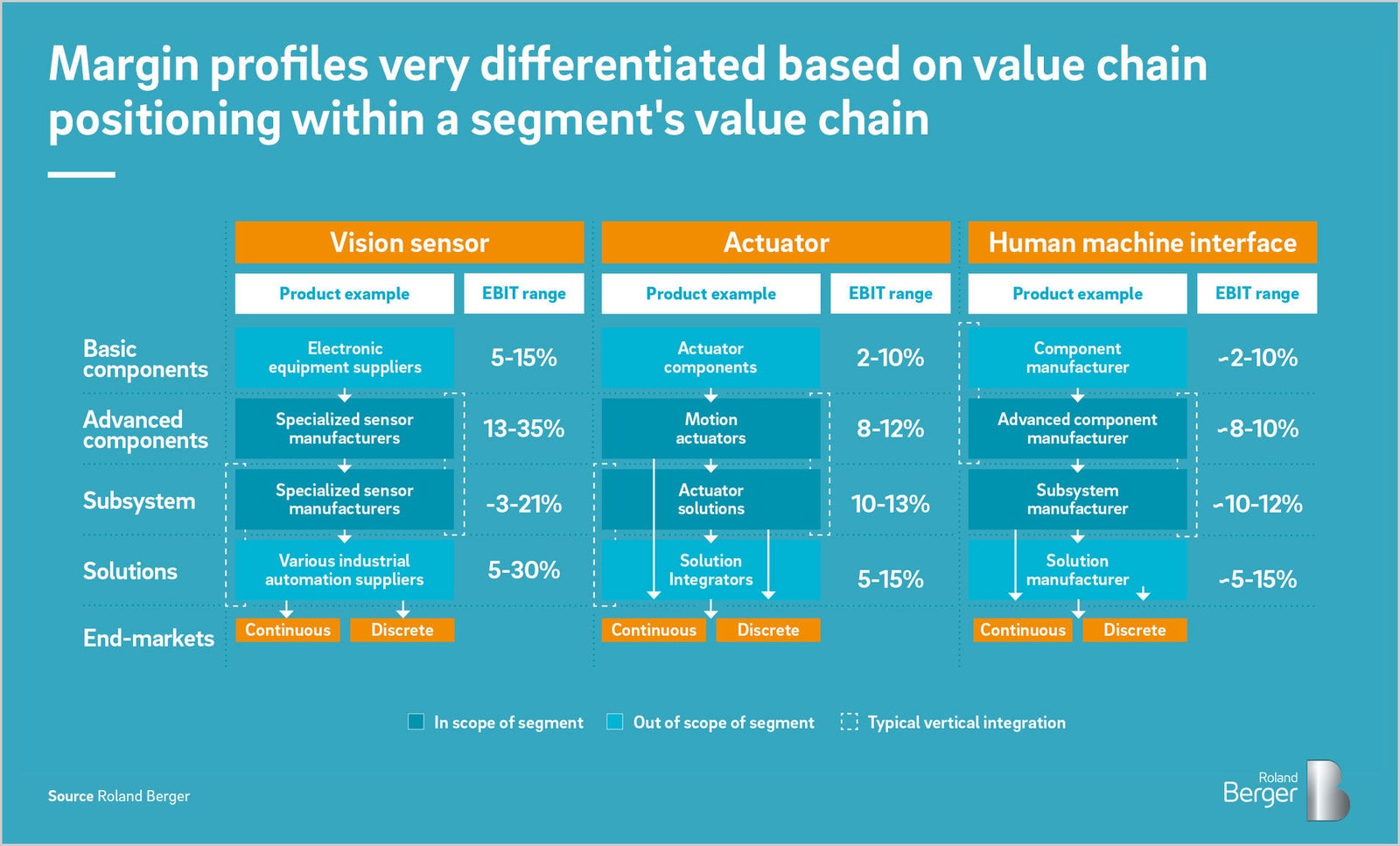
Margins dreams
At the component level, above all, there are numerous examples of how successful companies have been in realizing a strategic agenda driven by Industrial Automation aspects. For example, champions in optics or sensor technology are operating in a highly innovative manner – and standing out economically with annual EBIT margins in the double-digit range. Positioning along the value chain is an important factor as a comparison of three segments shows.