
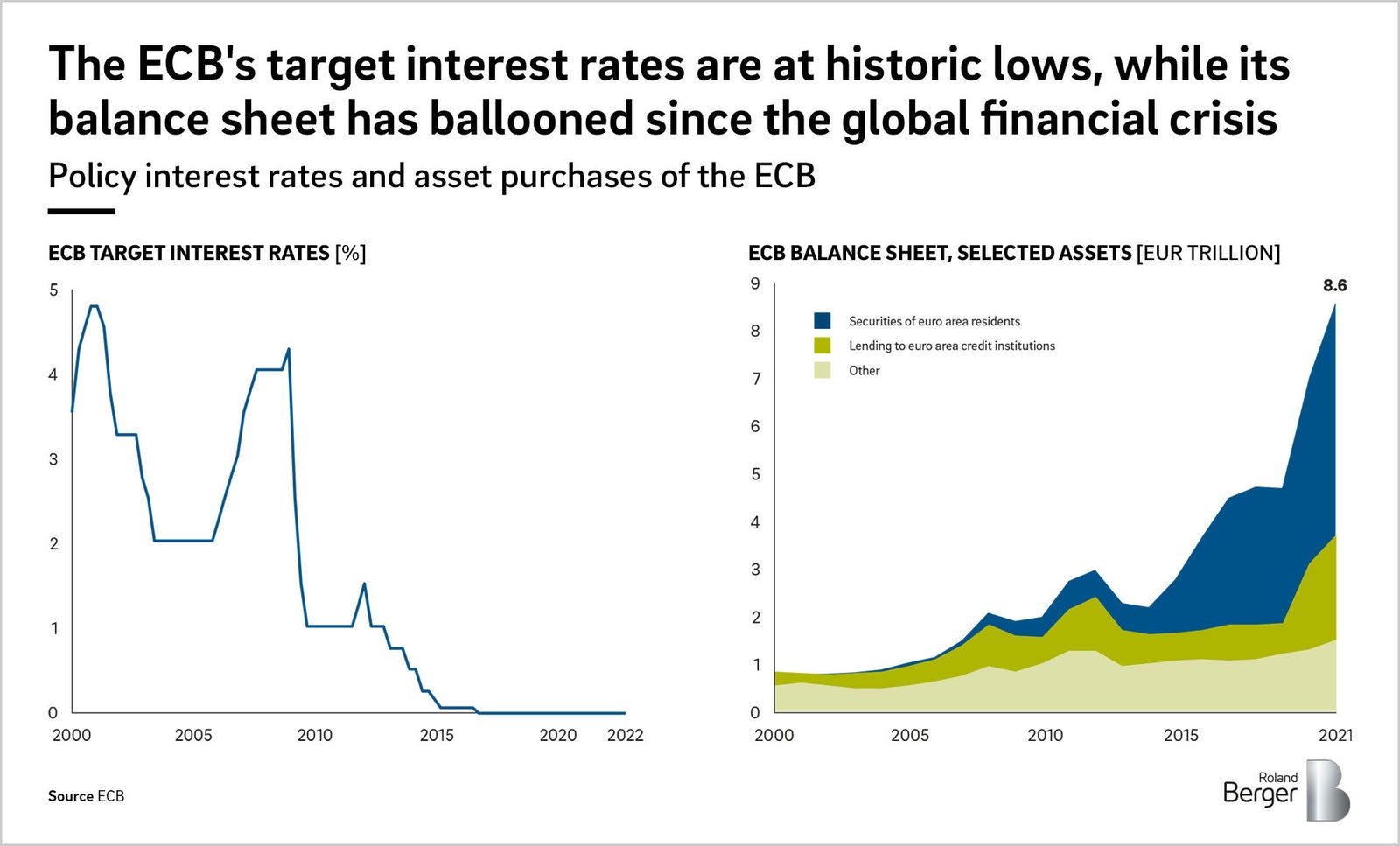
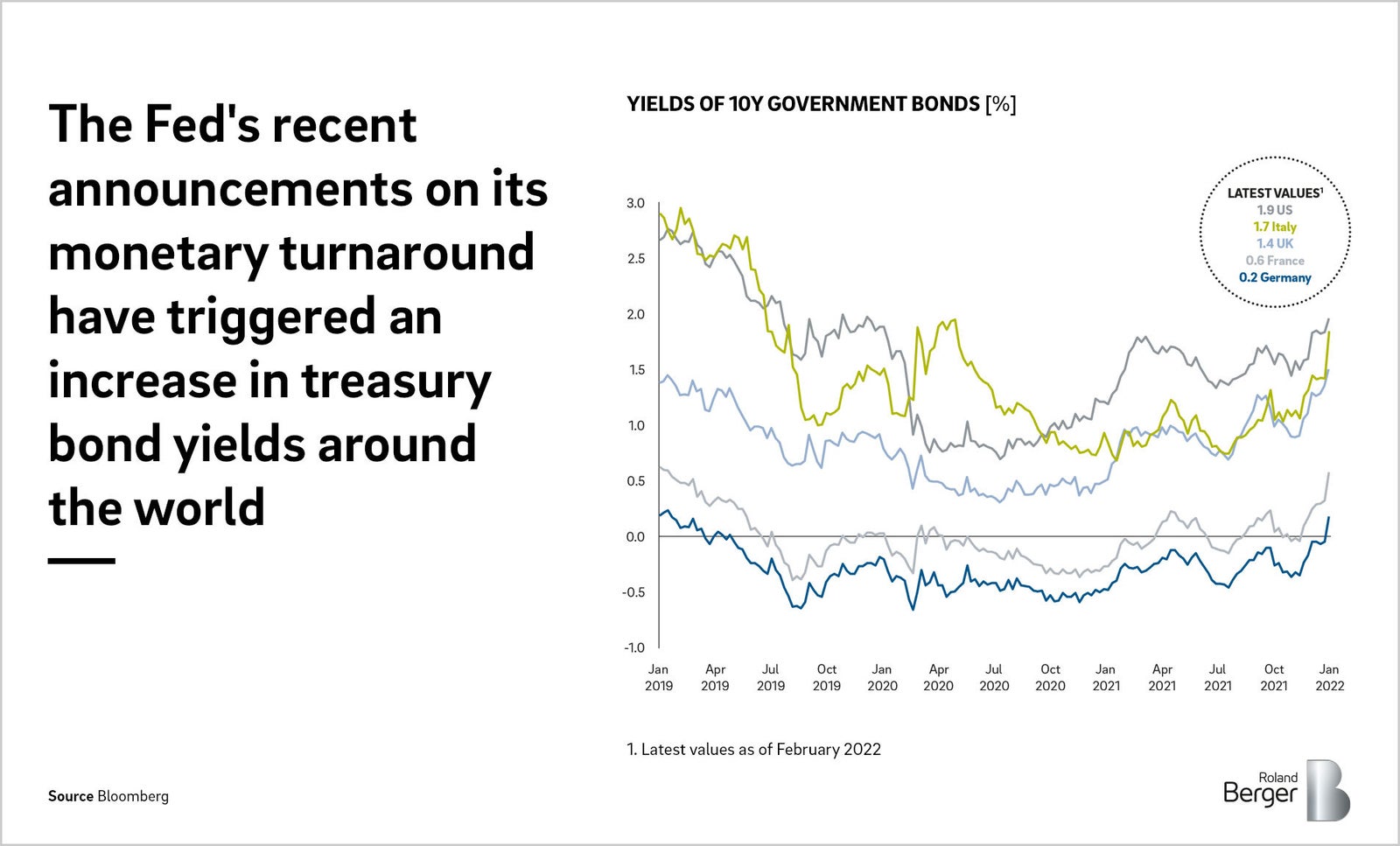
High inflation rates in the U.S. and in Europe - long characterized by optimists as "temporary" - have turned into a tenacious phenomenon which is clearly not disappearing on its own. Major central banks have reacted accordingly: The Bank of England raised its base rate from 0.25% to 0.5% in February. In December 2021, the U.S. Federal Reserve (Fed) announced that it would halt its asset purchase program by March 2022 – a move setting the groundwork for an ensuing interest rate hike. The Fed's monetary tightening has also put pressure on the European Central Bank (ECB): At a January press conference, ECB president Christine Lagarde said that the ECB would "leave no stone unturned" with regard to its monetary policy. Market experts and analysts saw the statement as a departure from the ECB's expansive monetary policy of recent years and expect a euro zone interest rate hike in the near future.

Article
What if – the ECB raises the key interest rates?

Inflation in the US and Europe, long characterised by many optimists as "temporary", has turned into a persistent phenomenon that clearly will not go away on its own.
Published March 2022. Available in