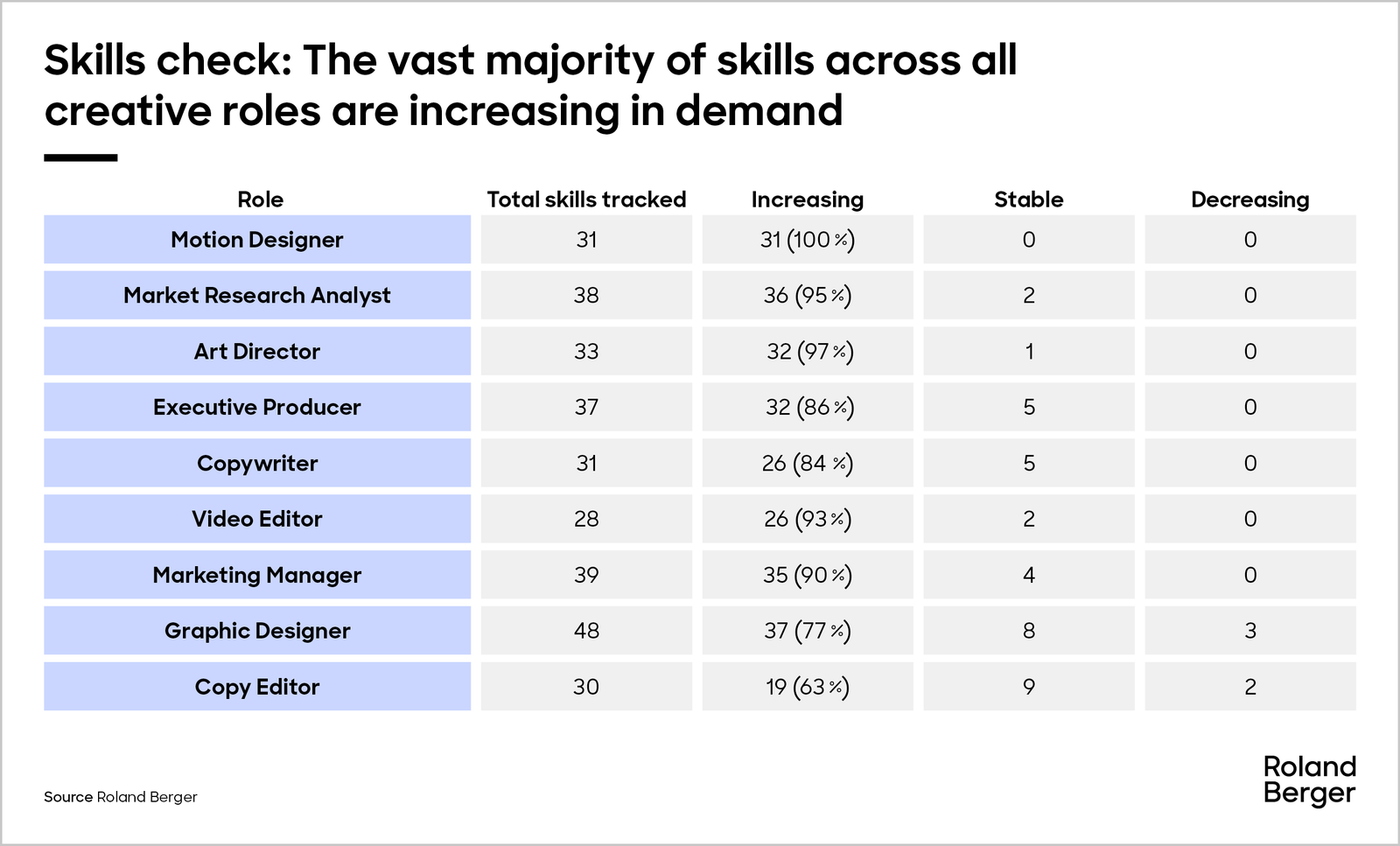
In several of these roles, all core skills are classified as increasing in demand. For example:
Market Research Analyst: AI, machine learning, Python, R, SQL, Big Data analytics, behavioral analytics and data visualization are all increasing.
Video Editors: AI, DaVinci Resolve, color grading, motion design, sound design, visual effects and storytelling are all increasing.
Critically, the skills that are rising in demand are not just technical. Collaboration skills are classified as increasing in every single role in the skills dataset. Creativity is increasing across all roles where it is tracked. Problem solving is increasing for Art Directors, Copywriters, Graphic Designers, Market Research Analysts, Motion Designers, Video Editors and Executive Producers. And adaptability is increasing for Video Editors, Graphic Designers, Market Research Analysts and Executive Producers.
The data gives us a clear takeaway: The market is not asking professionals to choose between technical and human skills. It is asking them to combine both. The premium goes to those who can use an AI tool and then make a judgment call that the tool cannot.
Recommendations for decision-makers
So, what do these insights and takeaways mean for leaders in the creative industry? What do they need to do to smooth the transition toward AI and automation, and how can they address emerging skills gaps, for example? Below we outline three calls to action.
1. Don’t think of automation as a tool to reduce roles – think of it as a reallocation of priorities and tasks:
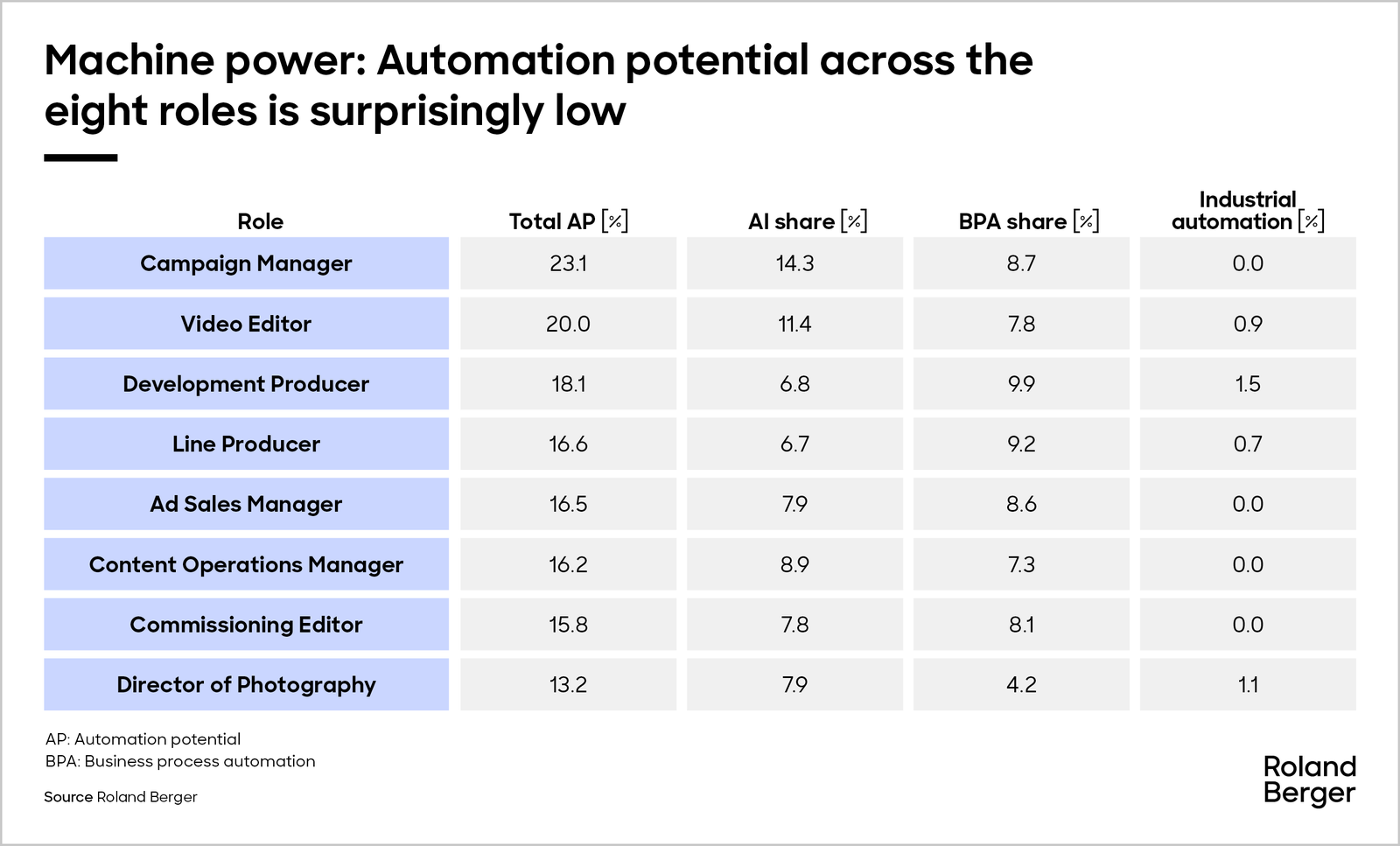
The data does not support a narrative of mass displacement – across eight roles, the highest total automation potential is 23.1%. Rather, it supports a narrative of task migration. The question is not whether a role survives. It is whether an individual is spending time on the parts of their role that will still matter in three years. For example, if a Campaign Manager is spending most of their day tracking analytics dashboards, a task that has an automation potential of 24.2%, a large part of their role is likely to change soon. But if they are spending their time on strategic hypothesis building and
cross-team collaboration,
they are on the right side of the shift.
2. Invest deliberately in the skills the data says are rising in demand:
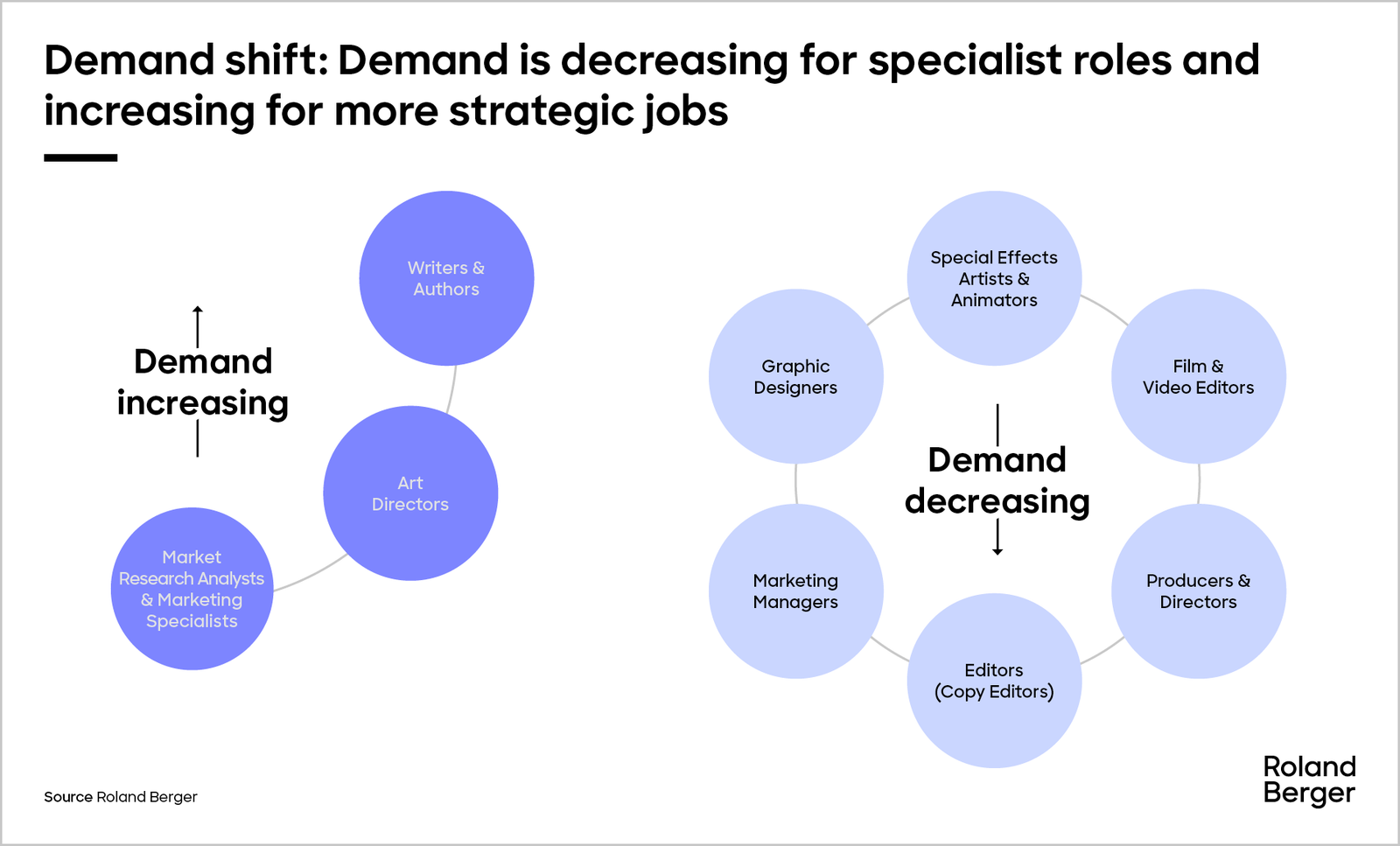
Across the roles we tracked, between 63% and 100% of skills are classified as increasing in demand. These include analytical fluency, AI tool proficiency, cross-platform expertise and the soft skills of collaboration, adaptability and creative leadership. The professionals who combine these will define the next generation of media leadership. And pay attention to the compression signal: Specialist roles are declining in favor of multi-skilled integrators who can operate across what used to be separate job descriptions, so focus on hiring these.
3. Know where to target AI and automation:
In a world where AI can generate a hundred options in seconds, the scarce resource is the person who knows which one to choose, and why. The data is unambiguous: The tasks with the lowest automation potential, consistently below 10%, are those requiring creative vision, relationship trust and strategic context. The tasks with the highest, above 25%, are those involving data processing and technical execution. So, absorb and cultivate this finding – focus AI and automation efforts on the more mechanical tasks and thereby free up human time for the more creative, strategic and higher value add tasks.
After all, the media industry is not facing a crisis. It is facing a transition. And transitions reward the prepared.
For more information, or to discuss any aspects of our findings, please get in touch with one of our experts. We look forward to hearing from you.