How do you see the role of airports in decarbonization and, more broadly, in terms of environmental, social and corporate governance?
Recently, I’ve seen many changes in the way in which airports approach decarbonization. The pressure is such that platforms have begun to adopt genuinely green strategies. Today, they are mobilizing their resources and pushing for the adoption of the right technical solutions.
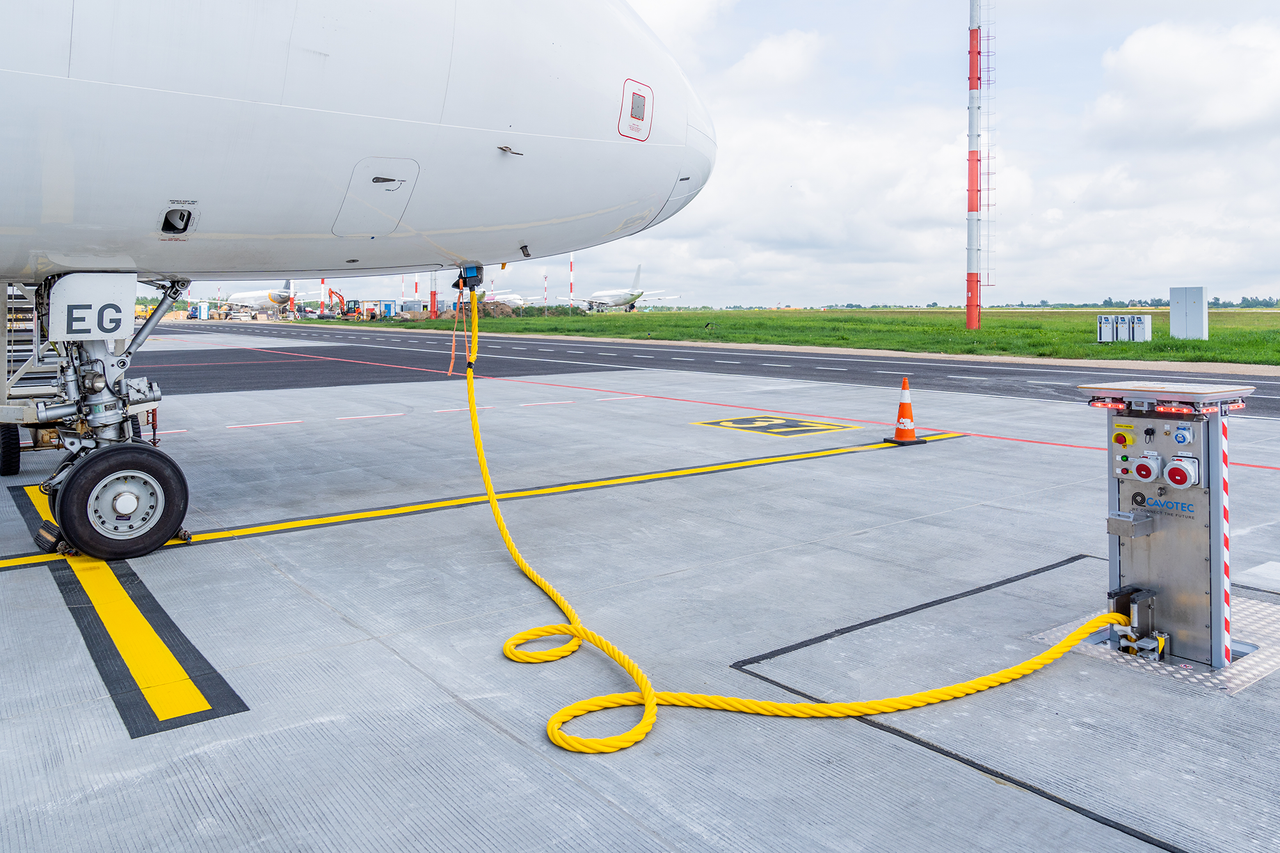
Nevertheless, some (often private) airports continue to focus on their balance sheet rather than their carbon footprint. Today, the simplest and cheapest way to save fuel (up to 10%) is on the ground and this can therefore lead to a significant reduction in CO2 on the ground. What’s unique about our solutions is that they are financially neutral or even generate negative costs.
We focus only on the cost of the turbine on the ground (whether the APU or the main engines): fuel consumption, maintenance and now the cost of CO2 – although this is almost non-existent today, because companies have received ETS certificates at almost no cost, their stocks are running out and the cost of CO2 is skyrocketing. The cost of APUs and aircraft engines is bound to rise.
Our Zero Ground Emissions solutions guarantee savings for companies and are a significant step toward their decarbonization objectives.