How will the construction industry develop in the near future?
Ishita Sood Kochhar: Digitalization increases productivity. Construction productivity has been lagging behind other industries and reports have shown that the usage of technologies in the field continues to be the primary obstacle to getting the long-promised benefits of advanced systems. Previous solutions demanded time and attention from the users without clearly providing value, which eventually caused workers to reject these technologies. Construction productivity cannot be improved unless it is correctly measured — and that measurement is acted upon for improvement.
The Internet of Things (IoT) is playing a key role in the revolution of the construction industry and related products. New and innovative construction products equipped with low costs, low power sensors are providing companies with information which in turn is being used to enhance processes, improve safety, reduce costs and increase profitability.
The industry has not yet embraced new digital technologies that need up-front investment, even if the long-term benefits are significant. By 2020, the construction industry should adopt to technologies that ensure safer environments to work at and promote productivity.
What are the strengths of your company?
Kochhar: We connect workers at the construction sites to get real-time field data to make better decisions and gain visibility on the project.
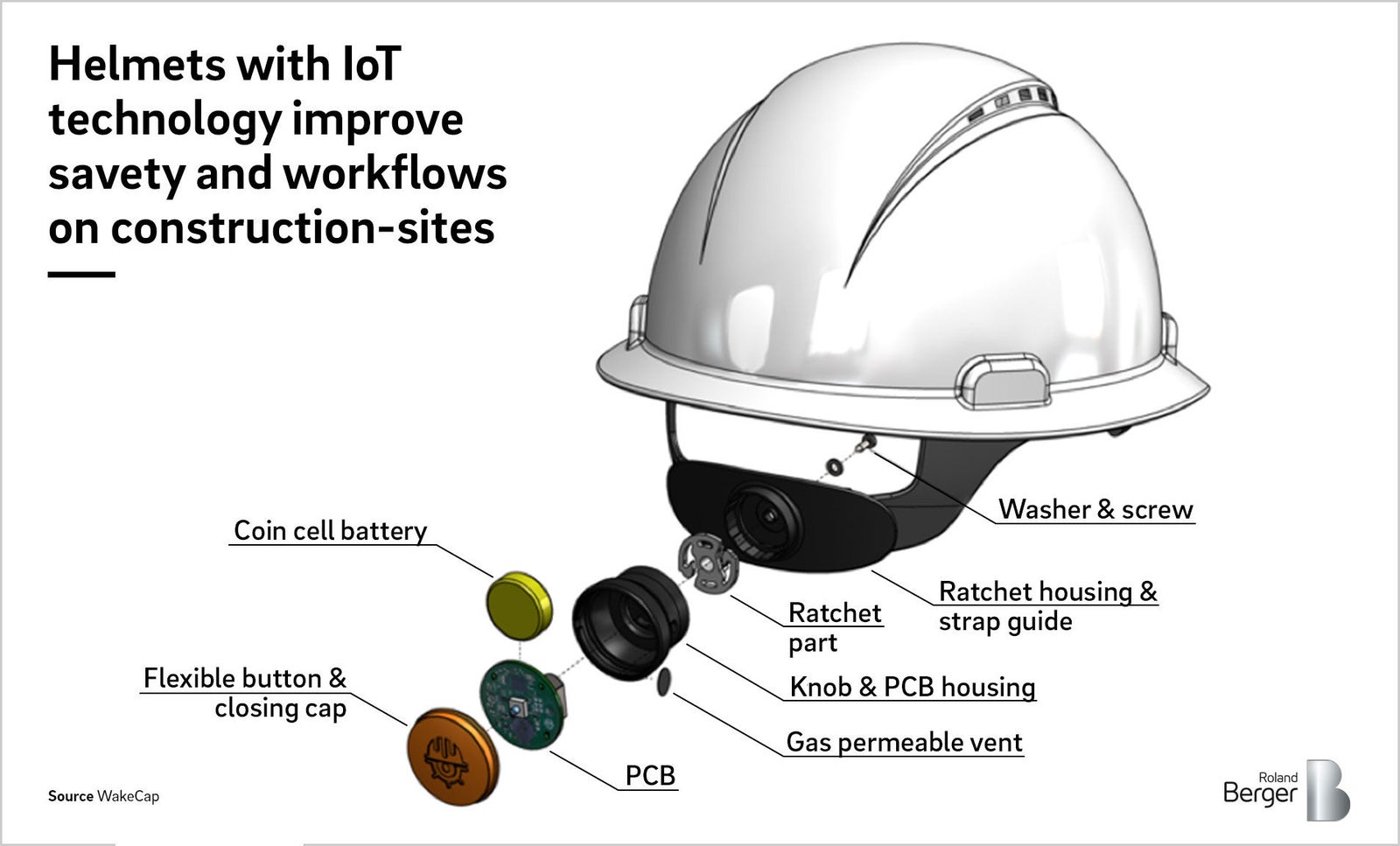
Our strength lies in our technology itself. The solution is seamless, scalable and easy to integrate at any construction site. There is no dependency on the worker in any form to maintain the hardware as the sensors are integrated in to the mandatory to wear safety helmet. The issue of achieving a stable connection at the site is one of the hardest goals and we solve this by using a mesh network technology – wireless connection through beacons – to offer stable connection without relying on power, GPS or internet.
By implementing WakeCap’s technology, the electronic component is equipped with a buzzer and a panic button to facilitate two-way alert system between the workers and a safety manager. In case of an emergency incident, each worker is simultaneously alerted with a loud buzzer, as soon as a worker hears a sound, he presses the button on the knob of the helmet to acknowledge and notify that, he heard the alarm. He then moves to a safe zone. The safety officer has an access to a dashboard, where he can check who is still stuck at the site in real-time and efficiently improve the response time towards a worker who is still stuck. Since we know the location of each worker, we can administer a faster response and an effective evacuation.