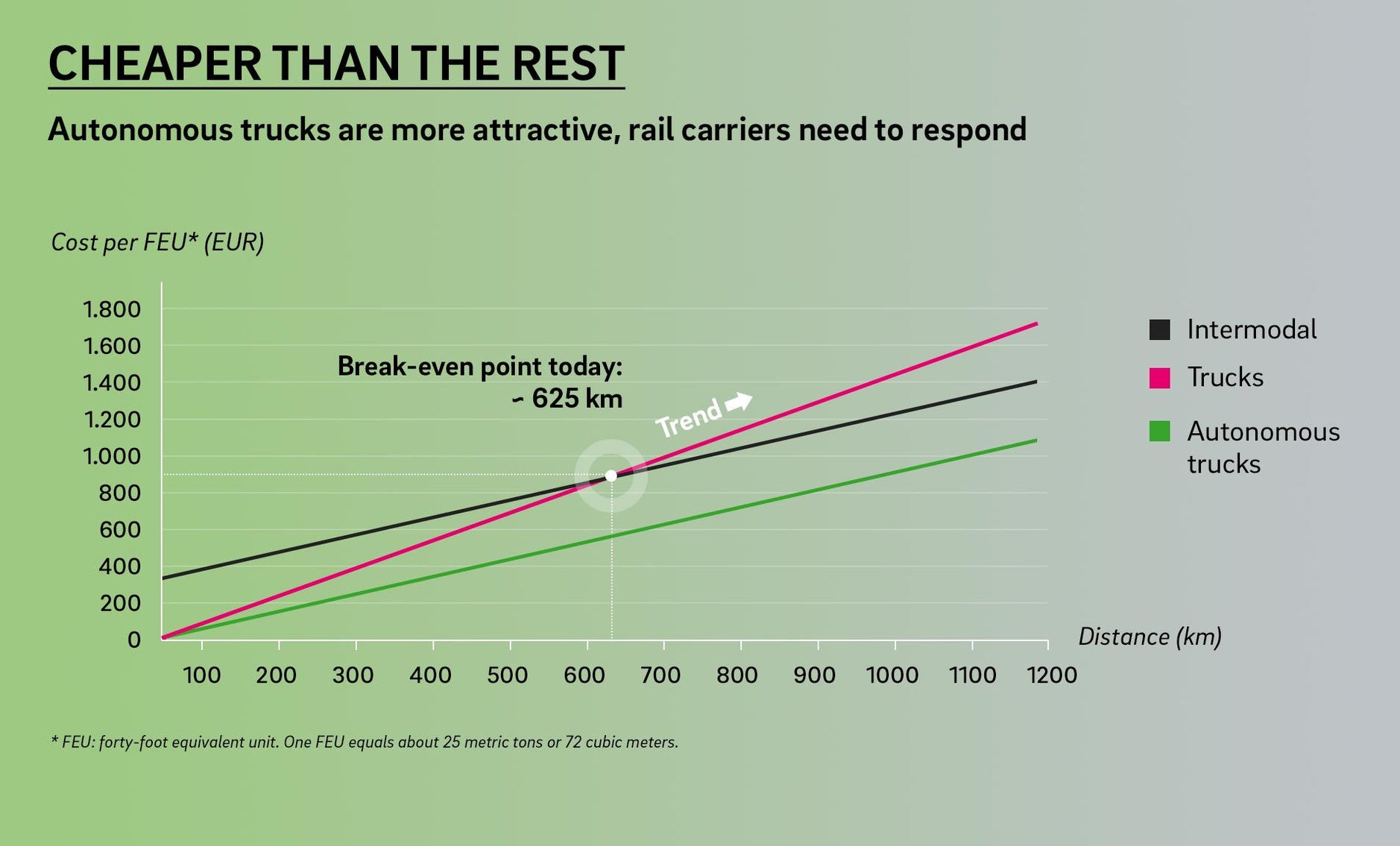
The automotive industry has so far invested comparatively little in the initial stages of automation, for example to facilitate truck platooning. The savings outlined above would, in any case, only be realized through further investment in more advanced stages of automation. Ethical and legal questions also remain to be answered. Even so, rail industry players must be aware that, in the long term, intermodal freight traffic is under serious threat if rail carriers fail to respond.
Above all in light of the far longer investment cycles in the rail industry, rail companies and suppliers need to find answers to this future threat today. They would be well advised to focus on digitization and automation, where heavier investment in research and development is an urgent imperative if autonomous trains are to be brought to operational maturity. By optimizing traffic flows, autonomous trains could increase line capacity and cut costs if the industry dares to think beyond automated regular operation on lines that switch back and forth between passenger and freight uses.