It's 2006. You're not in the mood to cook and decide to order food. You turn on your PC, look for your favorite restaurant and order your favorite dish. You're happy to see that the website supports iDEAL. This is when the hassle begins: you need to find your ID, your debit card, and go through a multi-step payment process. Finally you make your payment and your dinner is on its way.
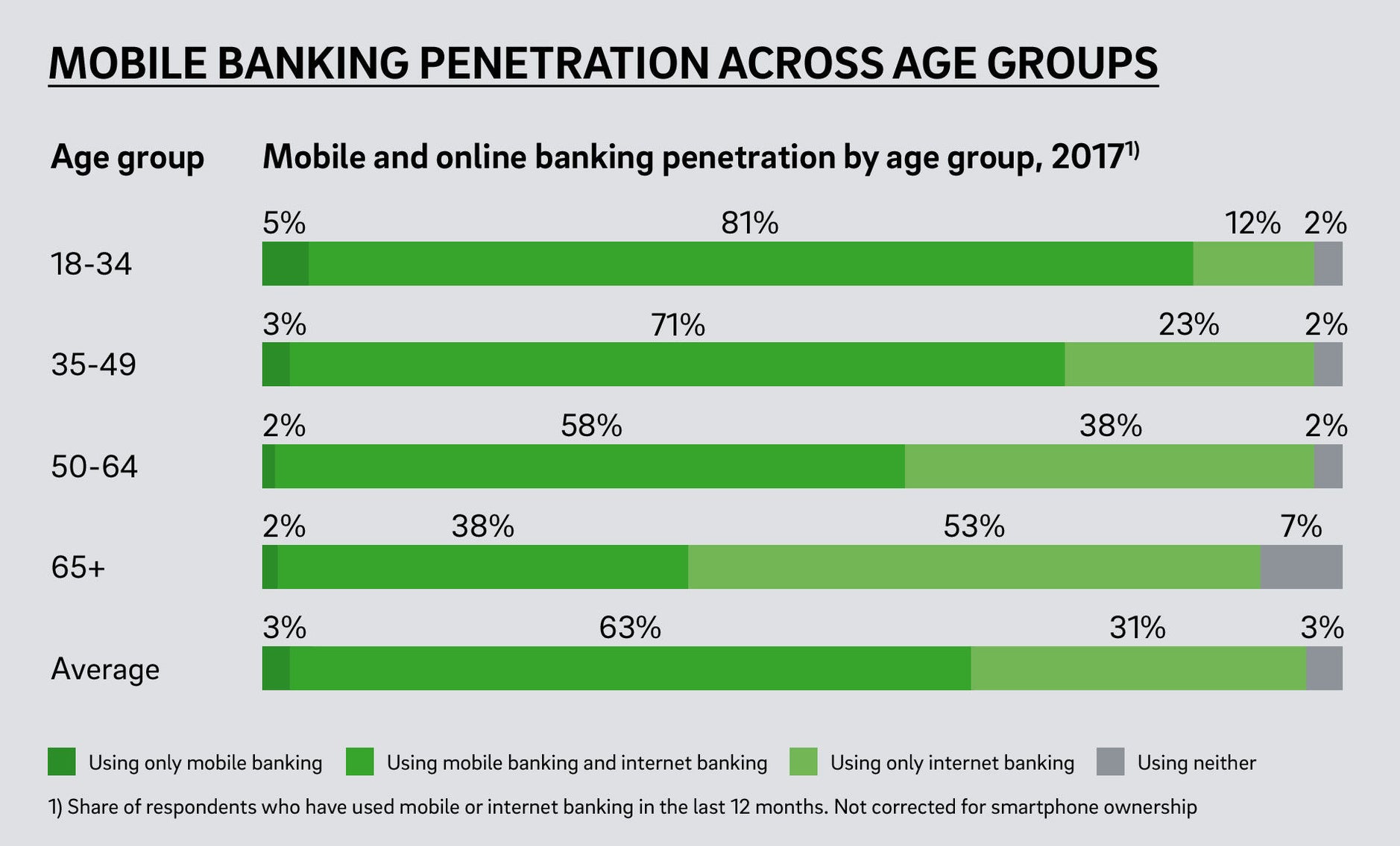
The look and feel of online payments and retail banking has changed a lot since then. You can now order food on your smartphone in mere seconds, right from your couch. In 2006, just 6% of the Dutch population used a form of mobile banking. Today, it's 66%. And mobile banking is not only used by young people anymore: 60% of 50-64 year olds are also banking on their phones. It has quickly become the primary retail banking channel for most customers.
How banks stay close to their customers
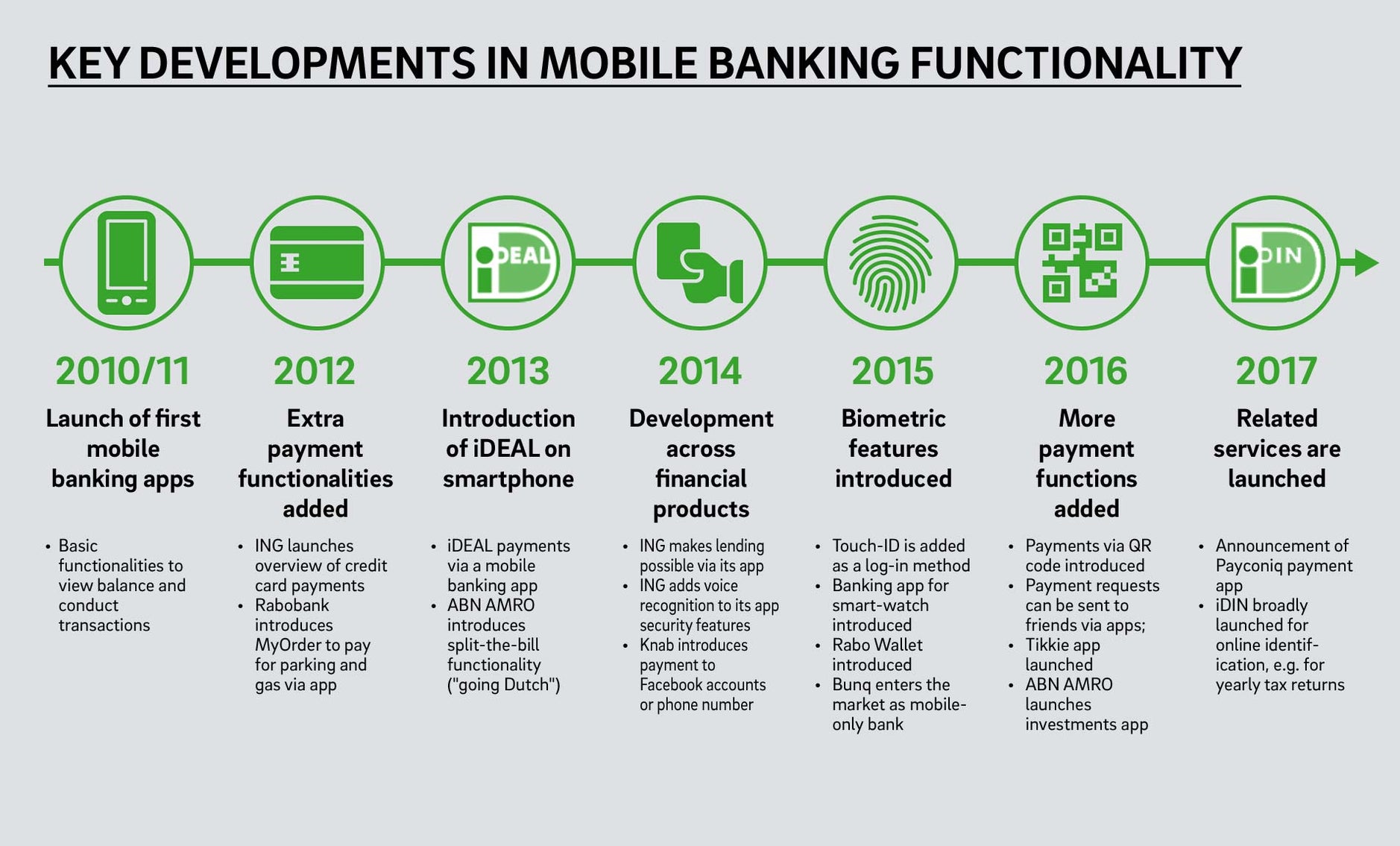
Mobile banking in the Netherlands is not only on the rise – it is becoming the preferred banking channel for retail banking customers. In our latest retail banking study, 80% of all respondents who use mobile banking use it at least once a week. Mobile banking owes this wide-scale adoption to the rise of e-commerce and banking apps that bring the day-to-day banking routine to smartphones, including the ability to easily make online payments. For many customers, apps have become the most important channel for interacting with banks – more important than the branch or internet banking. While this may not replace branches just yet – customers still prefer personal contact for more complex banking products, and branches provide necessary visibility – 50% of Dutch consumers expect the branch to become obsolete. It is safe to assume that a significant portion of retail banking customers would be fine with banking exclusively on their smartphones.