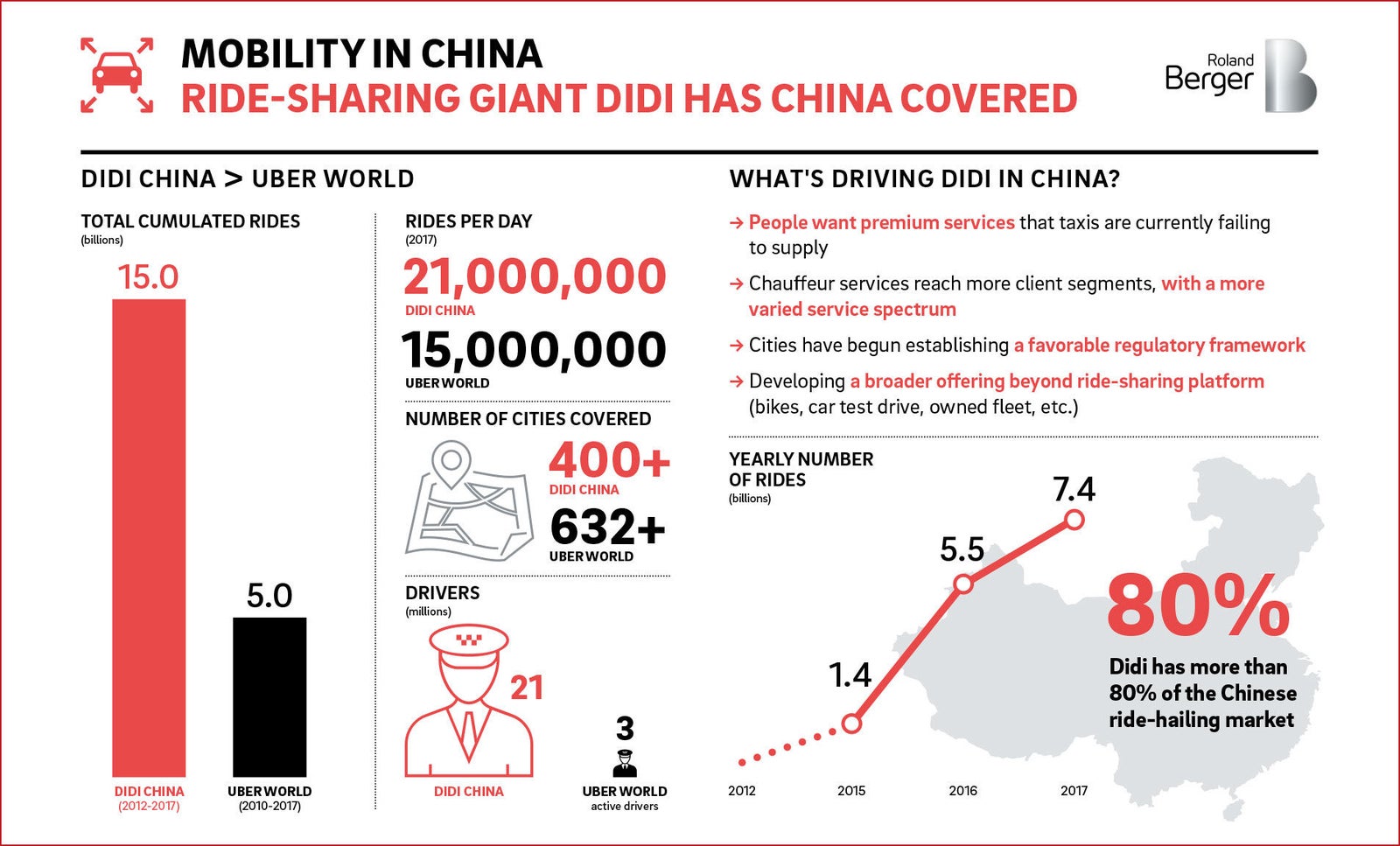
The global automotive industry is gradually shifting from a manufacturing focus to a more customer-oriented services approach. China is not only leading in new mobility options but has probably moved the furthest in phasing out traditional internal combustion engine (ICE) ownership. Motivated by serious pollution issues, the Chinese government has set aggressive targets on xEV, and more generally on what it calls "New Energy Vehicles" (NEV), with further supportive policies expected. This - combined with the fact that owning a car was never as common as in Western countries – has turned China into an exciting playing field for new mobility solutions, whether from pure players (such as Didi) or traditional OEMs.
Ride-hailing platforms expand their scope of business
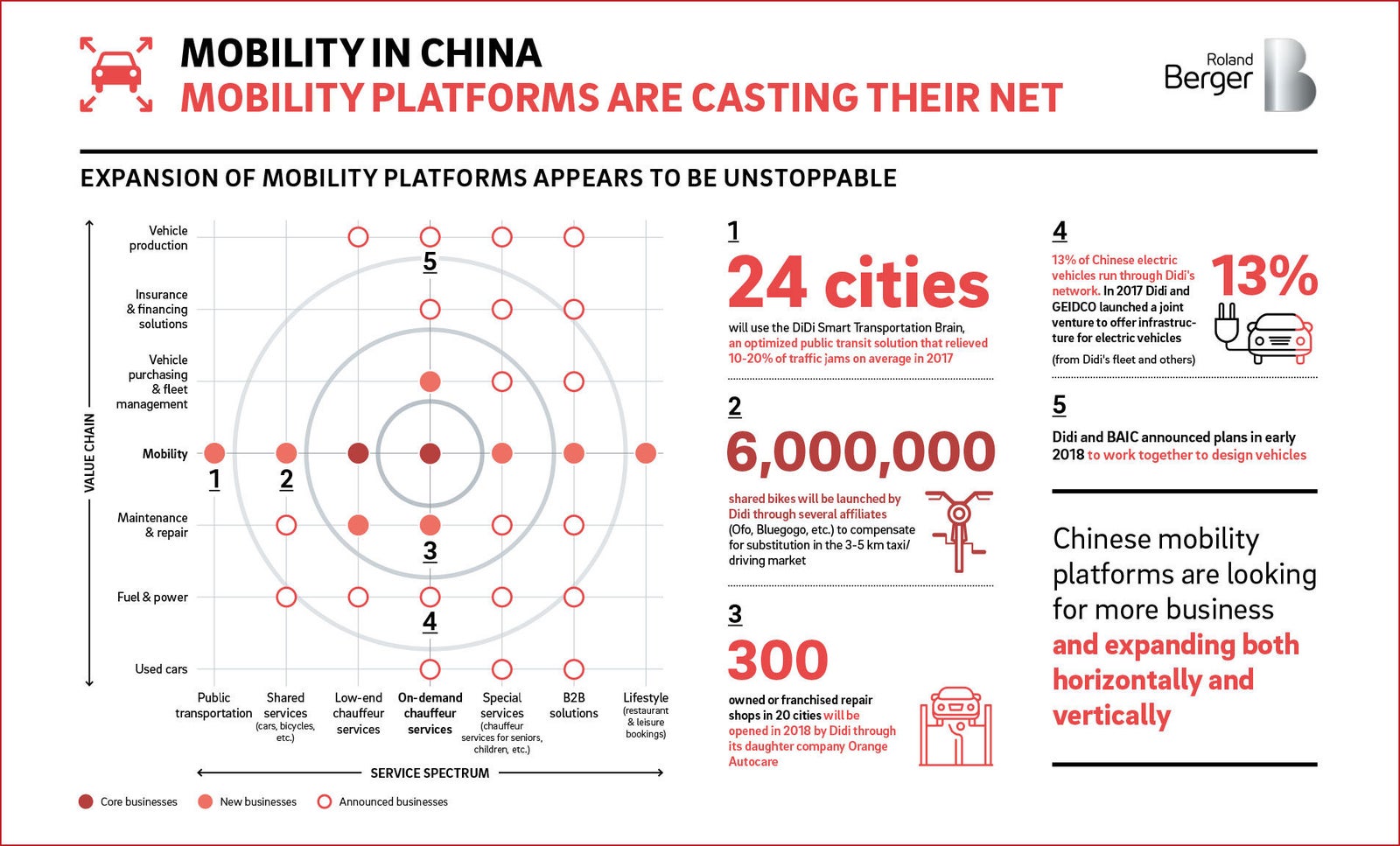
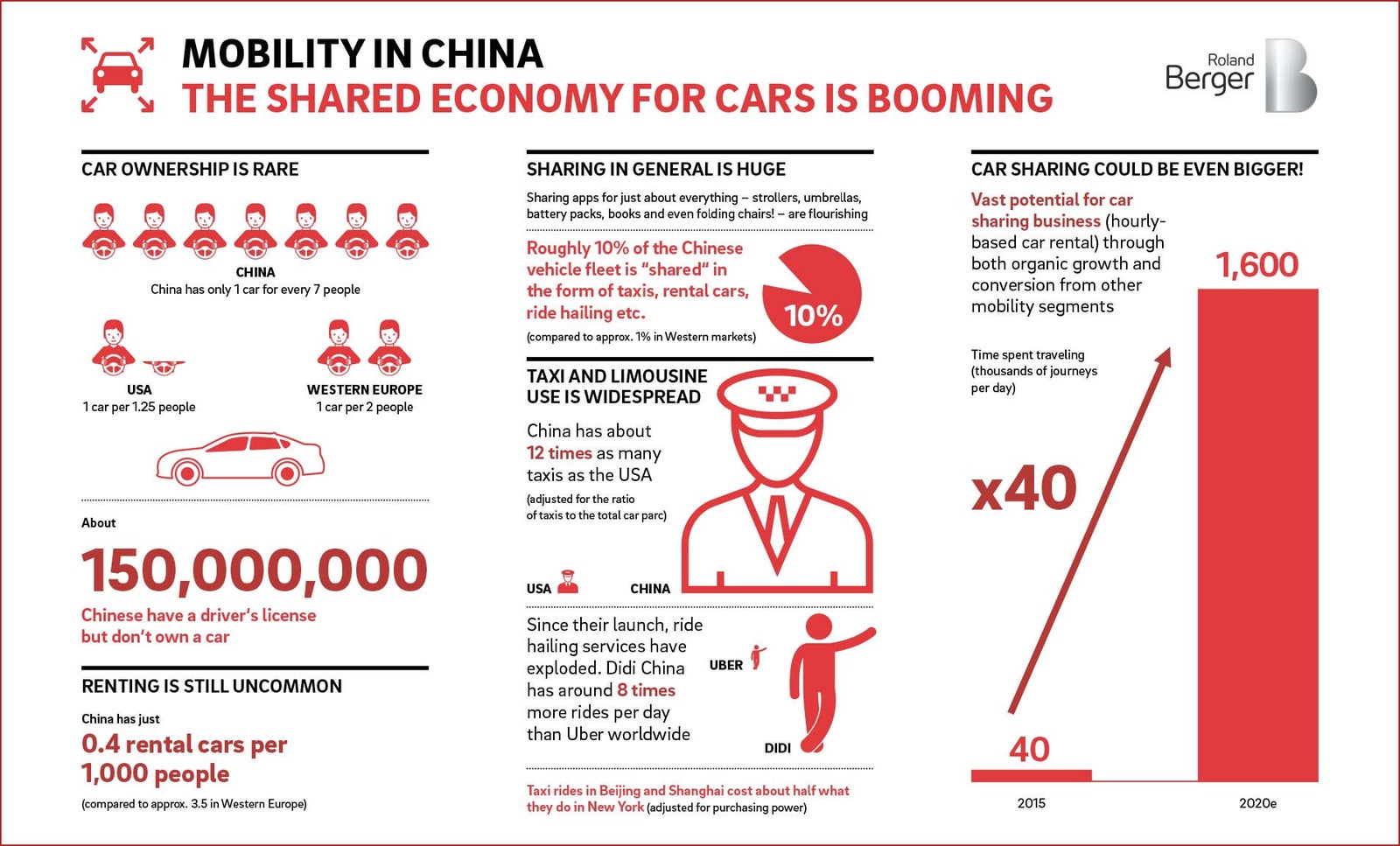
As China's cities continue to face rapid population growth, the demand for transport solutions ever increases. Car-sharing is booming around the country, with annual growth rates of 45 percent predicted until 2025. But Chinese ride-hailing companies are branching out beyond their traditional business and rapidly expanding up the value chain: no longer do they just provide a platform that connects clients with available cars, they now offer maintenance, have installed their charging stations, are selling services such as traffic management and optimization to city councils and are even thinking of building their own cars.