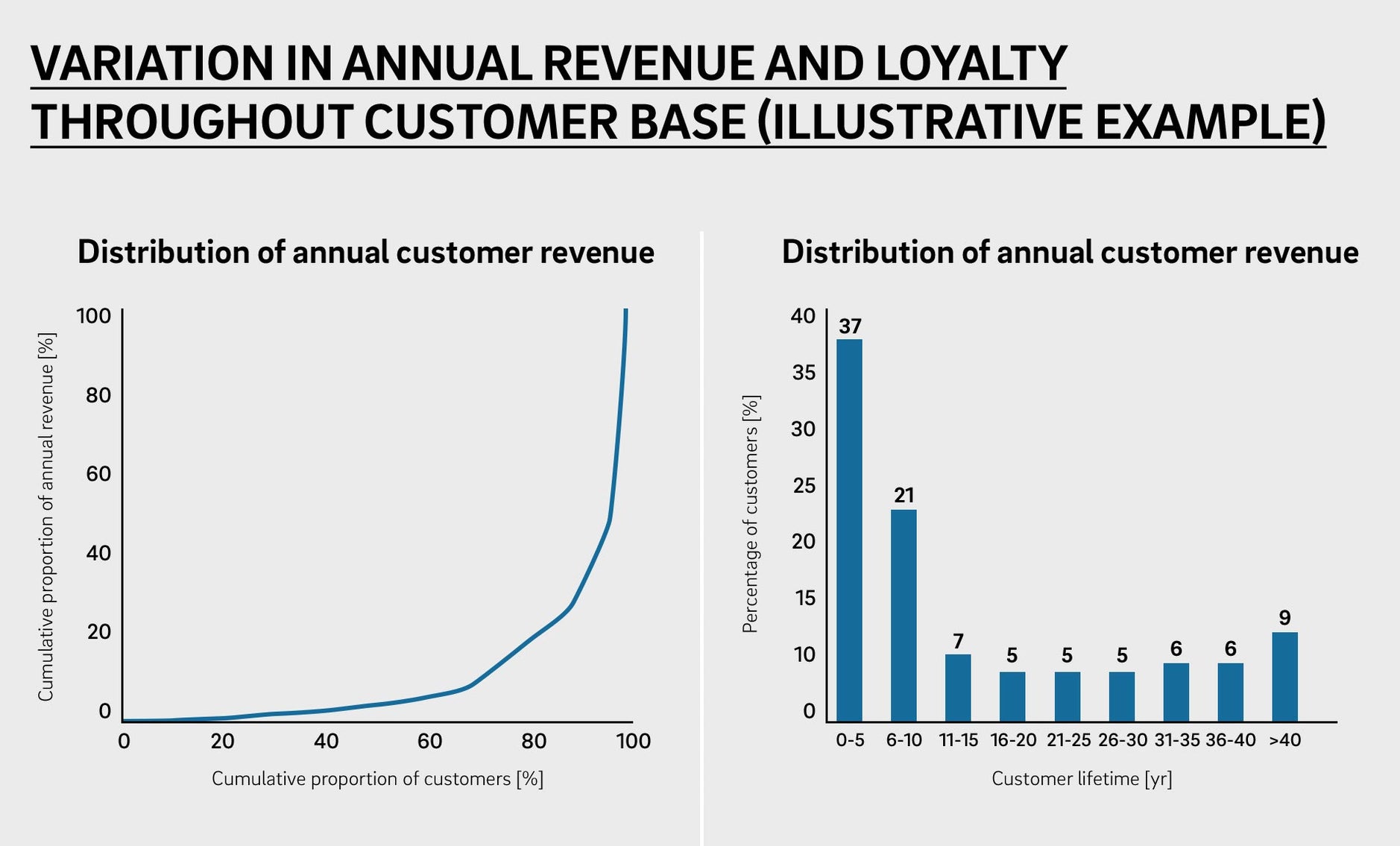
Figure A shows a typical distribution of revenue and loyalty across a customer base. The contrast between short-term value and long-term loyalty illustrates the heterogeneous nature in all customer bases, meaning that not all customers themselves are equally valuable to a firm. Even in customer bases that seemed homogeneous (educated women of 25-35 years old), we saw a high heterogeneity. But many companies ignore the differences, oversimplify their base, and use a one-size-fits-all formula (e.g. the NPS) that not only overlooks differences between customers, but also between business models.
A metric that truly supports decision-making
Direct contact with a customer service agent, a signed football when opening a bank account, or even discounts to the movies – these are just a few examples of ways companies may try to charm their customers. However, rarely do companies track the value of their customers before and after such campaigns. ROI of marketing spend is calculated superficially and only after the following financial quarter. Models are rarely dynamic or allow for attribution variables to be evaluated afterwards and future cash flows to be properly taken into account. This kind of shallow approach to the customer base leads to ill-informed decision-making and ultimately to missed opportunities.
To optimize resources across their customer base, companies should dare to step into the deep end of more sophisticated metrics. Metrics that help companies understand where they can create and extract customer value. In marketing campaigns, for example, there is considerable untapped potential in:
- Reallocating cross-channel spend for effective customer acquisition
- Prioritizing efforts to engage certain customer segments over others
- Pivoting customer service efforts toward valuable customers most likely to churn
- Focusing product development efforts to appeal to tomorrow’s best customers
Customer lifetime value
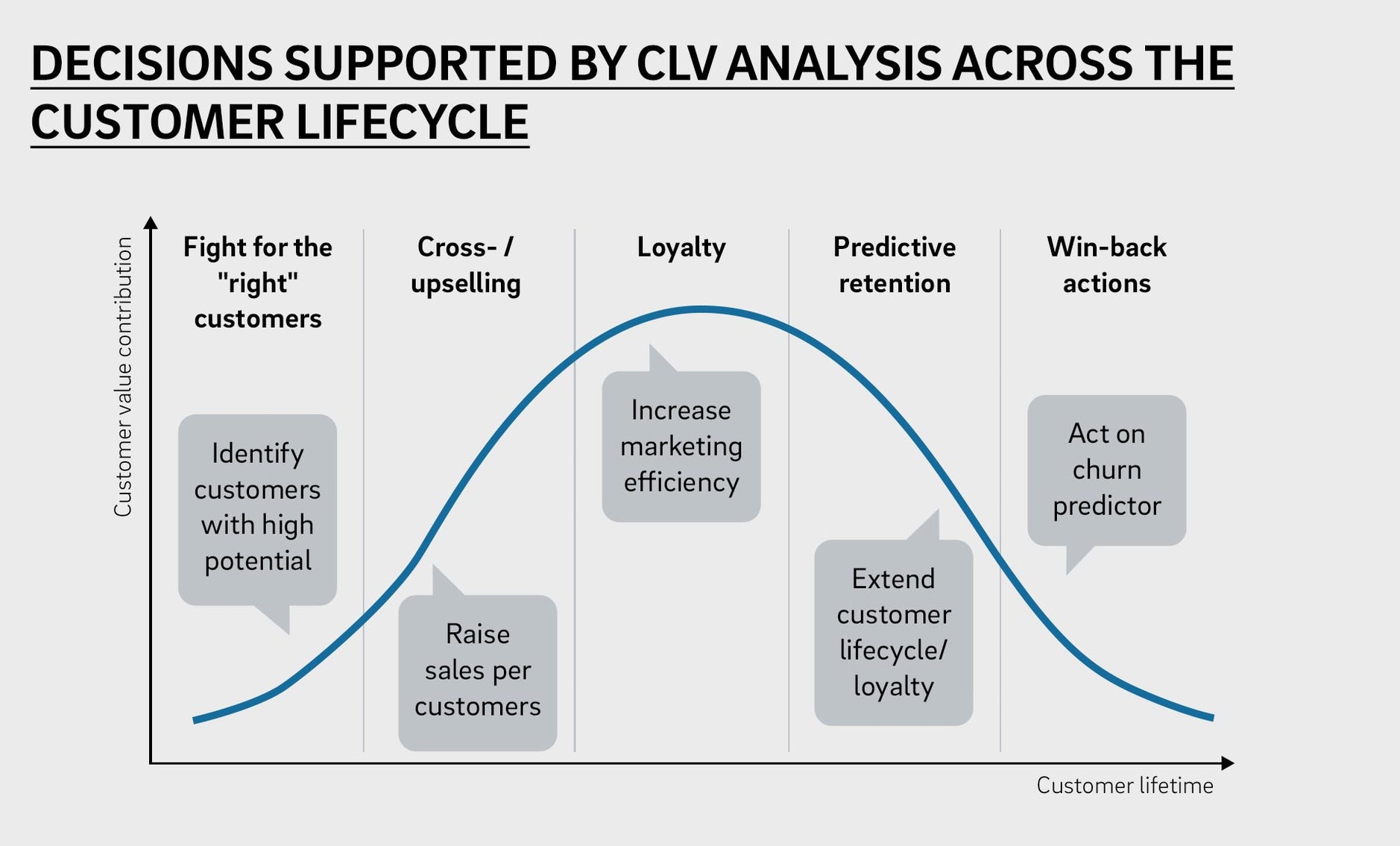
Customer lifetime value (CLV) is the foundation of a deeper approach to and understanding of your customers. CLV predicts profits over your entire relationship with a particular customer, from the moment they become a target to the moment they leave. Figure B illustrates a few of the decisions that managers may face along the course of a customer's typical lifecycle, where knowing their CLV could greatly support retention efforts.