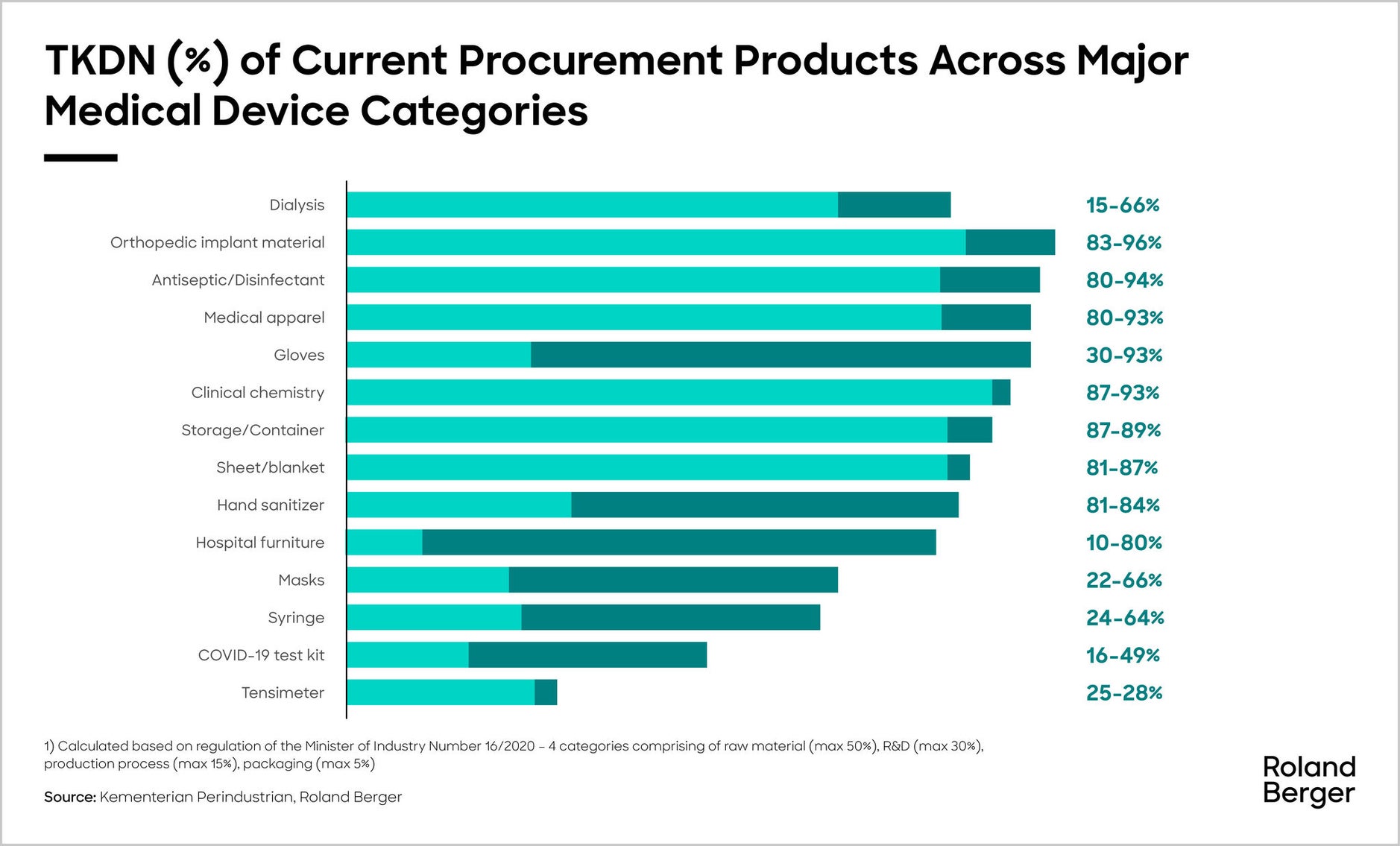
That distinction matters in a market where public-sector purchasing accounts for approximately 64% of medical device demand. Procurement eligibility can therefore influence a manufacturer’s broader ability to establish a viable position in Indonesia, rather than simply determine access to one sales channel.
Localization ambitions determine the partner profile
Moving beyond assembly and packaging requires capabilities that a conventional distributor may not have. Manufacturers need to assess whether potential partners can provide production facilities, quality systems, supplier relationships, and, for higher localization targets, design or R&D capacity.
The operating model should follow the intended TKDN target. Local assembly and packaging may be an initial step, while local sourcing of components or materials can support higher scores. More ambitious targets may involve in-country design adaptation, compliance testing, or software development.
Timing and product focus shape the opportunity
Preparing local production takes time. Our analysis estimates that finding a suitable partner and reaching production readiness can take around two years.
Companies that delay beyond 2026 may have to wait until after 2030 for another meaningful opportunity to bring products to market locally.
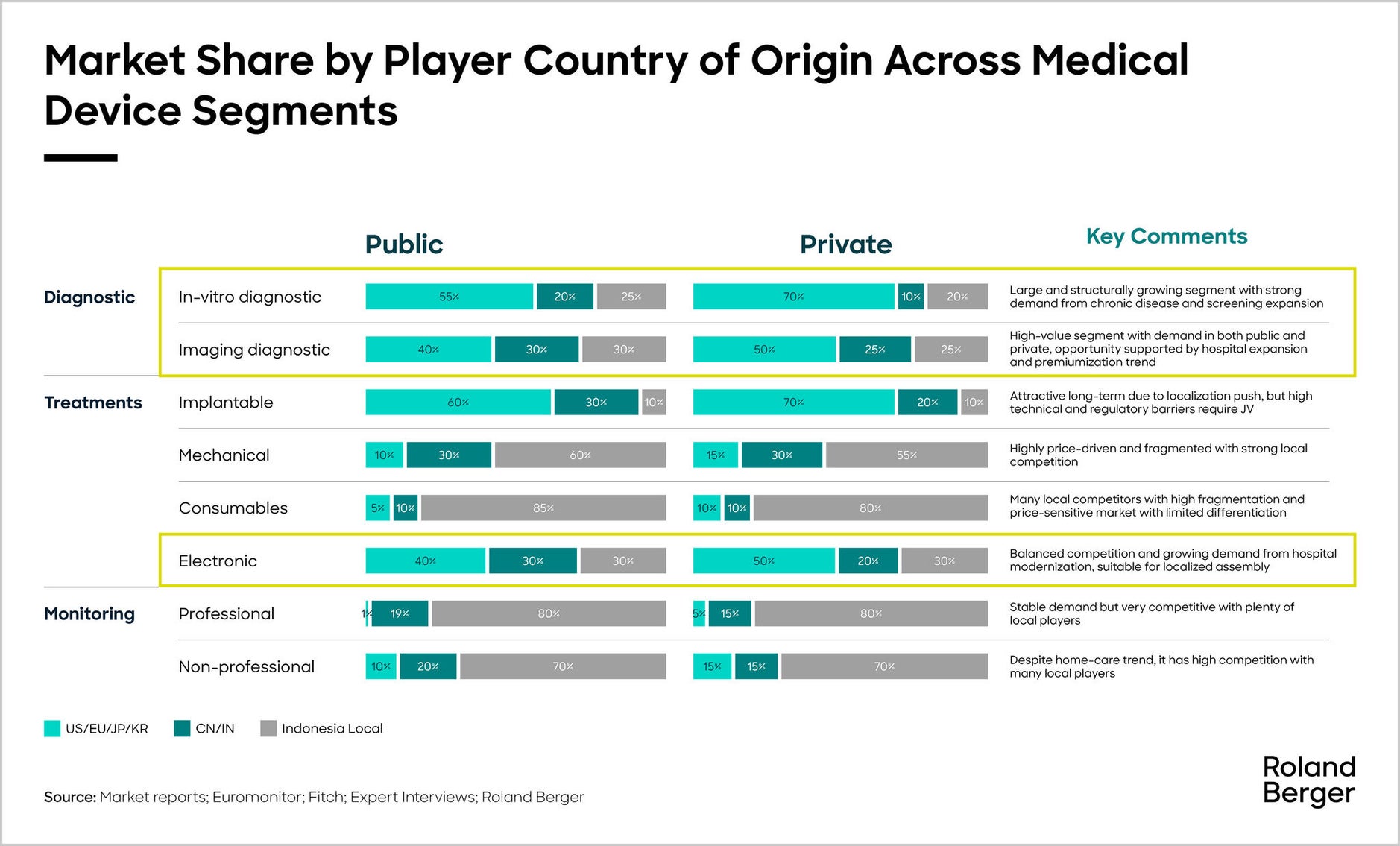
In-vitro diagnostics, imaging and electronic medical equipment offer potential entry points for new market participants through manufacturing partnerships. By contrast, some mechanical medical devices and consumables are already dominated by local manufacturers, leaving less room for new entrants.