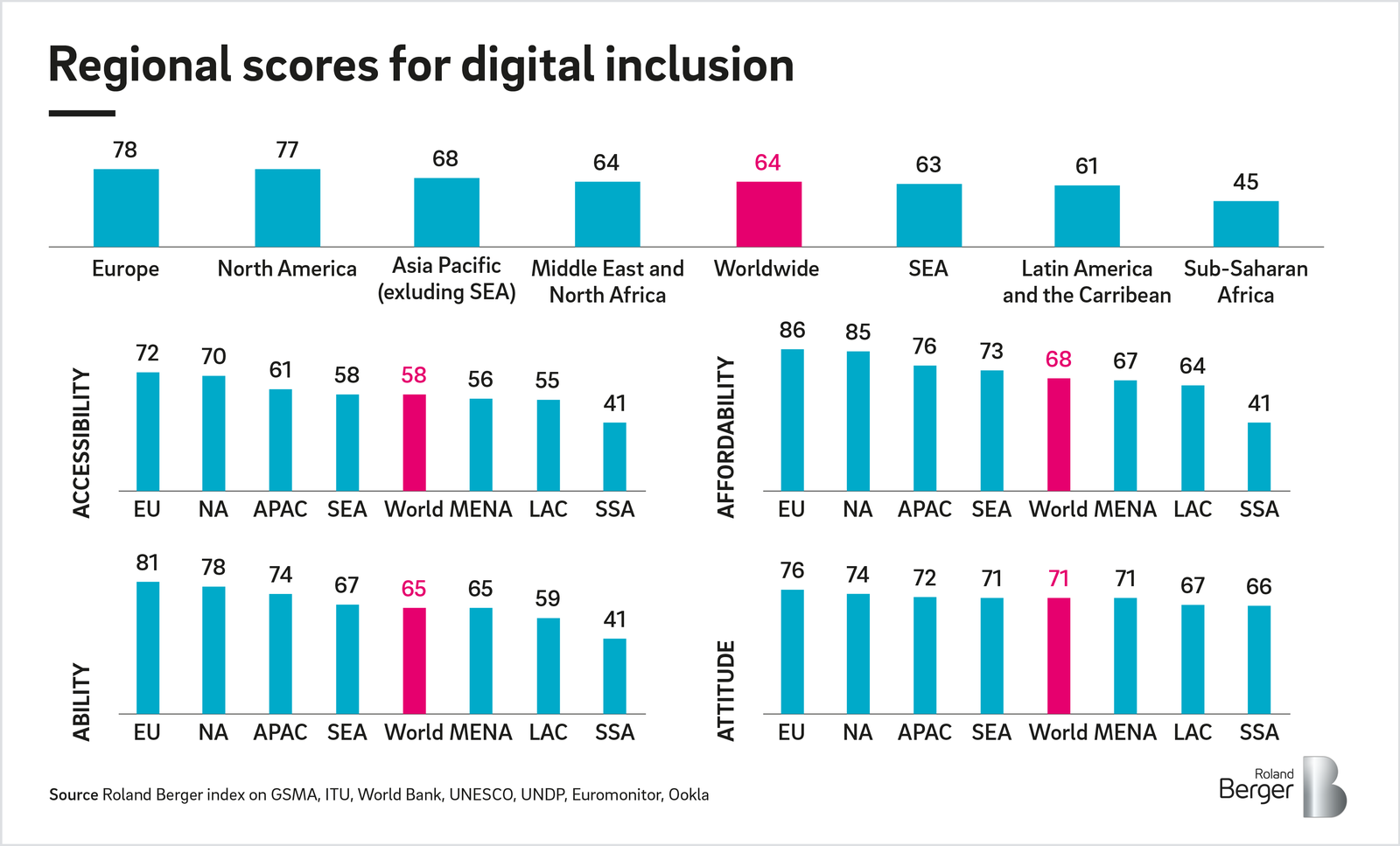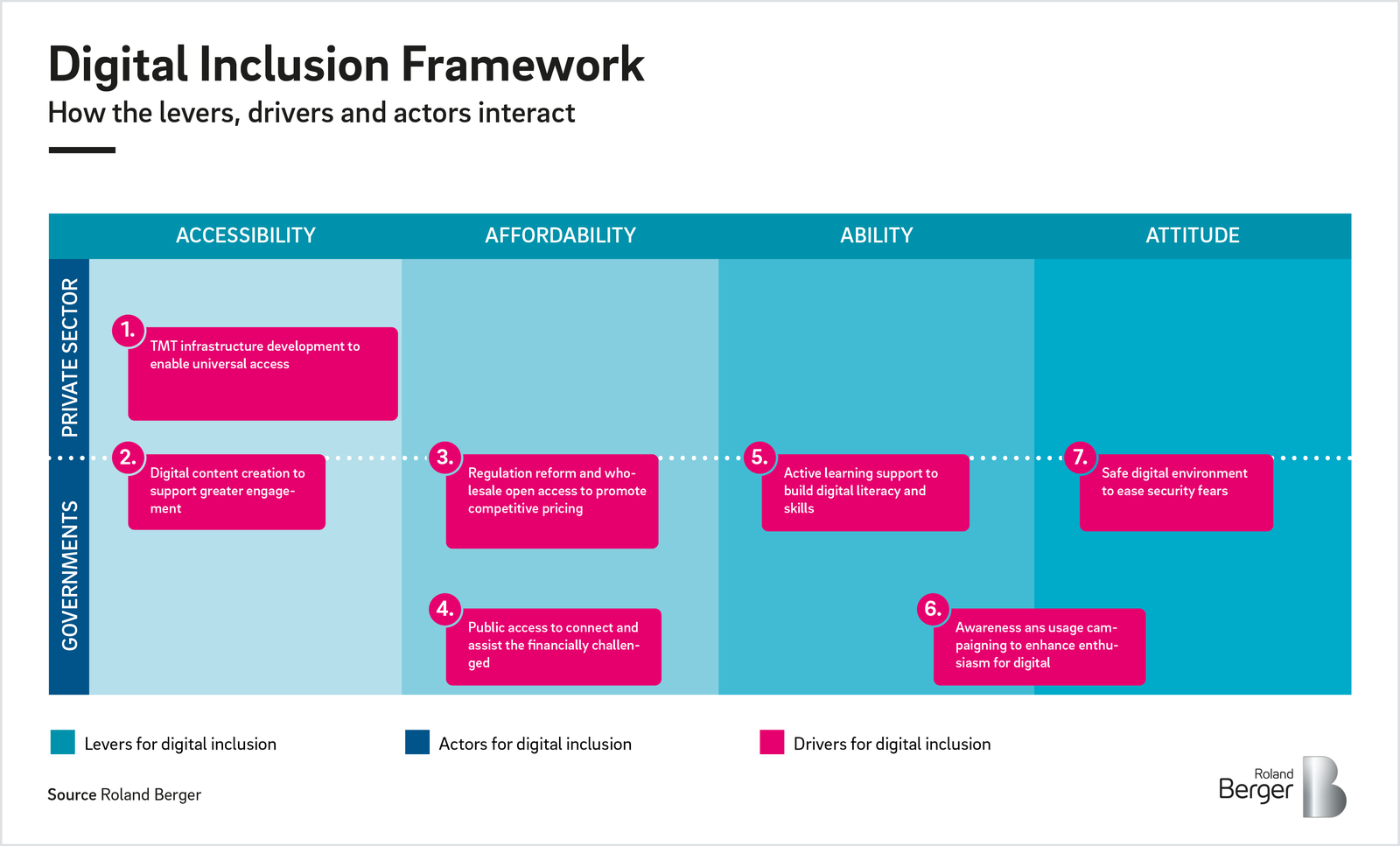

Digitalization has profoundly affected the dynamics of global industries, patterns of economic development, and the functioning of people’s daily lives. As the use of Internet and information communications technology (ICT) expands across the globe and the digital sector outpaces growth in other sectors, digital technology has asserted itself a crucial component of successful participation in societal and economic activities. Roland Berger’s latest study, “Bridging the digital divide”, reveals that if countries do not address digital inclusion, economic growth could be reduced, and social cohesion could be weakened.
Digital inclusion is the empowerment of individuals and societies to effectively use ICT, enabling them to contribute to and benefit from today's digitalized economies and societies. It is crucial to create an equitable and sustainable digital society, and to facilitate both personal income growth and macro-economic development. However, according to a UN report in October 2019 , nearly half of the world's population remains offline and excluded from the benefits of digitalization. This growing "digital divide" negatively affects socio-economically disadvantaged individuals and groups, such as low-income households, rural communities, the elderly, the illiterate, persons with disabilities, as well as micro, small and medium enterprises (MSMEs).