Fashion companies are under pressure, with sales declining in key markets and prices being pushed down by low-price fashion labels. Shoppers are able to compare prices for a wide range of brands instantly with the help of online search engines and comparison sites, putting further downward pressure on prices. Discount brands have gained massively in popularity in recent years and online competitors have carved out a large share of the market. That leaves traditional players – especially brands that lack strong brand equity – in an unenviable position.
Big Data can prove a lifeline for such companies. Savvy players can use it in a wide range of areas in fashion retail. It can form the foundation for successful lifecycle management, keeping your brand image fresh while avoiding detrimental price erosion. It can revolutionize inventory planning, making your supply chain agile and helping you avoid the stock-outs that so disappoint customers. And it can inform your approach to pricing and discounts, helping determine the right pricing level and avoiding a downward spiral of markdowns.
Of course, collecting, processing and interpreting massive amounts of unstructured data isn't easy. Traditional companies would be well advised to build alliances with others in the industry, sharing their technology and cooperating in order to achieve scale. With this in mind, Roland Berger has formed a partnership with fashion analytics company Retviews, winner of the Best FashionTech Startup 2019 award. Retviews crawls the Net gathering millions of data points daily from more than 2,000 fashion retail websites in different countries. Roland Berger then uses this data as a basis for further analysis to derive insights and adjust organizational structures and processes to boost sales and margins.
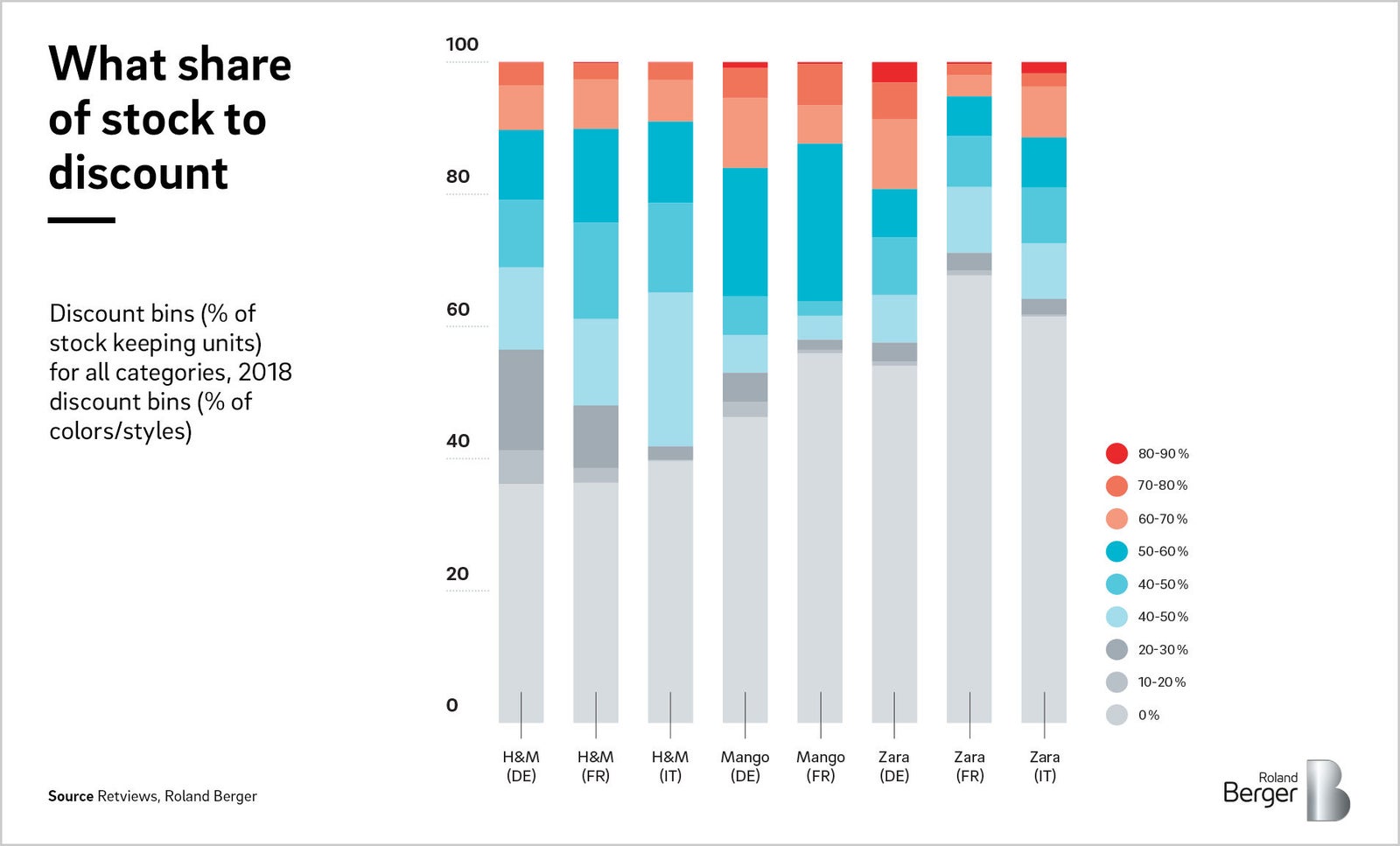
Let's take an example. One significant area where Big Data can benefit fashion retailing is pricing. Driven by competitive trends, the length of time that items are offered at full price appears to be growing ever shorter. The result? A downward price spiral in the fight for market share. Notably, the data reveals that some players drive their business with almost half as many full-price references as their peers.