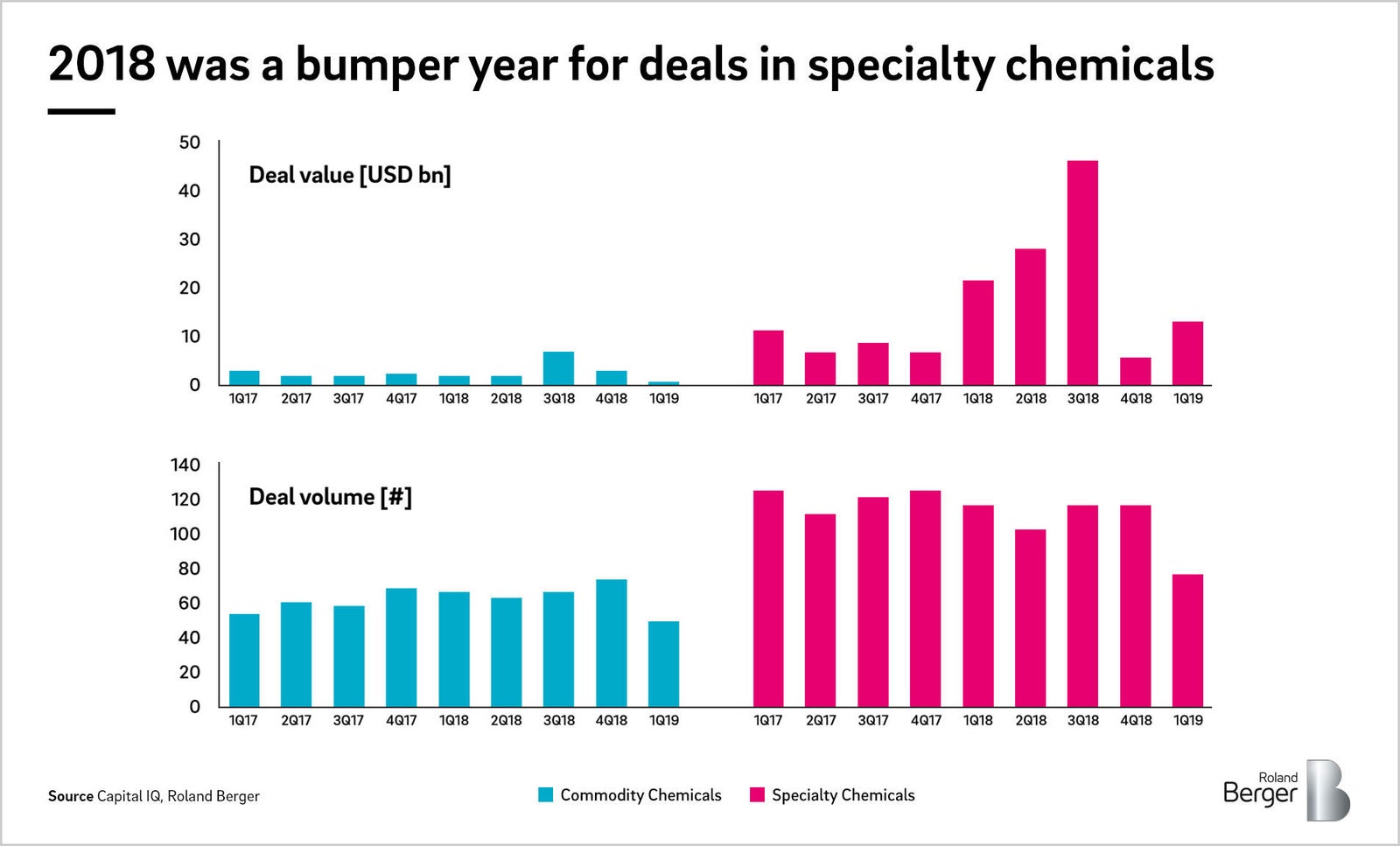



Increasing advances in technology and ever more sophisticated product requirements are prompting more and more companies from the European chemicals sector to switch their focus to specialties. The latest figures show that this industry segment is not only growing faster, but is also significantly more profitable than areas like basic chemicals. The large number of M&As involving specialty chemicals businesses in recent months shows just what a state of upheaval the industry finds itself in. Yet the real consolidation has only just begun.
In Europe, "specialty chemicals" seems like something of a magic word right now: A focus on chemicals for high-tech applications apparently promises to solve almost all of the industry's woes, caused by markets becoming increasingly high-tech, product demands rising and companies being forced to comply with increasingly stringent regulatory requirements. The situation is aggravated by the lack of a raw material base: While North America has the benefit of shale gas and the Middle East has its large oil and gas deposits, Europe has little to offer in the way of natural resources.
Some time ago, companies began to adjust their portfolios against this backdrop, with the scale of the restructuring reaching a new dimension over the past year. As a result, Europe's specialty chemical industry has become a whole lot more specialized.
A dynamic sector, specialty chemicals is growing faster than most
With an annual growth rate of 4.2 percent, the global chemical and pharmaceutical industry has expanded at an extremely dynamic pace, growing far faster than other industries over the past five years (global GDP: +2.7 percent). Europe is the world's second-largest chemicals market after China (measured in 2017 revenues). In Europe, however, average production over the past five years has grown by just 2.6 percent annually. Specialty chemicals makes up 41 percent of Europe's chemicals market.
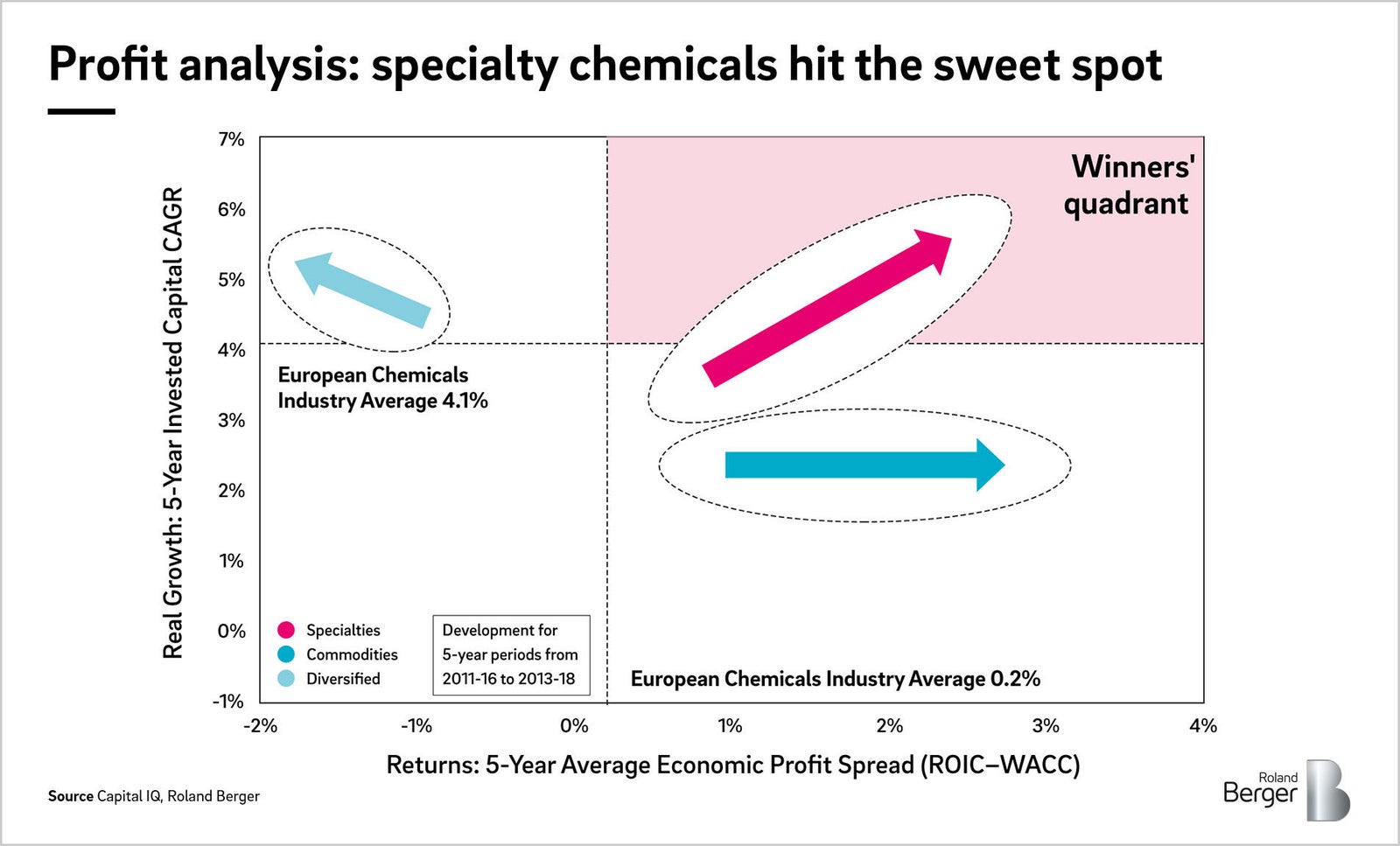
As our analysis (see fig. 1) shows, companies in the specialty chemicals sector have been particularly successful in recent years, making large gains in terms of both growth and profitability. They have successfully moved onto a different growth path to commodities, where business may have become more profitable but growth has been severely lacking. The analysis also shows that chemical companies active in both specialties and commodities perform much worse than others and recently saw a further fall in profitability.