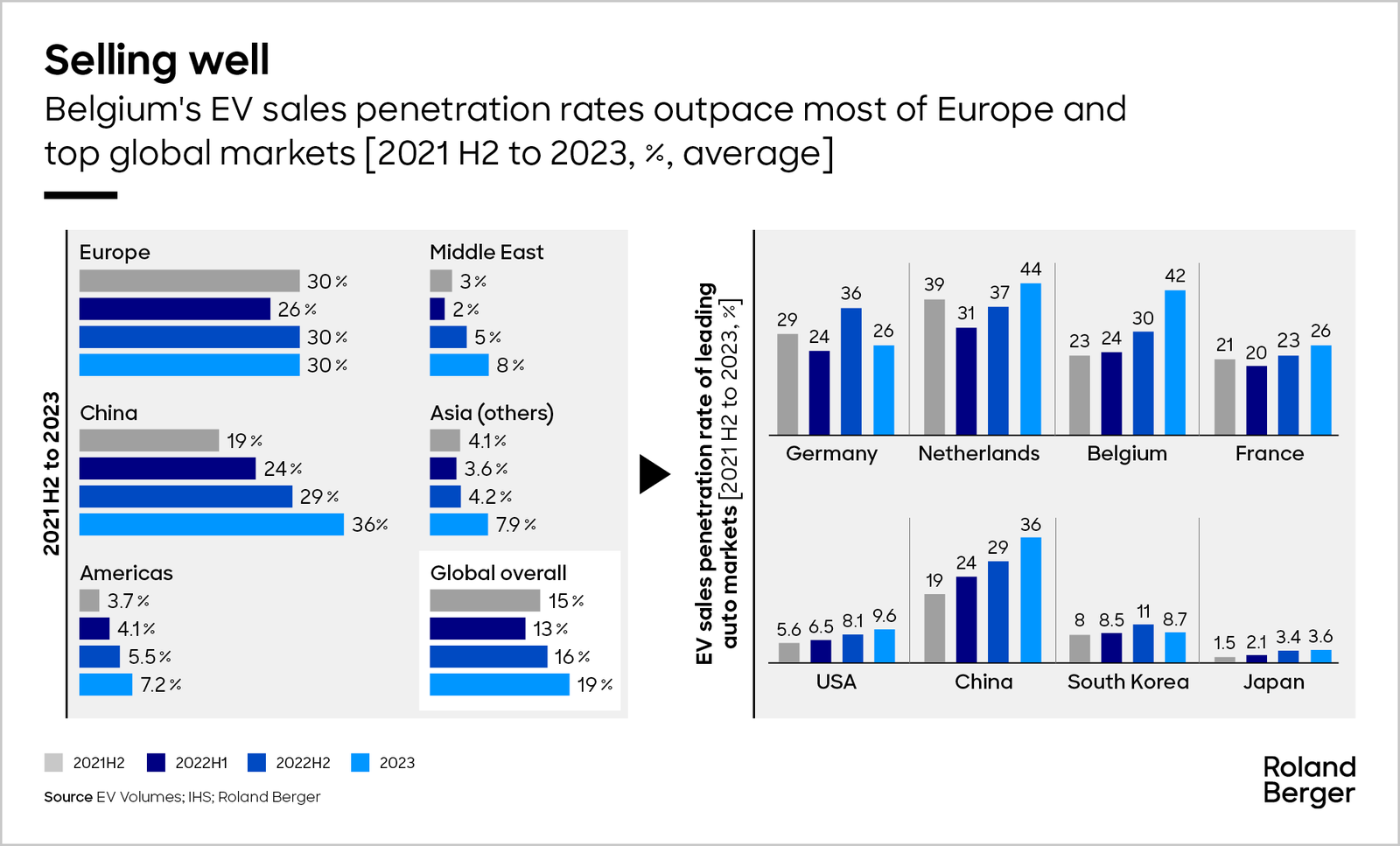
Growth rates are high, with the total number of EVs almost doubling since the end of 2022. This is strongly driven by the corporate leasing segment, which accounts for around 40% of all new car sales. More than three quarters of registered EVs in Belgium are now company cars. By 2027, only EVs will be fully tax deductible, so we expect corporate fleets to be more than 65% electric by then.
The private market, however, has not enjoyed the same success. Despite government incentives and subsidies, EVs are still seen as expensive. This is becoming a glaring issue, as there is still a lack of private demand for second-hand EVs when leases expire on company cars. Without a strong second-hand market, corporate leasing prices for EVs are unsustainable. The arrival of cheaper, often Asian, EVs could be a game changer.
Meanwhile, the number of electric light- and medium-duty utility vehicles is rising as more companies make the switch. The speed of adoption will depend on numerous factors. EVs are typically heavier than their ICE counterparts, for instance, which may impede access to city centers or require different driving qualifications. Charging infrastructure is also crucial. To be financially sustainable, the high investment cost in EVs and charging infrastructure must be (partially) offset – by capturing a green premium for the services, by optimizing delivery routes, or by improving the company’s energy management, for example.
The heavy-duty sector is also seeing an uptick in EV adoption, with public transport operators taking the lead. In the Flanders region, De Lijn has pledged to electrify its fleet of around 3,600 buses by 2035. Logistics companies and infrastructure operators are following suit, with large investments expected.