Government increases its attention on charging infrastructure
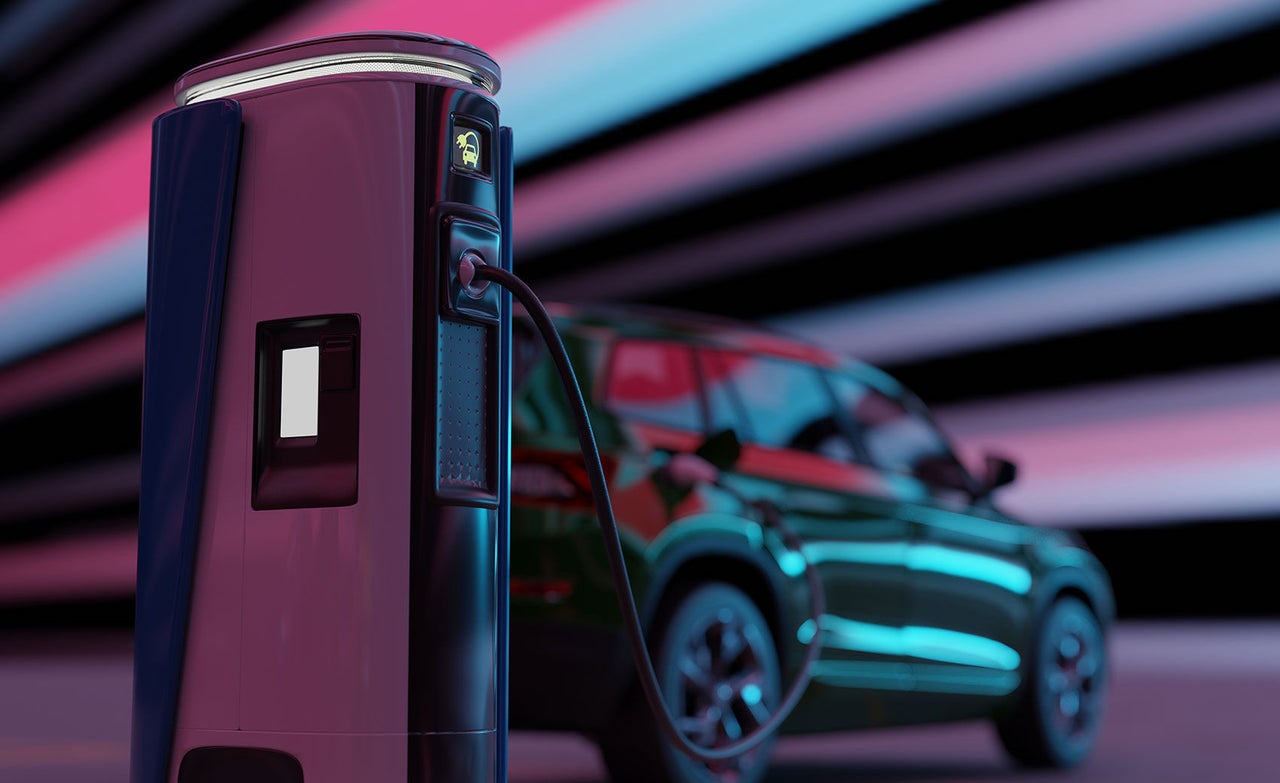
The Malaysian government is beginning to place greater emphasis on expanding the country's charging infrastructure, recognizing it as a critical factor in boosting EV adoption.
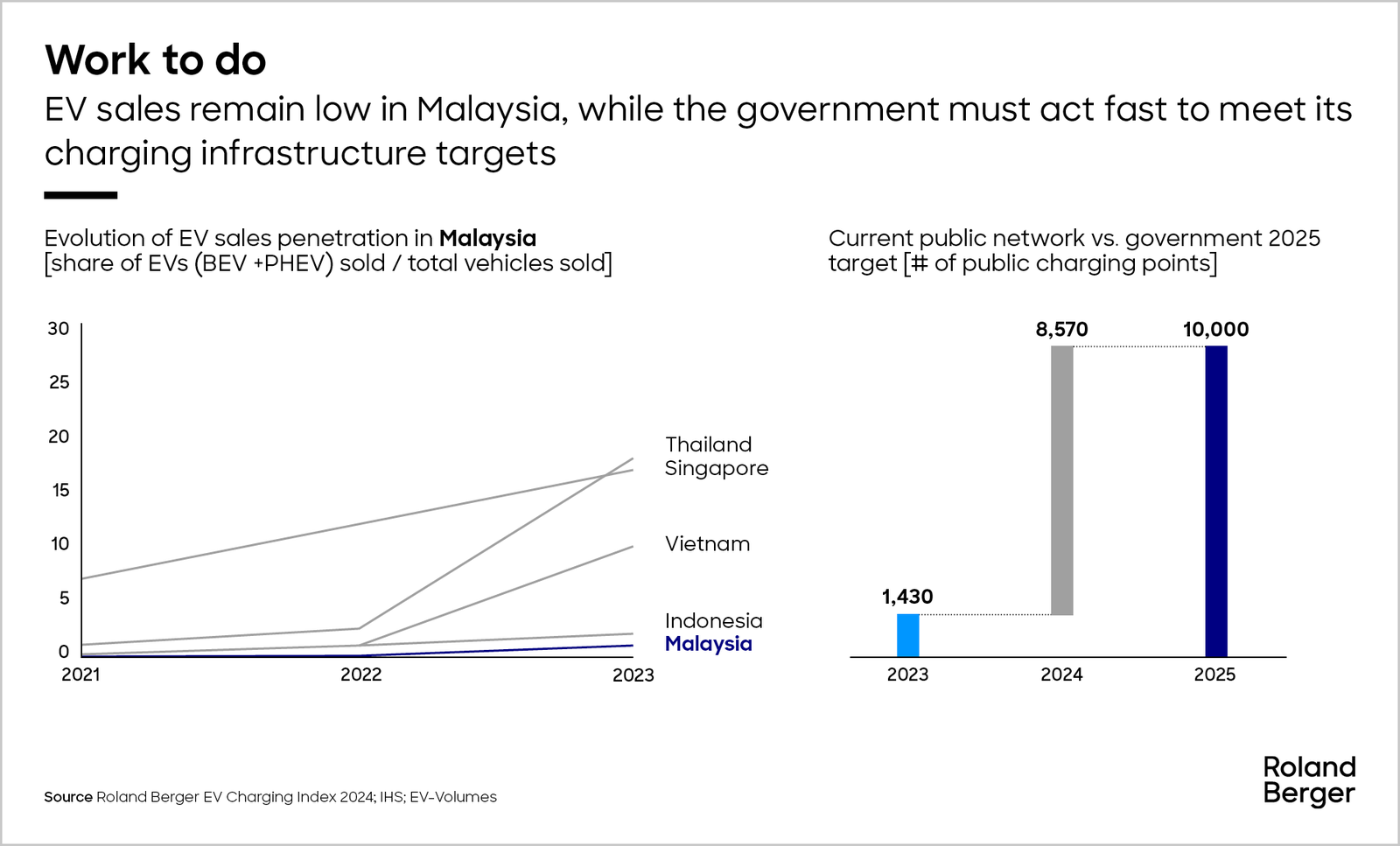
Under the Low Carbon Mobility Blueprint, Malaysia aims to have 10,000 public EV charge points by 2025, comprising 9,000 AC chargers and 1,000 DC fast chargers. As of October 2023, the country has around 1,430 EV chargers, including 1,156 AC and 274 DC units. This gives Malaysia a vehicle-to-public-charge-point ratio of 20.7, which is worse than the global average of 15.3, and well behind neighbors such as China (7.5) and Singapore (2.9).
Nevertheless, Malaysia has made some progress in developing its charging infrastructure, with the promise of more to come. The government aims to stimulate investment in EV charging equipment manufacturing by offering a 100% income tax exemption for EV charging equipment manufacturers over a 10-year period starting from 2023, along with a 100% investment tax allowance for five years. These initiatives underscore Malaysia's commitment to fostering a robust EV ecosystem and addressing infrastructure challenges to support broader EV adoption nationwide.
CPO market diversifying
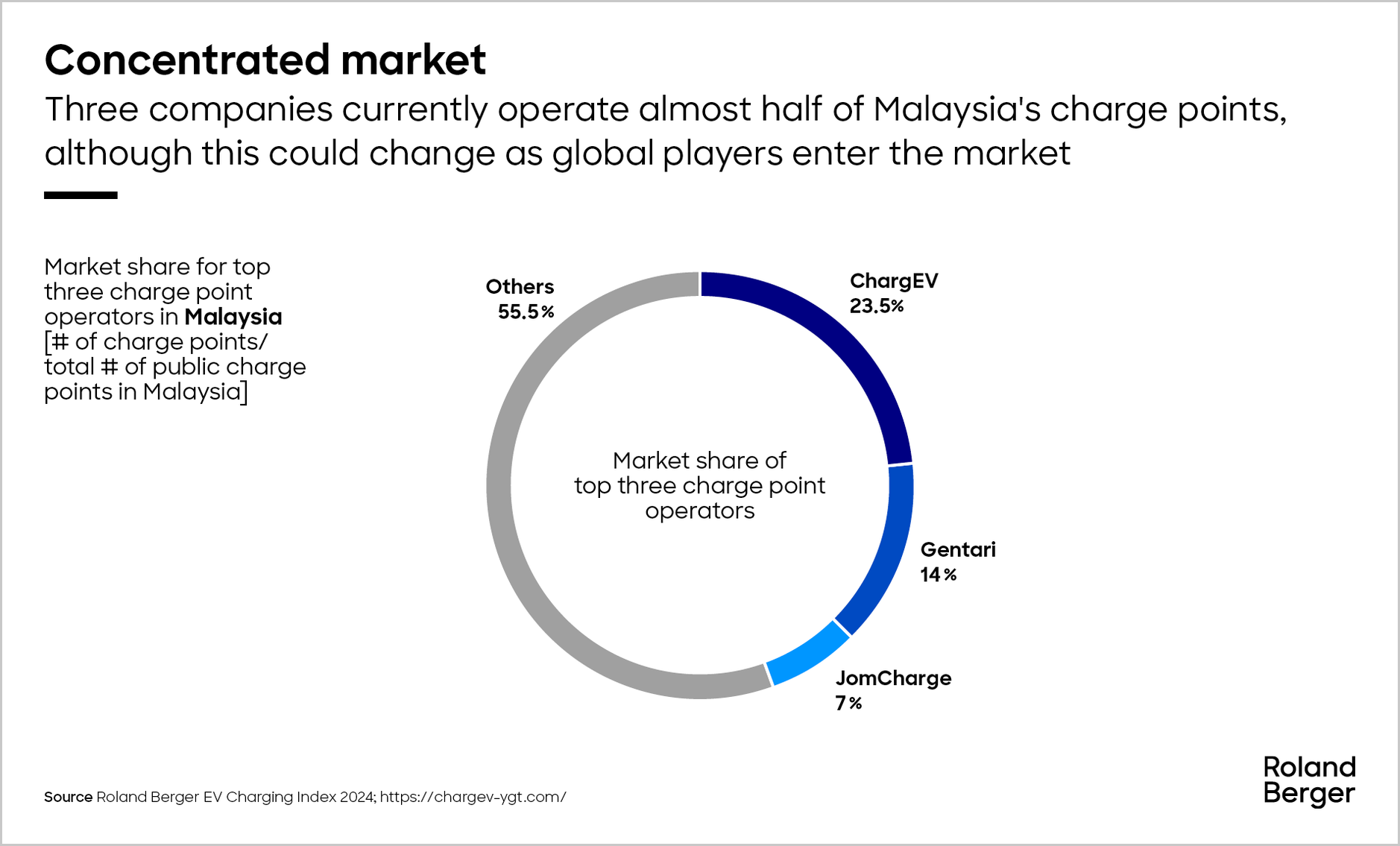
The charge point operator (CPO) market in Malaysia is quite concentrated, with ChargEV, Gentari, and JomCharge holding more than 40% of the market between them (in terms of number of charge points). These CPOs provide a range of services such as network planning, charging equipment installation, operation, and client-facing services.
Global players are also now entering the arena. Schneider Electric recently launched its first advanced DC Public EV charging hub in Petaling Jaya, signaling increased competition and innovation in Malaysia's EV charging market.
CPOs continue to shape the evolution of Malaysia's EV charging ecosystem, facilitating greater adoption of electric vehicles and supporting the country's journey towards sustainable transportation solutions.