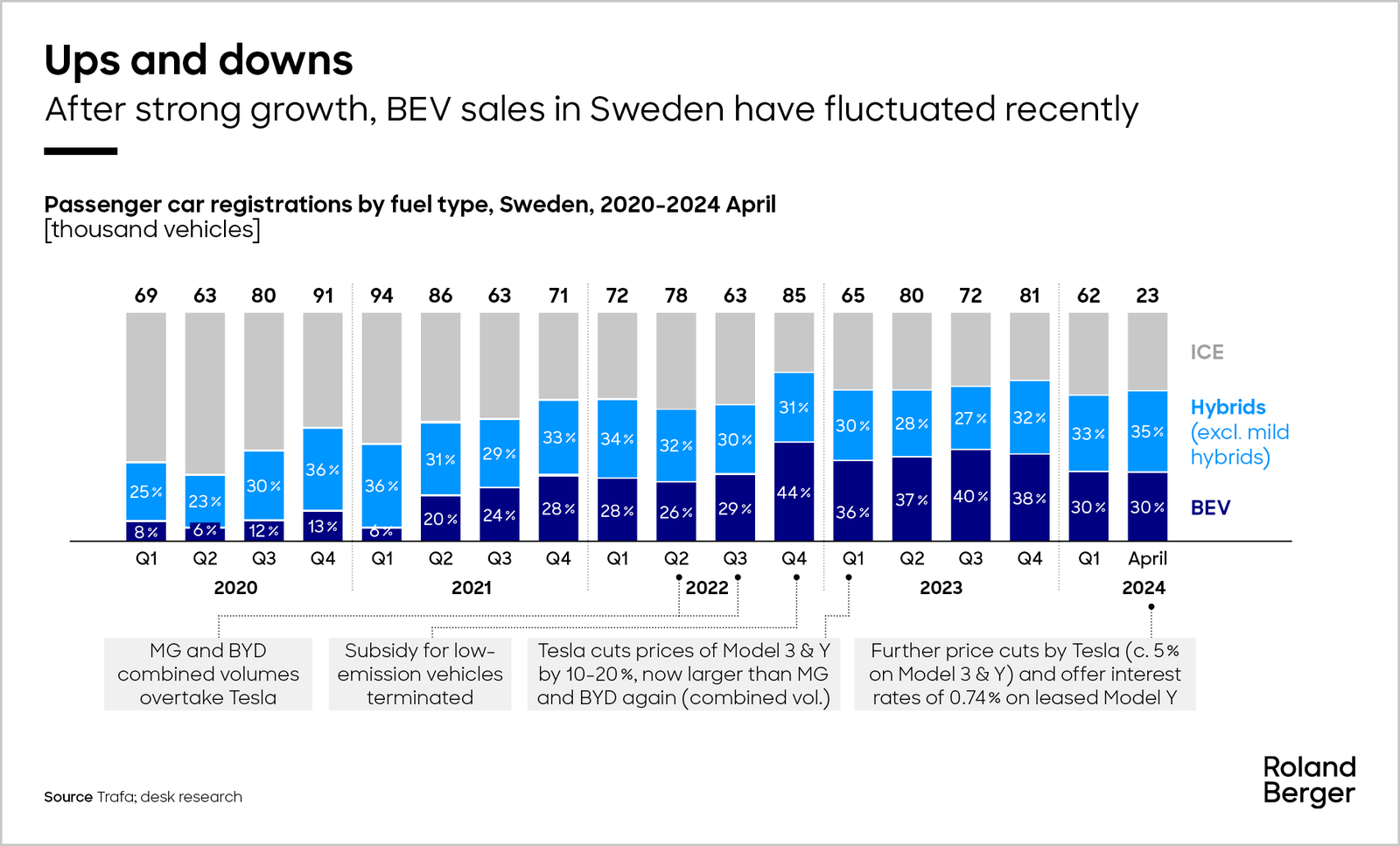
At the same time, Chinese OEMs such as MG and BYD began to increase their sales in Sweden thanks to lower-priced models. In response, Tesla, the market leader, has significantly lowered its prices for two consecutive years. This strategy has led to Tesla regaining its market share butcaused greater uncertainty among consumers as to how these price changes might affect the residual value of their vehicles.
Despite these developments, Sweden is committed to EV adoption, driven by its 2045 net-zero ambition, EU's planned ban on ICE vehicles sales by 2035 and its own planned ban by 2030. One of its main OEMs, Volvo, has already stopped selling “only ICE” vehicles in Sweden, for instance.
Public charging network must continue to grow
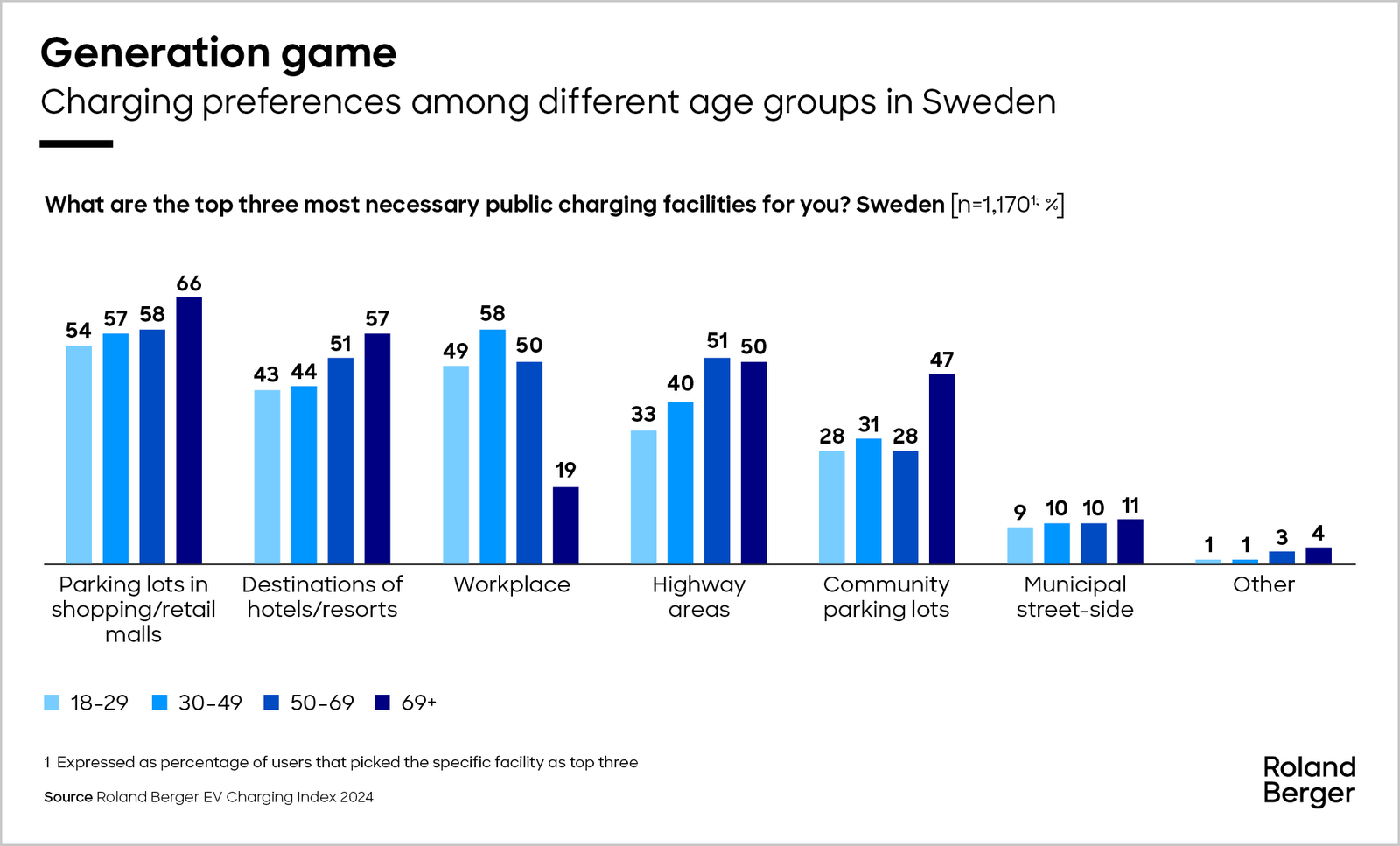
Sweden saw strong growth in its public charging infrastructure during 2023 (78%), although its overall public charging sufficiency remains just below average compared to other European countries. This is partly due to the large size of Sweden’s EV parc, which demonstrates strong demand for e-mobility and the need for continued charger rollout. The percentage of DC chargers in Sweden’s public charging network (9%) is well below average.
Private owners and organizations can still apply for a subsidy when installing a home or workplace charger, amounting to 50% of the costs, up to a maximum of SEK 15,000. There are also subsidies available to public charge point operators.