Charging infrastructure varies
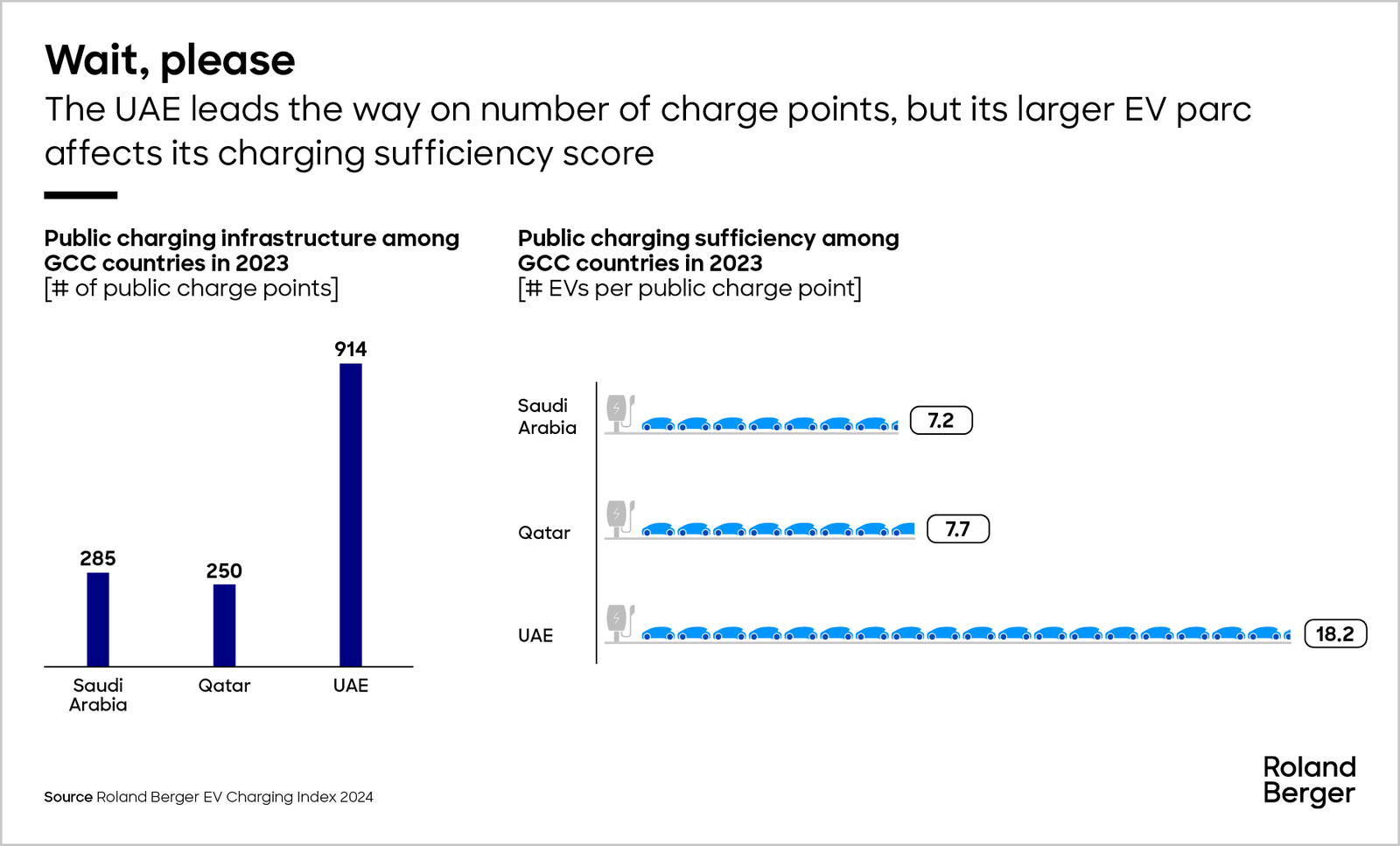
Charging sufficiency is mixed across the GCC states. Saudi Arabia and Qatar both have less than eight vehicles per public charge point, albeit with very low EV numbers. The UAE has the most public charge points but a much larger EV parc, giving it a worse charging sufficiency (18.2 EVs per public charge point).
There are growing efforts from both public and private stakeholders to expand charging infrastructure in the region. In the UAE, for instance, Abu Dhabi's national oil and energy companies have set up E2GO to establish charging stations and services for EV users. DEWA and Etihad WE have also launched EV charging initiatives. And the government's Global EV Market policy has set targets for charging infrastructure goals, among other things. We expect demand for fast public charging to be at around 23,000 charge points by 2030 in the UAE.
Meanwhile, in Saudi Arabia, EVIQ aims to set up 5,000 charging points across 1,000 strategic locations throughout the Kingdom by 2030. We expect demand for fast public charging to be at around 5,000 charge points by 2030 in Saudi Arabia.