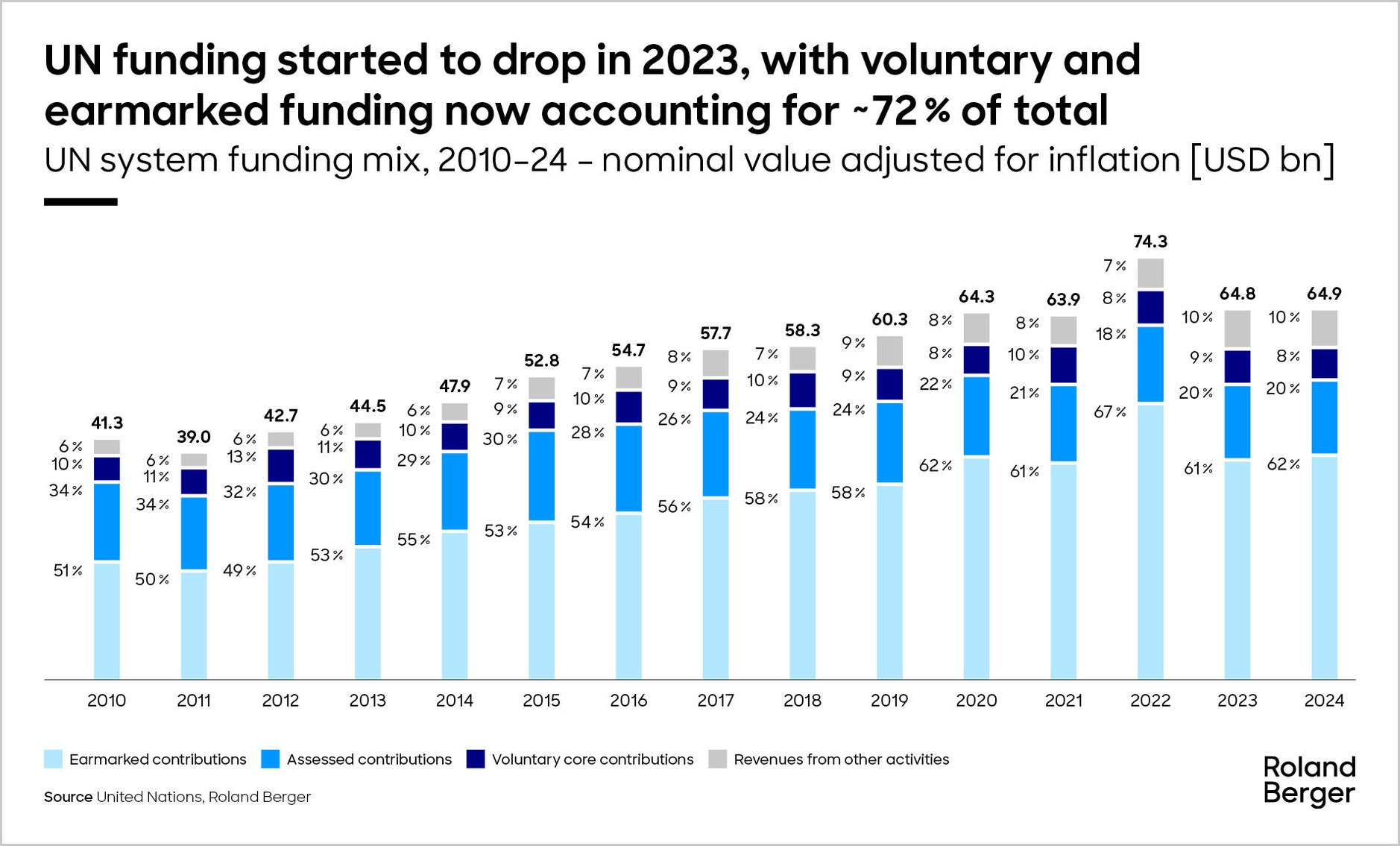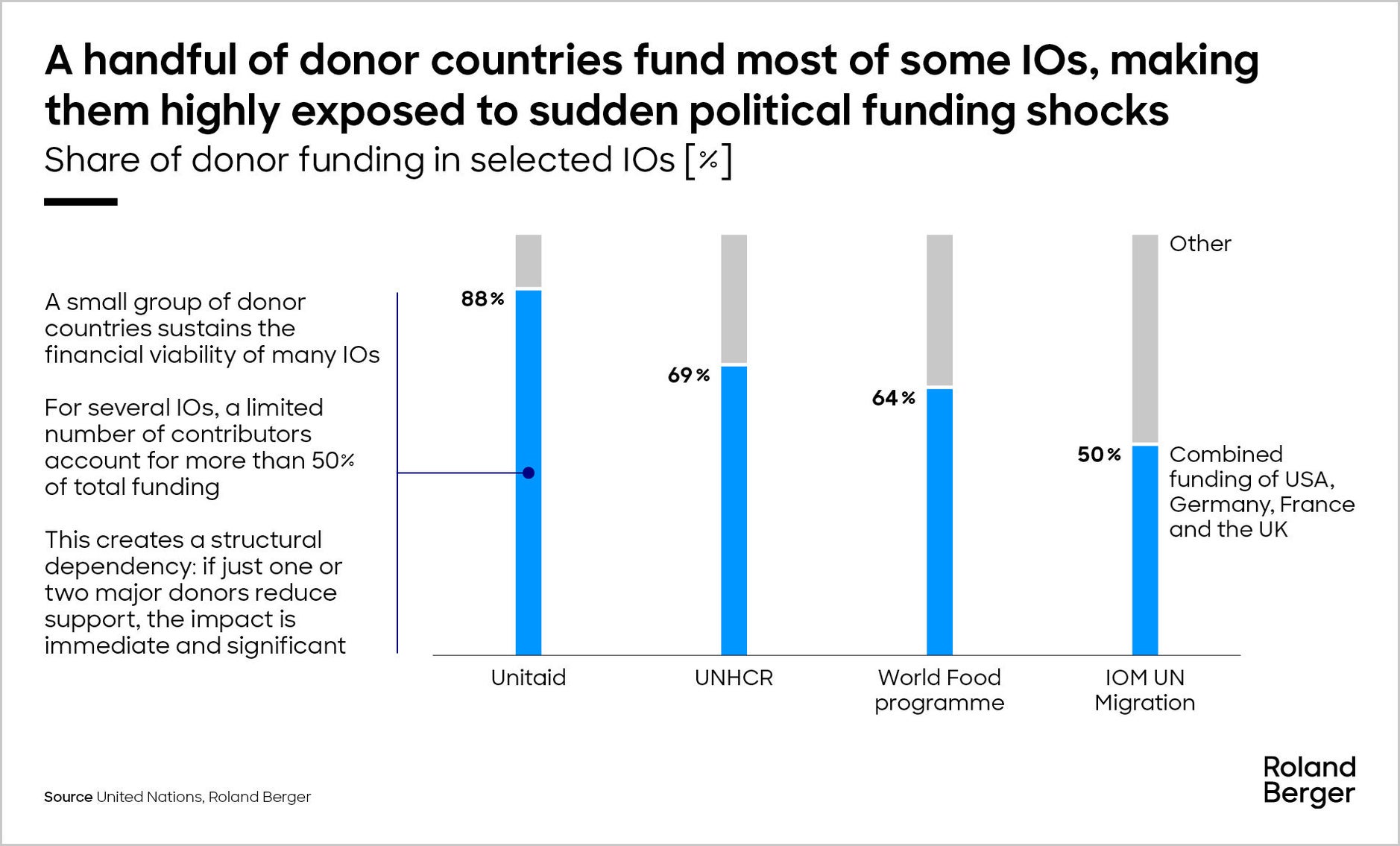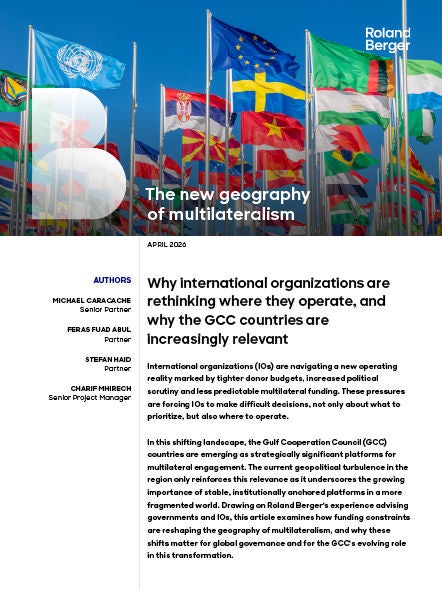
International organizations (IOs) are navigating a new operating
reality marked by tighter donor budgets, increased political
scrutiny and less predictable multilateral funding. These pressures
are forcing IOs to make difficult decisions, not only about what to
prioritize, but also where to operate.
In this shifting landscape, the Gulf Cooperation Council (GCC)
countries are emerging as strategically significant platforms for
multilateral engagement. The current geopolitical turbulence in the
region only reinforces this relevance as it underscores the growing
importance of stable, institutionally anchored platforms in a more
fragmented world. Drawing on Roland Berger's experience advising
governments and IOs, this article examines how funding constraints
are reshaping the geography of multilateralism, and why these
shifts matter for global governance and for the GCC's evolving role
in this transformation.