New partnerships between “old” and “new” economy
When it comes to industry action in ADR4, China again performed strongly. Several big players in China´s
automotive and technology sector
just recently agreed or strengthened partnerships: BMW was offered a seat on the board of Baidu´s autonomous driving platform; Daimler announced to deepen its partnership with Baidu and Audi, and Huawei signed a strategic cooperation on autonomous and connected technologies, just to mention a few.
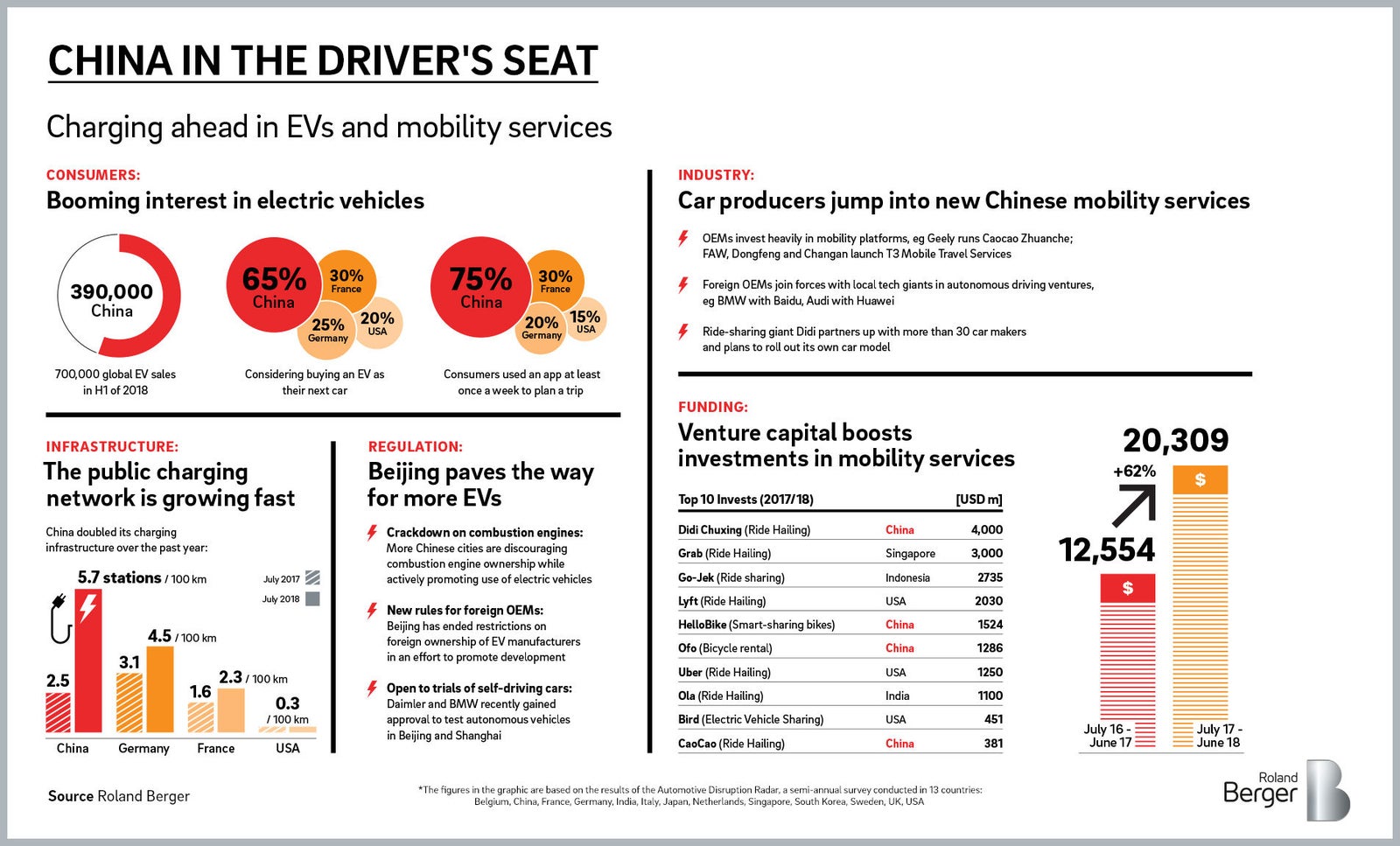
ADR4 also shows that the last 12 months were a busy year for investors. Venture capitalists poured more than USD 25 billion into mobility services and artificial intelligence (AI). One year ago the figure was USD 14 billion. The growth rate in AI-investments is especially impressive: a plus of 153%. Again, Chinese AI companies like deep-learning specialist SenseTime, raising a record USD 600 million, were the major beneficiaries.
But it´s not only capital, the number of R&D employees working on mobility services and autonomous driving is also continuously increasing. Compared toa year ago, the figure rose by 27% to an all-time high of 57,000 employees. Patent approvals also increased significantly, with the share of patents relating to autonomous vehicles rising from 2.2% in 2017 to 3.9% in the first half of 2018.
In summary, ADR4 shows that the world´s largest car market, China, has extended its lead when it comes to disruptive mobility services like autonomous driving and car sharing. No other country is as advanced and as open. Overall, Asian countries lead the ranking, with China closely followed by Singapore and South Korea, whereas most Western countries are stagnating or moving slowly.
Another interesting finding of ADR4 is that no one mobility brand yet dominates the global market. Though Uber rates highest, only 46% of respondents know the brand followed by blablacar (20%) and Daimler´s car2go (9%). The battle to be the brand globally known to a majority of people is yet to be won.