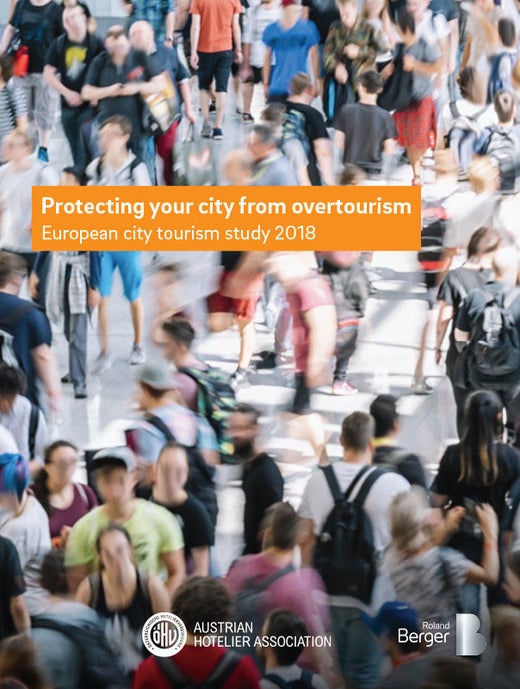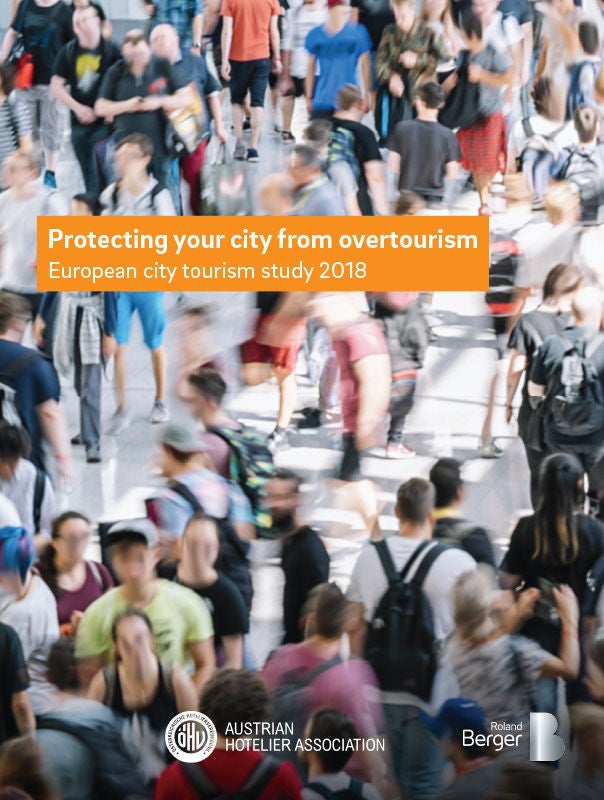
A weekend in Amsterdam, Barcelona or London – city breaks are all the rage across Europe these days. The number of overnight stays made by tourists in cities has risen 57 percent since 2008, more than double the rate of growth in people visiting the respective countries in general. This gives cities and their tourism providers an important source of income. But popular destinations like Amsterdam or Barcelona show just what the consequences of ''overtourism'' can be like.
When cities become victims of their own success and are overwhelmed by tourists, the local residents get irritated by noise, traffic congestion and crowded restaurants, the local identity and culture are damaged or adapted to suit tourist tastes, and so on. However, cities can remain attractive places to be and increase the value added by tourism without falling into the ''overtourism'' trap, as demonstrated in the publication "European city tourism study 2018: Protecting your city from overtourism". To produce their study, Roland Berger and the Austrian Hotelier Association (ÖHV) gathered and analyzed data from 52 European cities to examine the tourism situation across the continent.