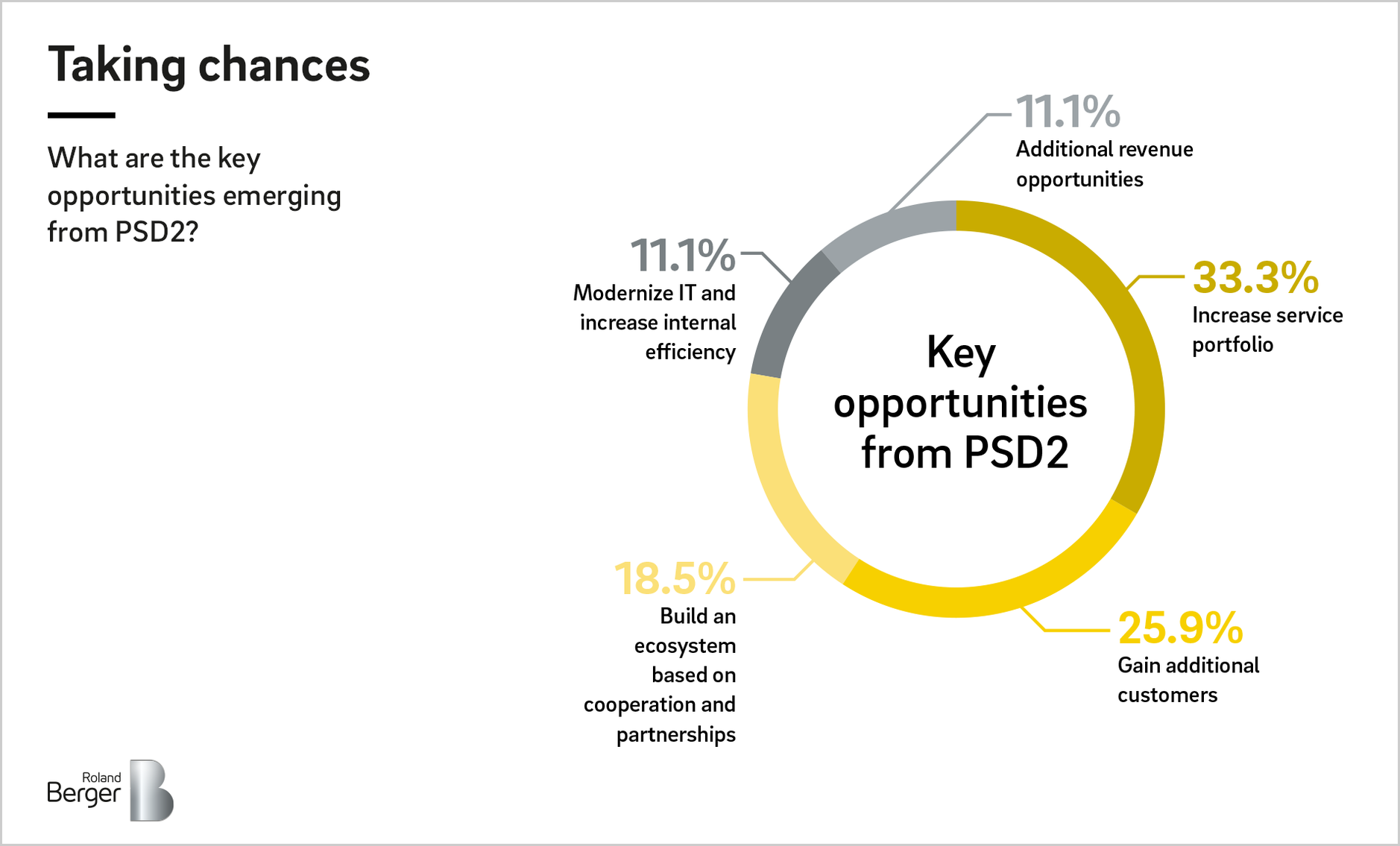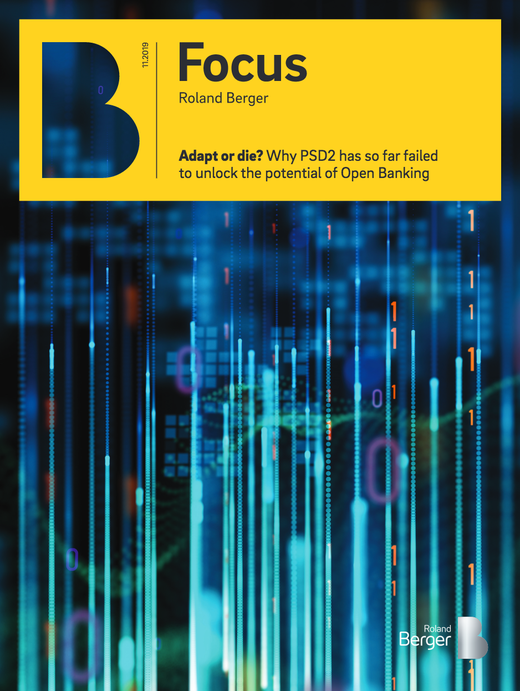

The vast majority of European financial institutions (81 percent) see the second Payment Services Directive (PSD2), which came into force in the EU on September 14, as an opportunity. However, most banks are still reluctant to take advantage of the new opportunities: only around one third (35 percent) of banks have so far positioned themselves to take on the role of a third-party provider. These are the key findings of Roland Berger's study "Adapt or die? Why PSD2 has so far failed to unlock the potential of Open Banking". The publication included interviews with over 40 leading banks, third-party providers and large technology companies in twelve European markets.
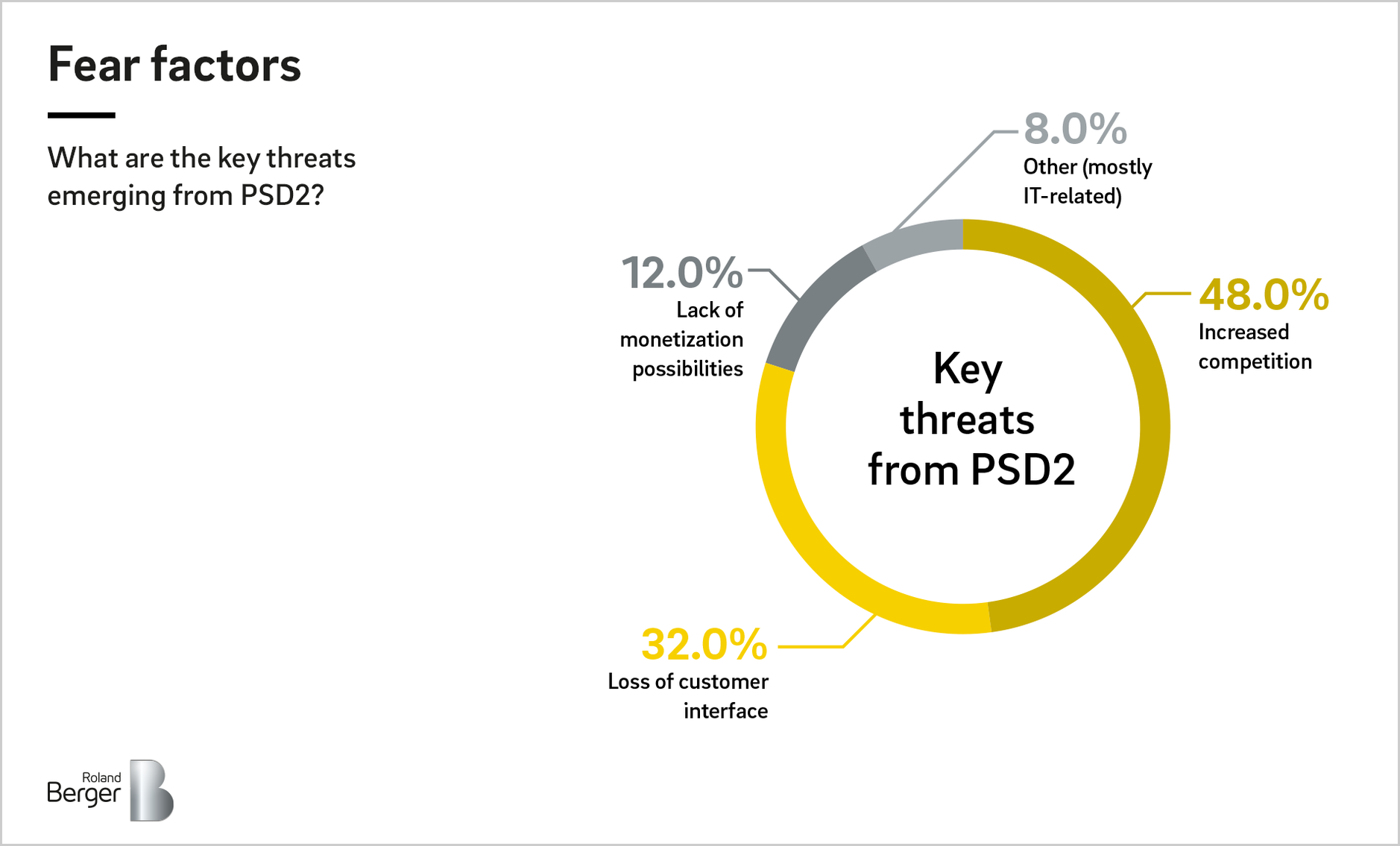
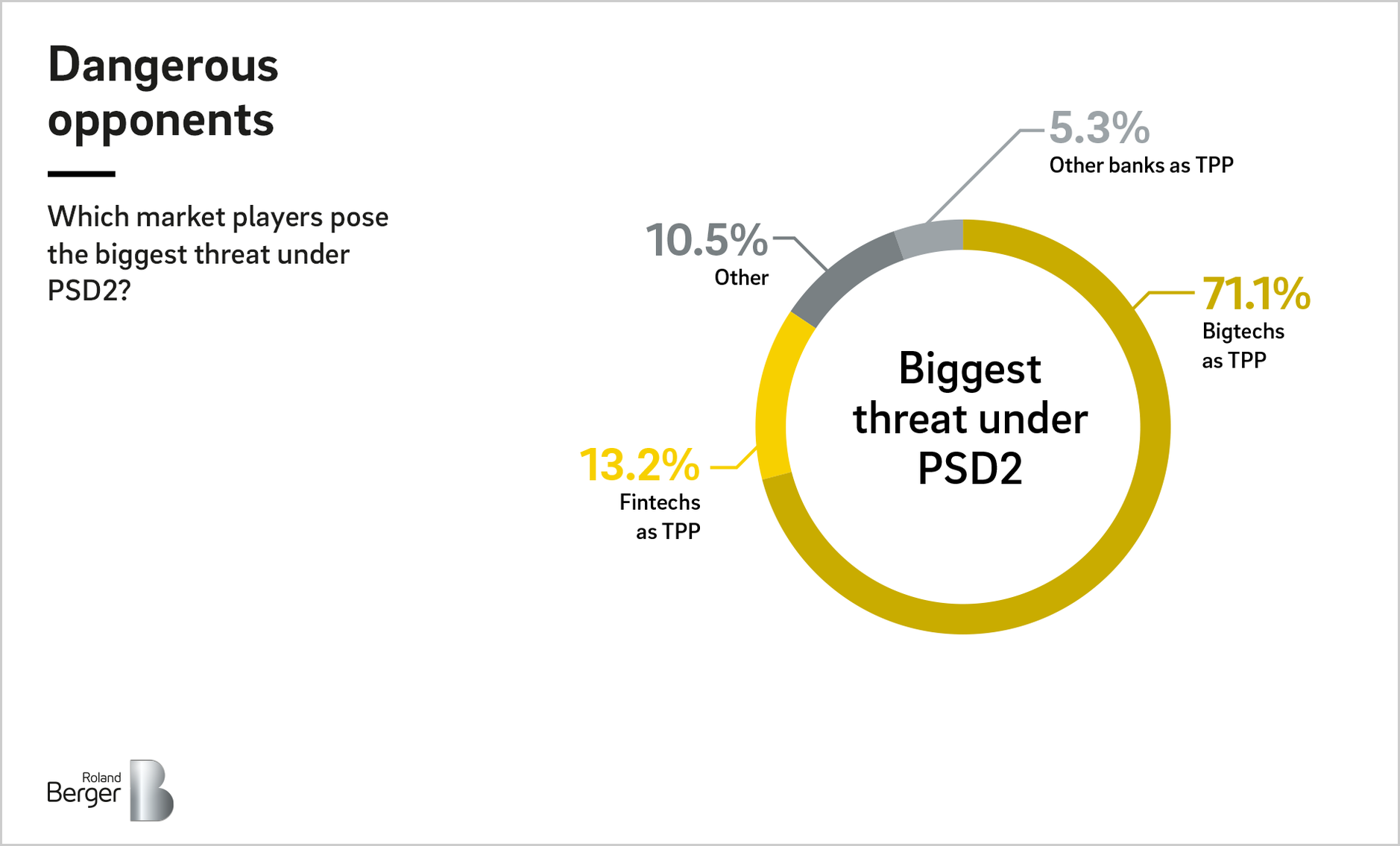
In addition to greater consumer protection and payment security for customers, the PSD2 means heightened competition for banks – they are now obliged to provide third-party providers access to customer data. On the other hand, the PSD2 also opens up new strategic opportunities on the way to an EU-wide open banking scenario. Finally, PSD2 allows banks to enrich their already plentiful customer information with even more external data. As such, almost three-quarters of banks (72 percent) plan to improve their service portfolio with PSD2 and, in doing so, attract new customers. However, most of the banks have not yet reached that stage and are initially focusing on meeting the minimum statutory requirements.