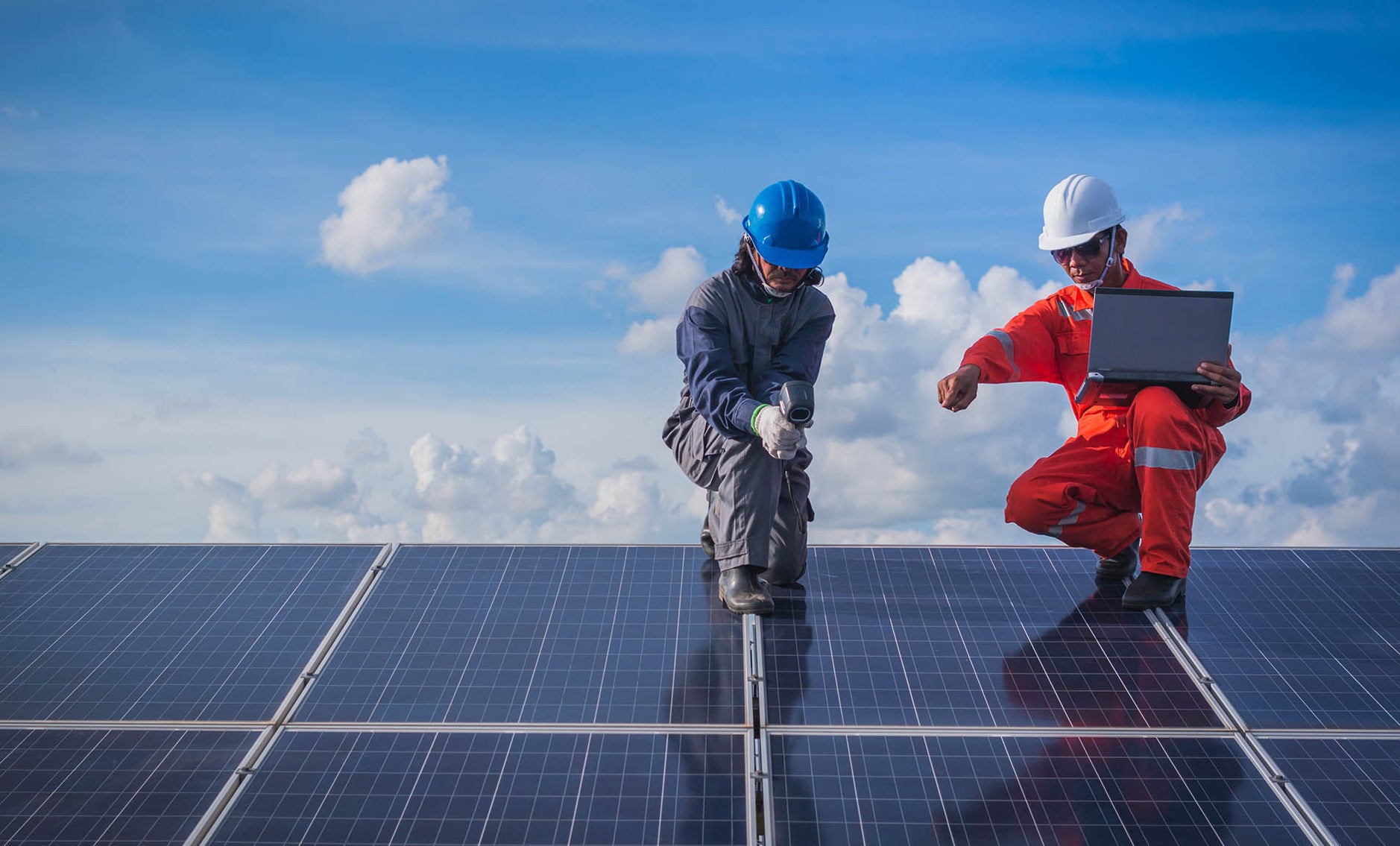
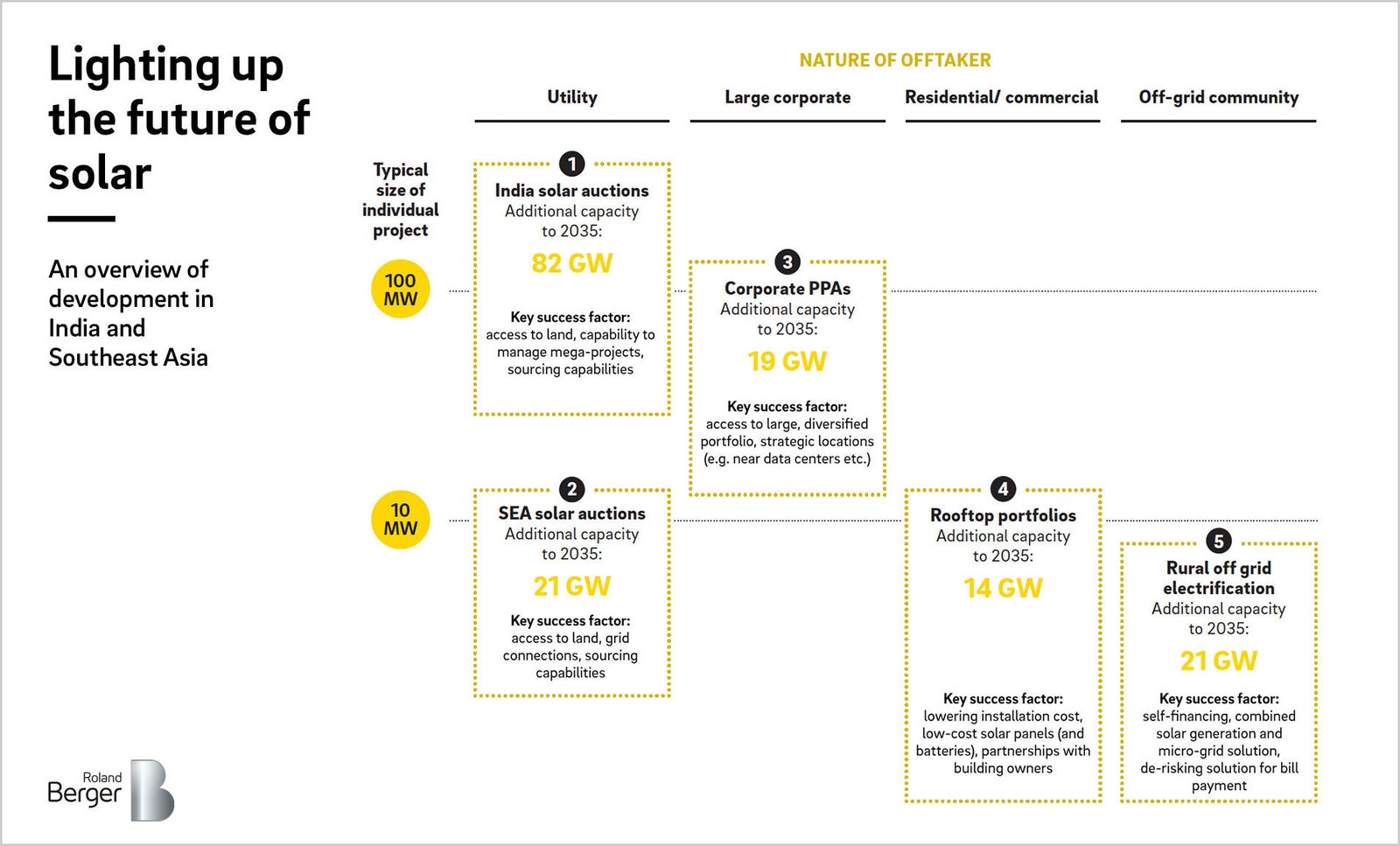
In many regions of India and Southeast Asia the sun shines often and intensively. However, this source of energy is still used to varying degrees in different regions. While larger projects are already underway in India, the potential in Southeast Asia is still largely untapped. In the future, however, solar energy could be used to provide the additional energy capacity that will be needed in the growth regions - by 2035 this would be 580 GW in India and 250 GW in Southeast Asia. Roland Berger's study "Solar power: Shining prospects in Southeast Asia and India" highlights development opportunities for both major international projects and rural initiatives.

Study
Solar energy in Asia: why investments are lucrative now
Energy demand in the growth markets of India and Southeast Asia continues to rise. As in China, solar energy could contribute to meeting the demand.
Published January 2019. Available in