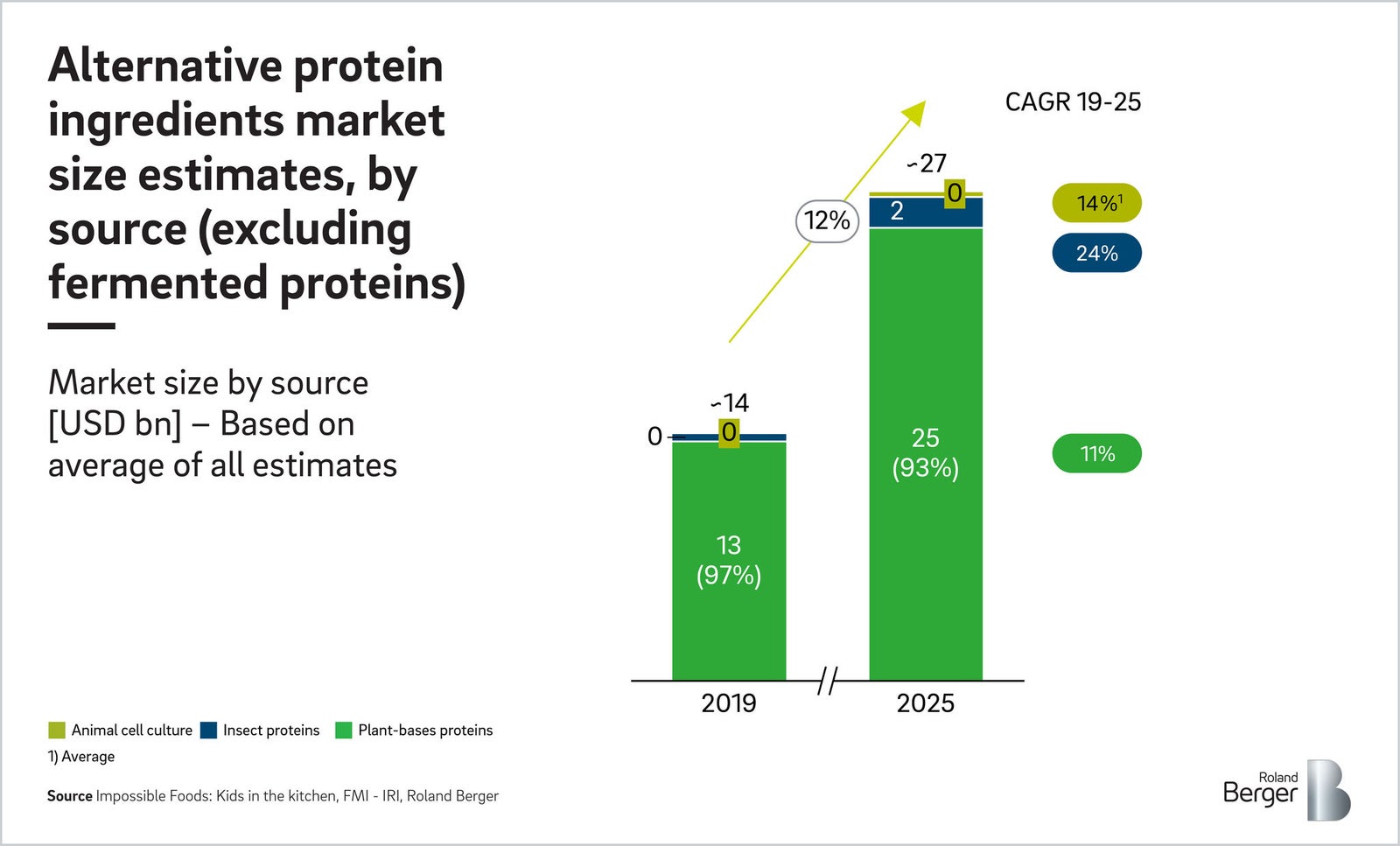
The alternative protein ingredients market size is estimated at USD ~14 bn, although valuations vary widely. Across all estimates, however, it is clear that the market is on the rise, with annual growth rates varying between c.5-50% over the coming years. But the market of alternative proteins still represents a small fraction of the global traditional protein market. The global meat market and dairy market are currently valued at around USD 1.2 trillion and USD 0.8 trillion, respectively, and are expected to see moderate growth over the coming years.
Companies active in the plant-based protein space currently come closest to
the operational efficiency and production capacity
needed to compete with traditional protein sources. Soy dominates the market and is expected to continue despite growing skepticism around allergies, estrogenic effects and genetically modified crops. Pea protein is expected to become the next boom in plant-based proteins, driven by consumer trends in gluten-free, health benefits and sustainability, and further fueled by large players establishing new manufacturing facilities and sensory capabilities.
But the range of sources is expanding with innovations in fermentation, animal cell culture, and insects. Significant investments are being made in all parts of the value chain, from protein extraction to the marketing of consumer products. But where will their success depend on? We believe there are four common areas that will elevate alternative proteins to the next level: product quality, cost efficiency, consumer adoption and maturity in the value chain.