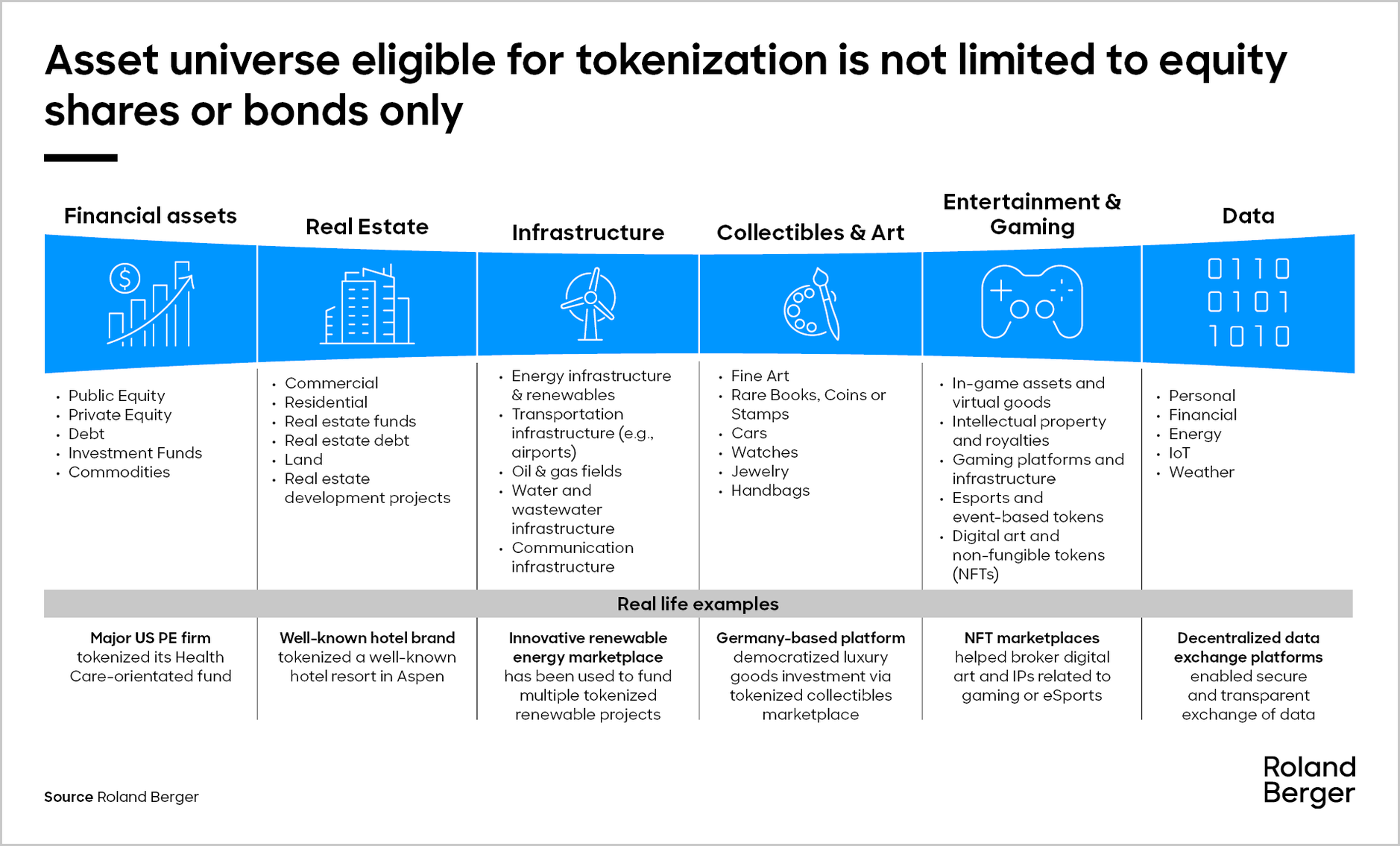
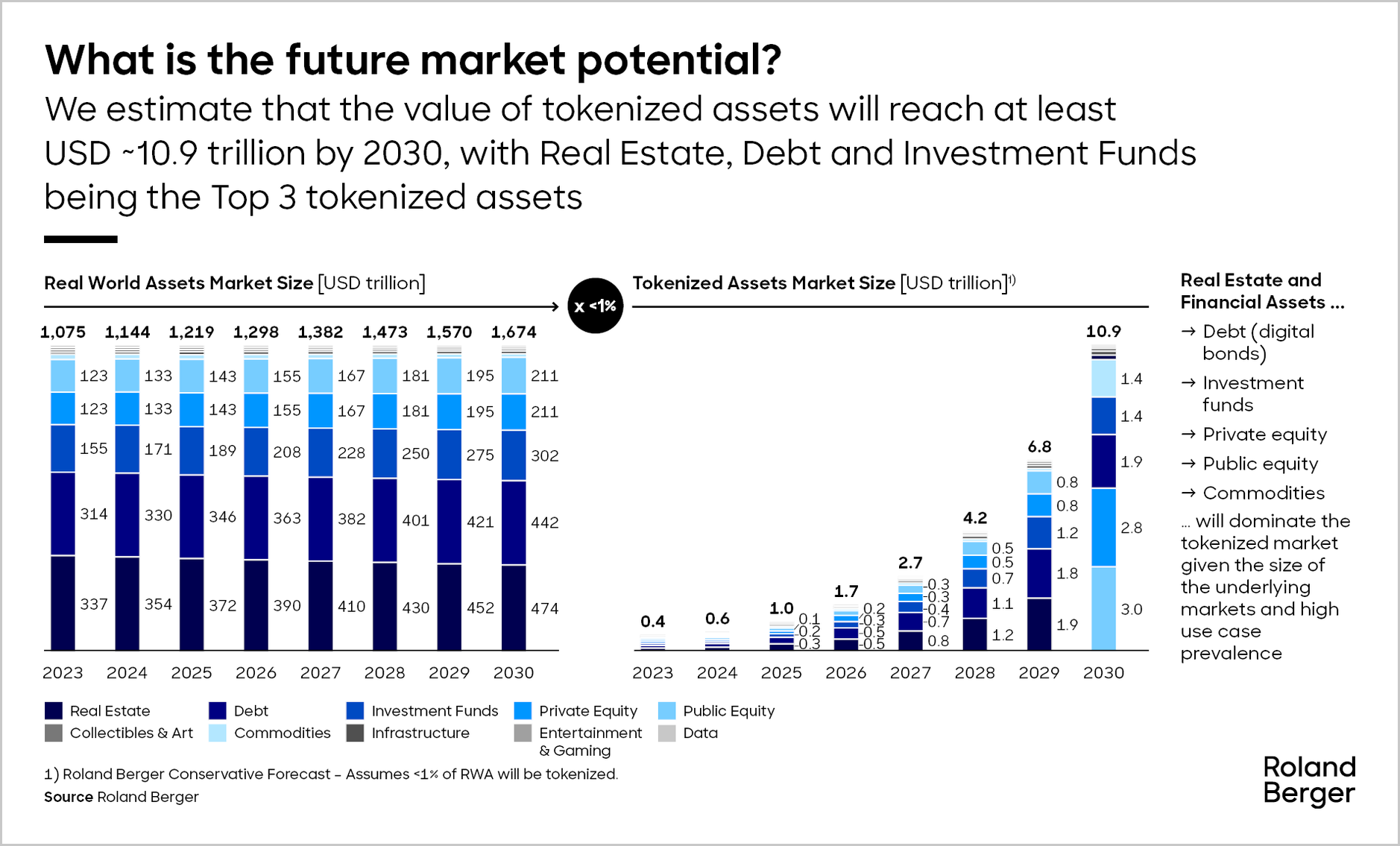
Tokenization will revolutionize the way we fund, trade, and manage assets. It is expected to disrupt nearly every industry and sector of our modern society – from investing and asset management, through manufacturing to real estate or even art. We conservatively estimate that the total market value of tokenized assets will significantly exceed USD 10 trillion by 2030. In this article, we lay out the basics of tokenization, share our view on the main use cases, as well as discuss what you need to consider for your business.

Study
Tokenization of real-world assets: unlocking a new era of ownership, trading, and investment
Tokenization to reshape asset funding, trading & management, impacting all sectors. Market value may surpass $10tn by 2030. This article discusses basics, uses & business considerations.
Published October 2023. Available in