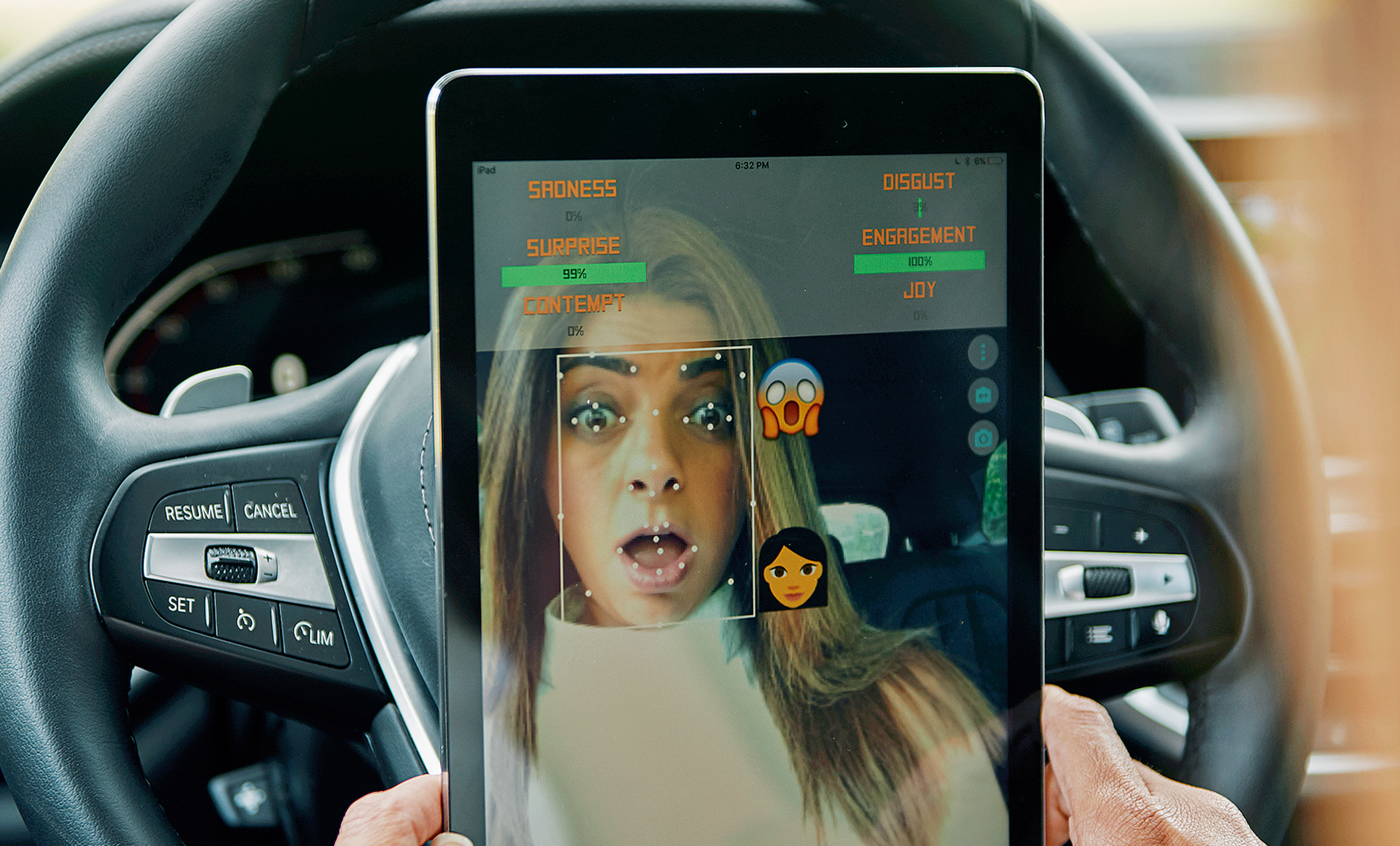
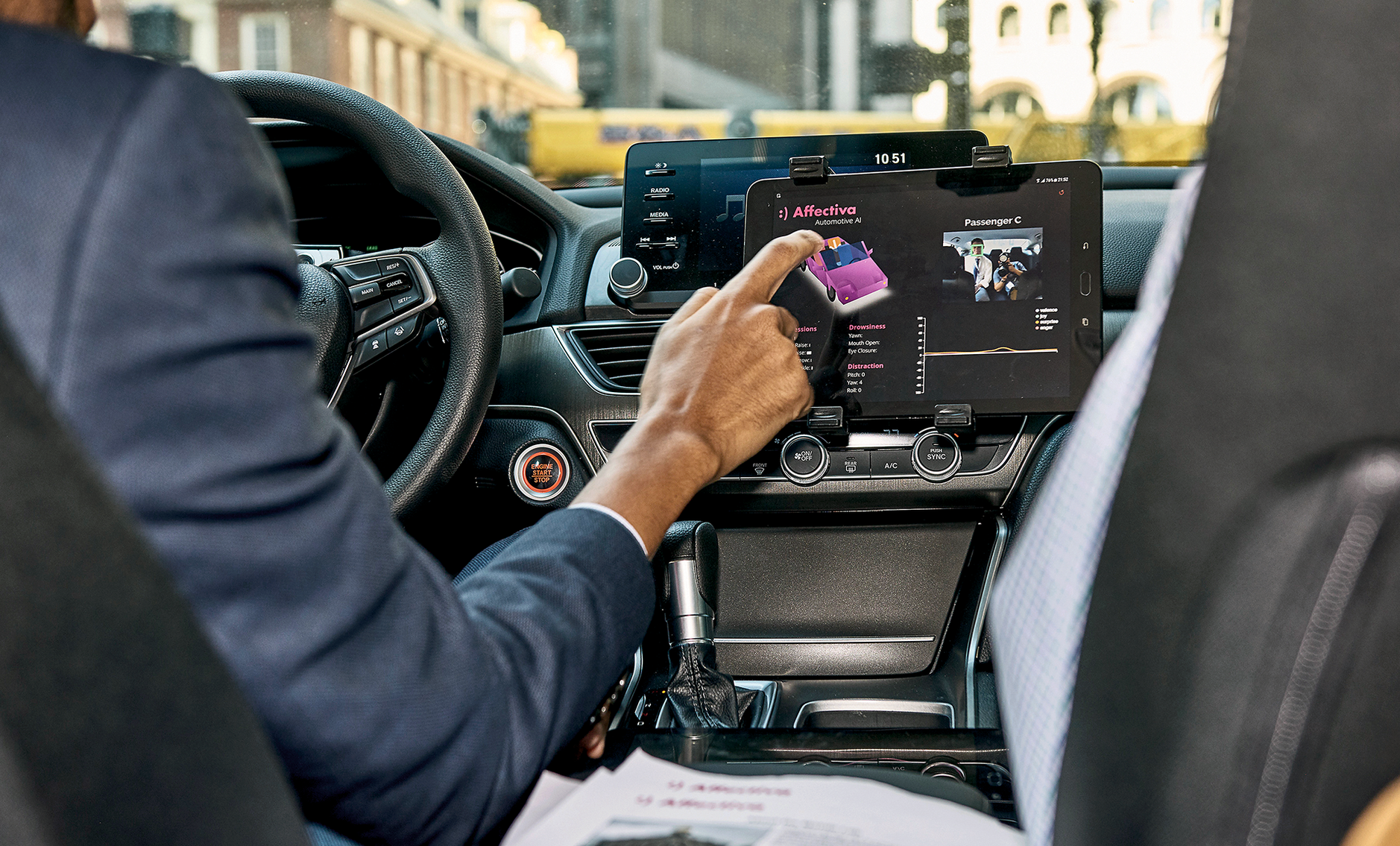
Understanding the complex web of emotions, facial expressions and voice utterances is a work in progress. Affectiva, which now employs 90 people at its headquarters in Boston and Cairo, has accumulated what it calls the world's largest "emotion data repository" based on more than 9.8 million faces and four billion frames of video collected in 90 countries.
She stresses that technology like hers must be designed with the goal of diversity and inclusion from the start. "A European car company sent us a training set of faces, but they were all blue-eyed, blond middle-aged guys," she recalls of the data set. "We told them this was not good enough. If our technology doesn't work with darker-skinned people like me, or with people who represent diversity in all of its forms, then that’s an epic fail from a business and ethical standpoint."
Giving cars an EQ to complement their IQ is but one area where el Kaliouby sees promise, especially as human-to-human interaction is somewhat tainted by the coronavirus pandemic. "We will see a lot of innovation using technology like ours that can quantify and give you analytics on top of a videoconferencing or livestreaming platform."
It would help not only presenters to get something akin to emotional ratings in real time, she believes, but also aid audiences and hosts. "If the viewers opt into giving an algorithm access to their device’s camera and the algorithm aggregates reactions, the audience can feel they're contributing something that's shared with everybody who's watching."
El Kaliouby wants to see Emotion AI roll out in other areas to "help us become happier, healthier and more empathetic individuals." She envisions social robots in health care settings that can perform the intake assessment at a hospital instead of a nurse and only send those to see a human doctor who need attention. "There is evidence that facial and vocal biomarkers exist for things like depression, stress, anxiety or Parkinson's disease.
While we're stuck with our devices for hours and hours every day, these could be opportunities to get a pulse on a person's mental and emotional state." Using better AI tools can also improve the hiring process. While HR departments are already striving to become aware of and correct for human biases, algorithms have the potential to conduct job interviews without being distracted by the gender, ethnicity, age or looks.
Instead, they can home in on the nonverbal communication to determine if somebody is a good fit. And finally, AI with a helping of emotional astuteness stands to improve online learning systems because educators would be able to detect the level of engagement of each student and tailor their approach accordingly