In order to get the company more comfortable with change (and even with the occasional error), Rafiq hired hundreds of new employees. Many of those came from the tech industry, where the product development process has been likened to throwing spaghetti on the wall and seeing what sticks. "I was trying to help these companies act like Amazon, to create a culture that is comfortable with innovation," says Rafiq.
Bringing in new blood, however, didn't mean embolizing old arteries. Rafiq says that while the companies he's worked for – not just McDonald's but also Volvo, MGM and others – wanted him to usher them into the digital era, he had to approach that process with respect for what came before. "I had to position what my team was doing in familiar terms," says Rafiq. "Instead of digitization, I talked about convenience."
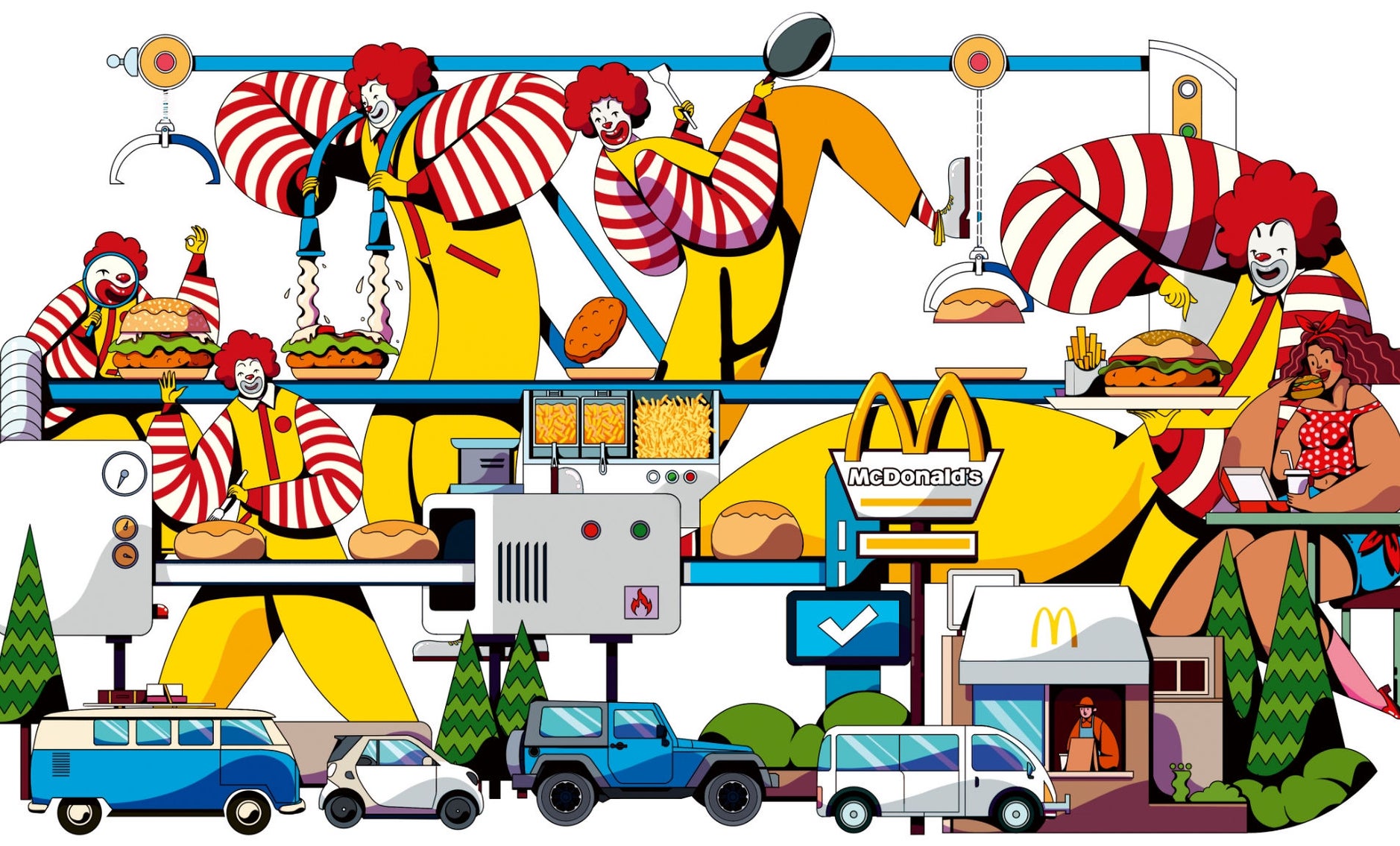
When Rafiq joined McDonald's, for example, he says there were three main ways the company sold hamburgers and fries and other products to its customers: going through the drive-through, getting in line and sitting down to eat or buying a bag of food and taking it home. Rafiq got buy-in to create additional models for serving customers not by espousing the whiz-bang merits of a technology-first approach, but by making a case for customers. Ordering through an app was convenient, not just cutting-edge. "You have to create a desire or hunger for the upside of new ideas," says Rafiq, who has also recently published a book called Decision Sprint: The New Way to Innovate into the Unknown and Move from Strategy to Action.