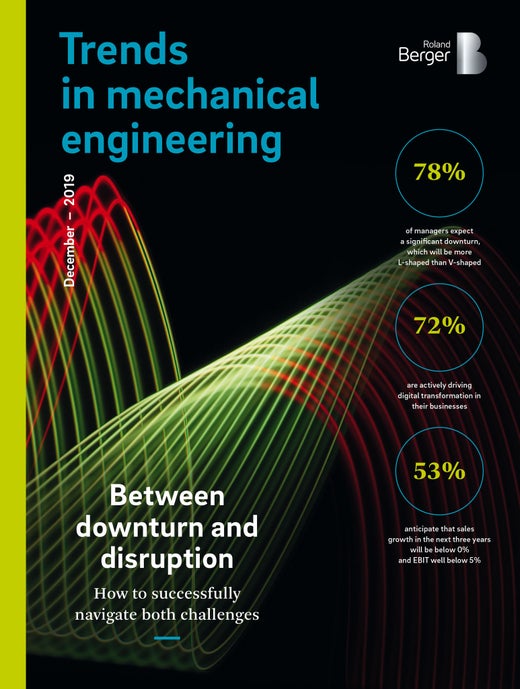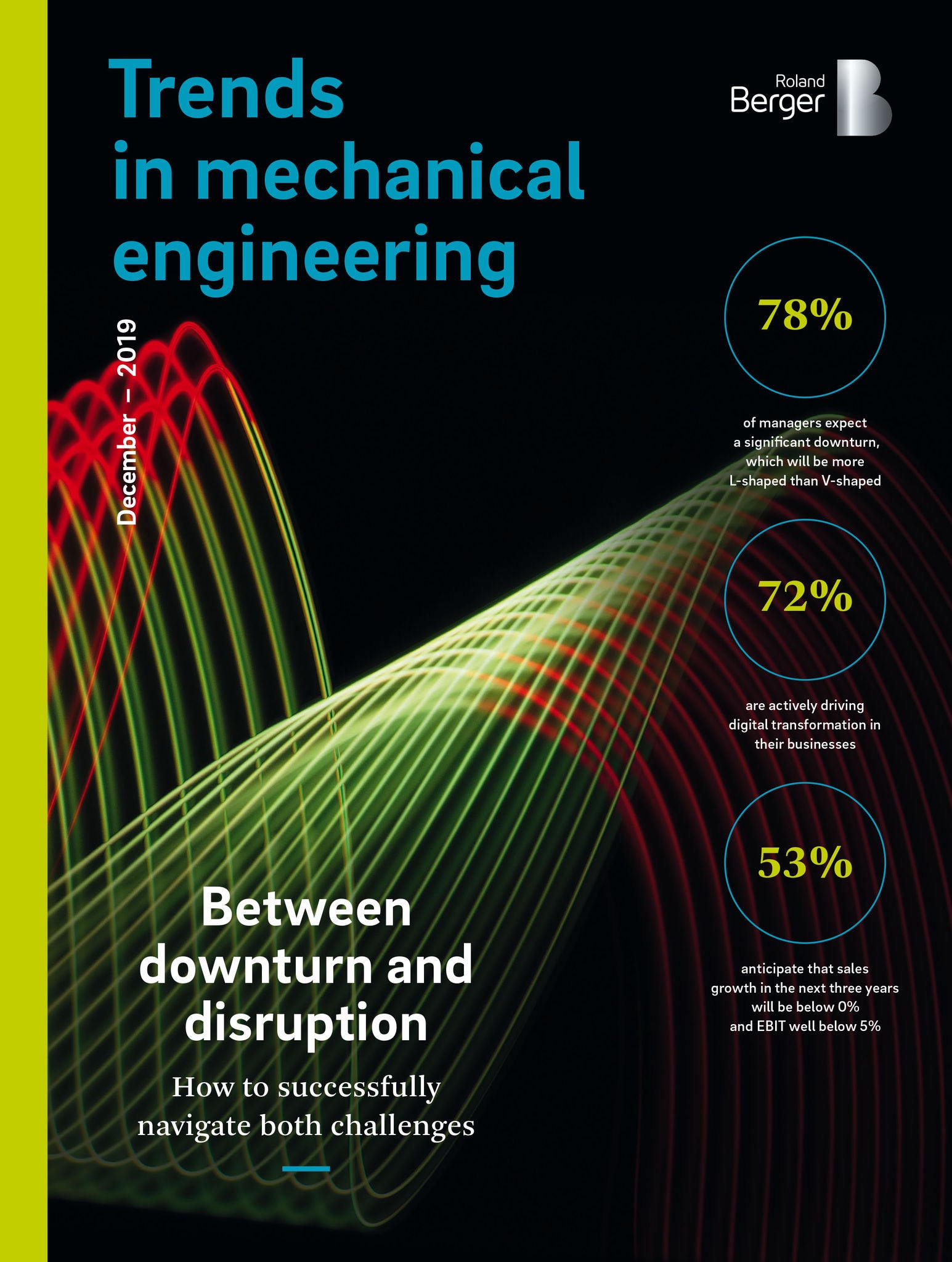

Between economic crisis and disruption
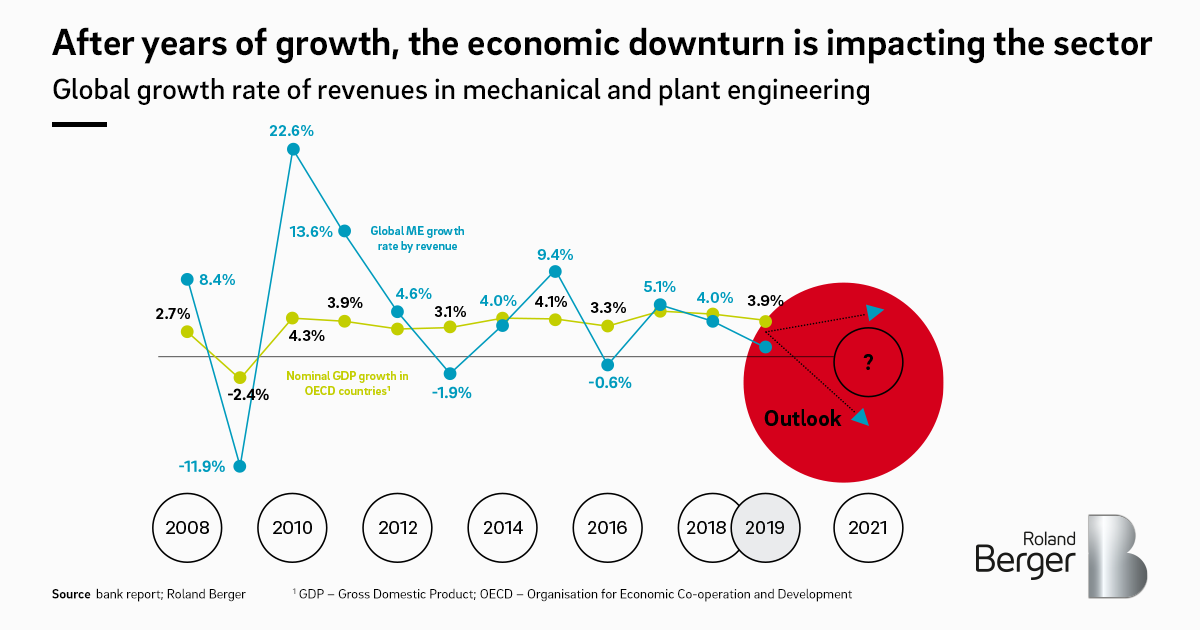
At present, mechanical engineering is giving little cause for optimism: The times of plenty have come to an end and the downturn has long since gripped many a player. Particularly hard hit are companies in the automotive sector whose business is highly dependent on conventional drive systems.
Their example shows that the general economic slowdown and falling investments are joined in this downturn by the challenges of far-reaching structural change. The gradual substitution of the internal combustion engine poses major challenges for all equipment suppliers. At the same time, companies are compelled to invest in new technologies in spite of the drop in sales and revenues.
Many industry players have successful years behind them. It's true that most companies are in a much better position than they were going into the financial crisis ten years ago because of the larger financial reserves they have. But we think the dry spell will last longer this time. Besides that, many firms have not done their homework on digitalization.
They have a balancing act to pull off: They must adjust their structural costs while simultaneously investing in new business areas. This means they need a «weatherproof» core business with adaptive structures, and they also need to actively address the big topics of the future now, such as industrial automation and digital transformation. That requires companies to invest in digitalization, test new business models, and grasp industrial automation as an opportunity.