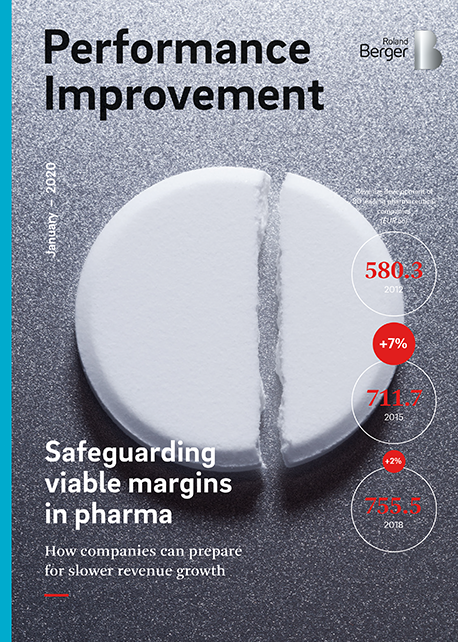

Pharmaceutical companies face ever-increasing pressure as revenue growth slows down. This leads to the pharmaceutical blockbuster model being challenged by personalized therapies and smaller patient populations.
Cost-effectiveness is key as top-line growth trick falters
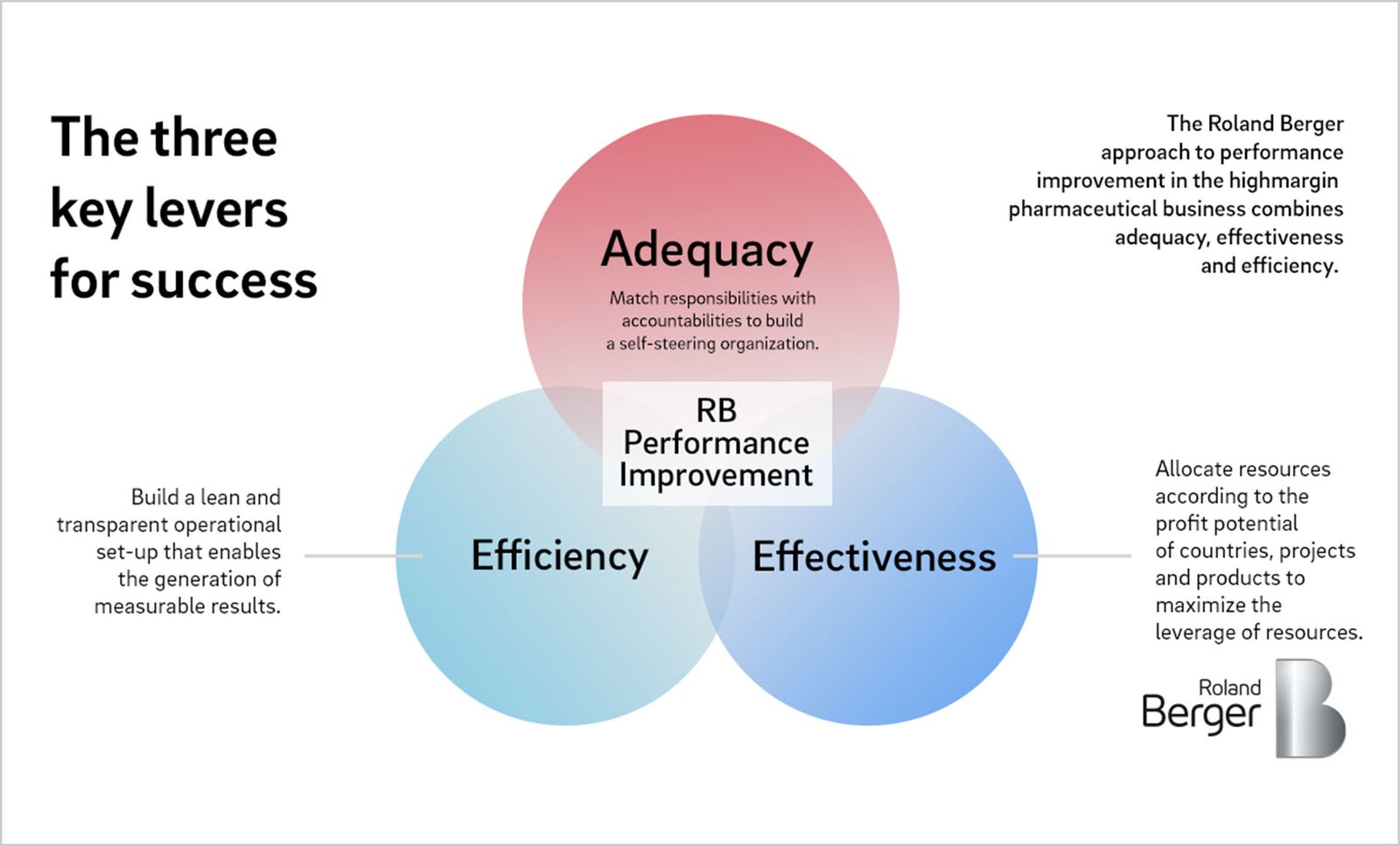
Pharmaceuticals companies must operate more effectively and efficiently. As high-margin businesses, drug makers have traditionally seen performance improvement as a less pressing response to declining sales margins. Rather than managing costs, companies were able to increase revenues as an antidote to margin pressures. A new round of investment in research and development or business development and licensing typically delivered new high-margin products, boosting sales and profitability. But this top-line growth trick is becoming more elusive. A Roland Berger analysis of 80 leading publicly listed pharma companies – representing about 70% of the market – shows that annual revenue growth fell by more than two thirds in the last three years.
Pharma companies' traditional response to eroding margins has come under pressure in recent years. Healthcare systems all over the world have striven to better control expenditure. While drug development can target individual patients much more effectively today, it has become ever more difficult to create blockbuster drugs to serve broader patient populations. These targeted developments often require more complex manufacturing processes, which require end-to-end process control and effective steering of cost of goods sold (COGS).