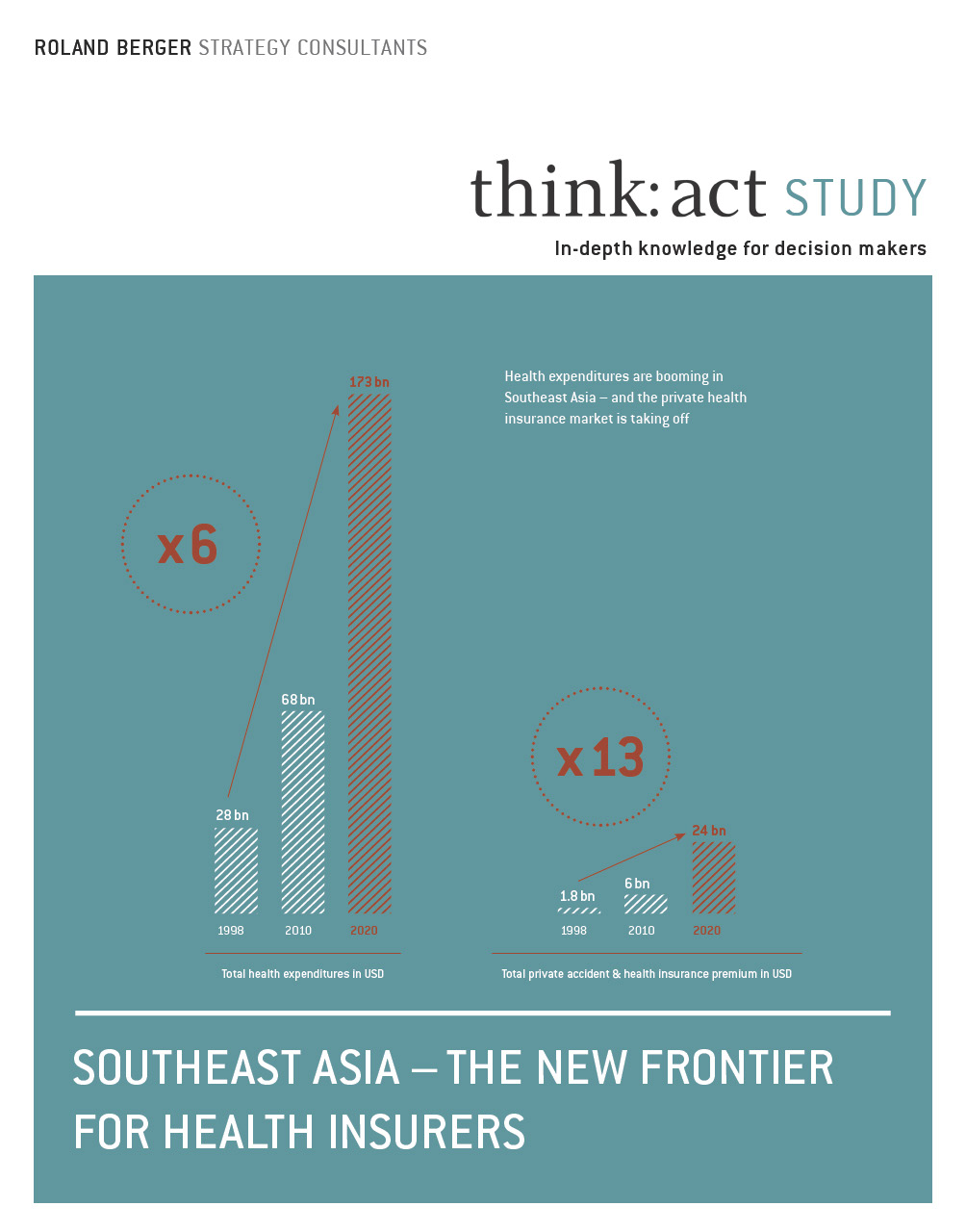
The health insurance industry in Southeast Asia is slated to grow to USD 24 billion by 2020 at a compounded annual growth rate of 15% (from USD 6 billion in 2010). According to a new study by Roland Berger Strategy Consultants entitled "Southeast Asia – The new frontiers for health insurers", the next six years will see increasingly affluent consumers in the region drive demand for health policies and pave the way for more advanced healthcare.
"As disposable incomes and the number of wealthier consumers spike in the region, personal health is fast becoming their number one priority," said Philippe Chassat, Partner and Head of Financial Services Southeast Asia at Roland Berger Strategy Consultants. The co-author of the study referred to this prosperous segment as the mass affluents. This is a group of more than 17 million consumption-heavy households in Southeast Asia, around 70% of which are in the region's three largest economies: Indonesia, Malaysia and Singapore. "They are prepared to pay more and, in return, they want shorter waiting times, access to the safest and latest medical technologies and the best logistical support from top healthcare facilities."
Insurers in the region also stand to benefit from the growth of group corporate policies. This segment – consisting of multinationals, large domestic corporations and upper-end small and medium enterprises (SMEs) – is expected to increase its share of premiums from an estimated 20-25% in 2010 to 35-45% by 2020.
Demand for health insurance projected to rise in major markets across the region
With healthcare expenditures in the region estimated to reach USD 173 billion or USD 264 per capita by 2020, demand for private health insurance will rise. Four economies will account for over 90% of all premiums in the region by the end of the decade. Malaysia expects annual premiums to grow by 13% up through 2020, while Singapore and Thailand will each achieve 15% growth over the same period. Indonesia will enjoy the most robust growth of all: almost 20% a year.
While individual policies are expected to remain the most profitable segment, with loss ratios as low as 30-40% for best performers, the group policy segment will grow the fastest. "The group insurance segment has grown at a rate of 20% or more annually over the last decade, and this is clearly a segment where international health insurers can excel," said Chassat. He added that international players have more experience in designing and profitably managing group schemes.
As for the rest of Southeast Asia, some opportunities may emerge in the Philippines and Vietnam due to their large numbers of local affluent consumers. However, health insurance penetration in the remaining countries is anticipated to remain undeveloped up through 2020.
Managing portfolio ratios and profitability critical
Despite the increasing demand, Chassat warned that insurers would need to keep premiums affordable to grow the industry and recommended that they tightly manage the profitability of their portfolios. To do so, insurers must act on several fronts: closely cooperate with healthcare providers, improve claims management and streamline operating processes. He also cited the need to balance individual policies – the most profitable segment – with group policies, the fastest growing segment.
"Managing costs is not only a matter of reducing the cost of individual claims but also implementing preventative measures. Insurers can negotiate rebates and caps for specific procedures or impose requirements for second opinions to reduce overbilling. They can also develop a comprehensive approach that fosters early and preventative checkups, promotes healthier lifestyles and offers better post-hospitalization care to reduce remission," explained Chassat.
The study also underscored the need for insurers to closely monitor regulatory developments and contribute to building a robust framework, which could be beneficial to both industry players and consumers.