3. Define the portfolio strategy and target composition
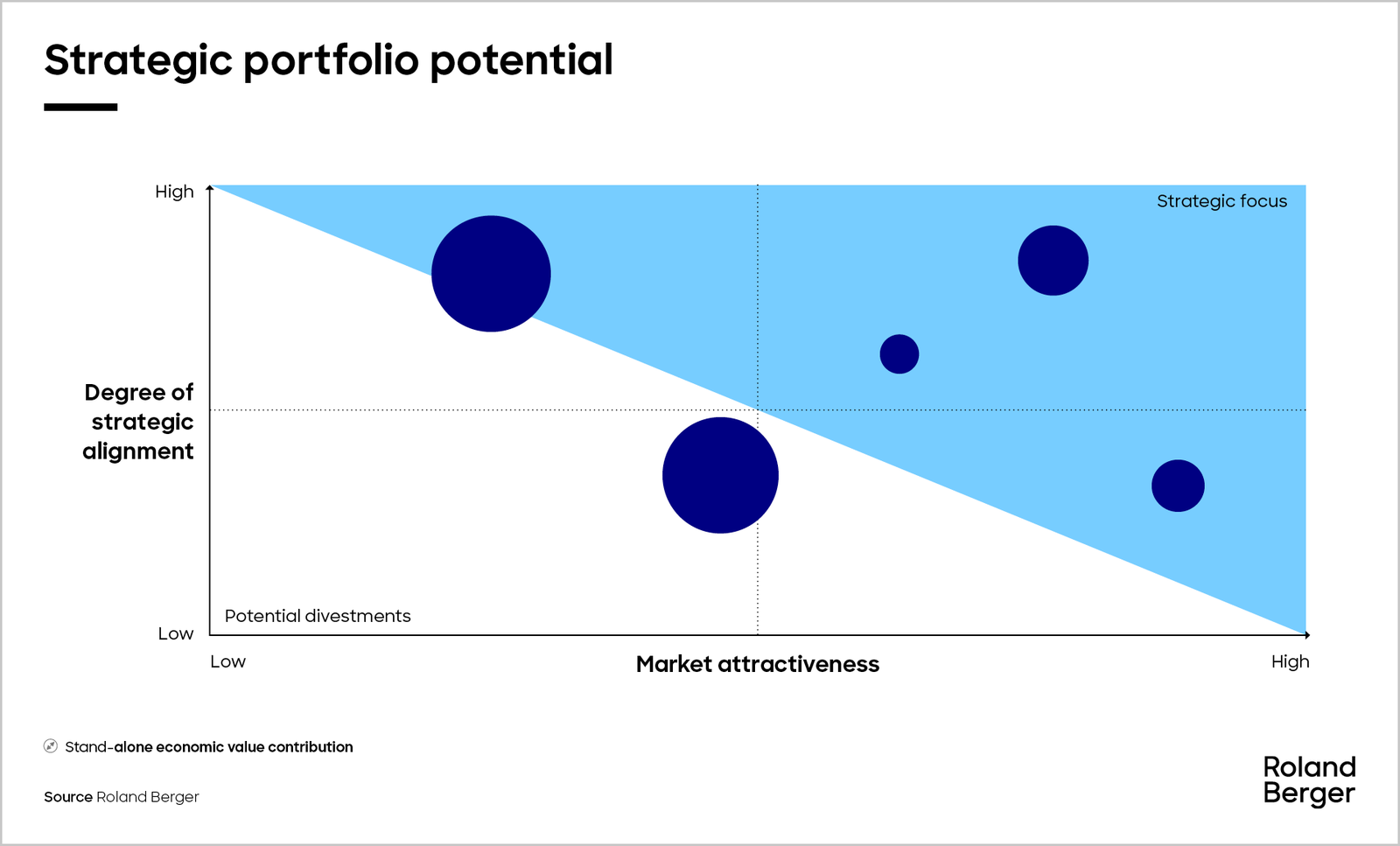
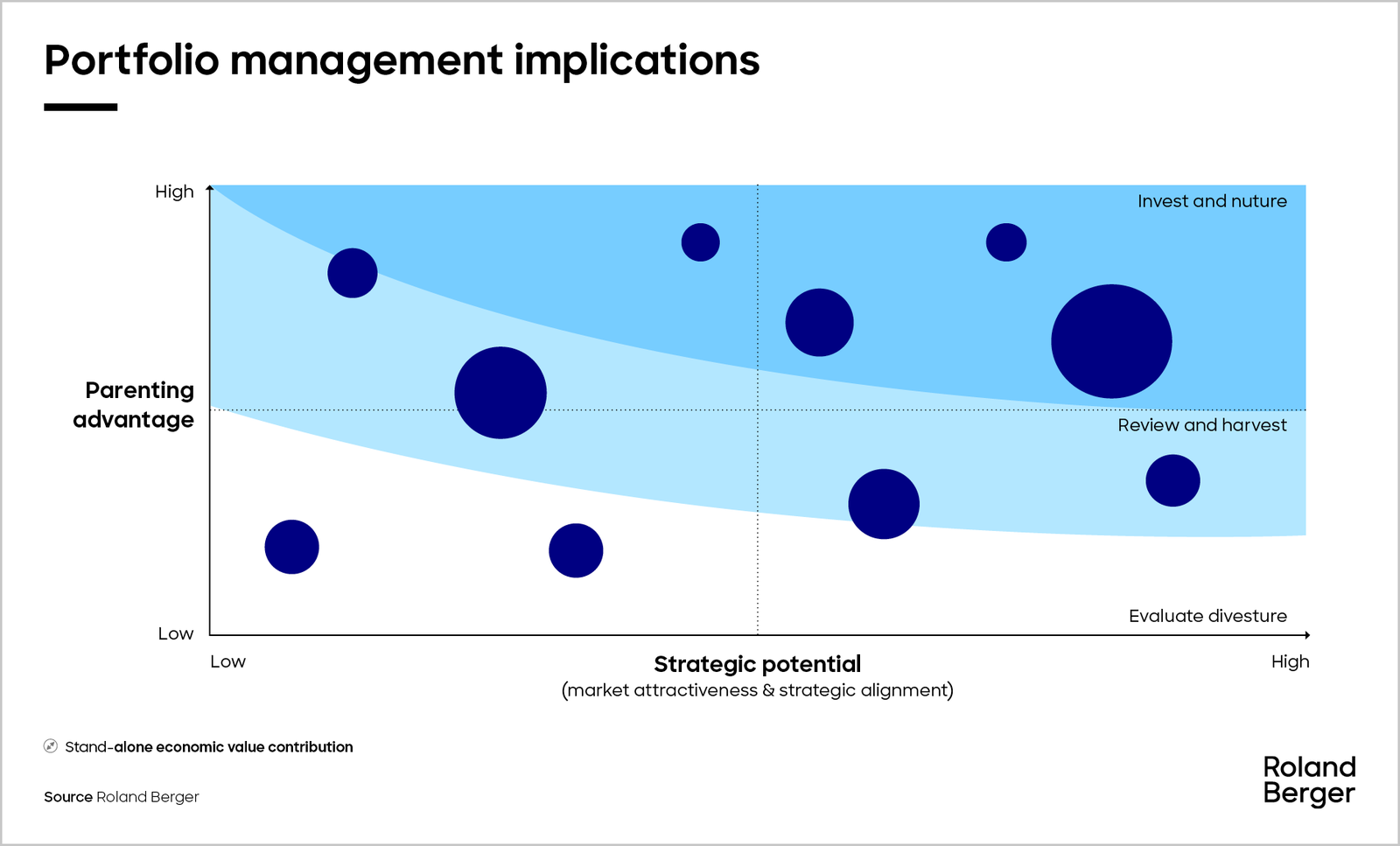
Based on the defined strategic potential of portfolio businesses, market opportunities and parenting advantages, we define an actionable portfolio strategy to maximize value creation and optimize asset allocation. First, we focus on the core businesses and define actions to protect competitive advantages. Investments should be channeled to strengthen USPs of portfolio businesses, which have the highest ability to win in their respective markets. Also, distinct performance improvement programs can be setup to drive profitability and the parent’s ability to harvest consistent cashflows. Next, a plan is developed to address identified market opportunities as future business. Investments are needed to develop or acquire new capabilities. Strategic options we consider are internal developments, Buy & Build strategies, large single acquisitions, or joint ventures. To free-up capital for investments in these growth opportunities, we develop exit strategies to divest non-core businesses. This is considered when the divestment benefits outweigh relevant strategic implications. Divestments require a diligent carve-out concept as a basis for a structured sell-side
M&A
process and need to be planned diligently.
All defined portfolio management activities are then summarized in a strategic roadmap that leads to the Group’s target portfolio composition. Due to a dynamic market environment and shifting strategic priorities, portfolio management is a continuous process. So regular revisions of the portfolio strategy and the target composition are of essence to ensure long-term success.