Branch networks play a central role in this transformation, both as significant cost element as well as a core part of any multi-channel strategy. Many banks are now recognizing that the days of a large network with purely transaction-focused branches are numbered. However, smart branch networks will remain an integral part of any comprehensive, personalized banking offer.
With all the different internal and external factors, designing the optimal branch network poses a key challenge – and getting it wrong comes at a high price. So, how can a bank reshape its branch network holistically, taking client behavior, operational efficiency, technology, regional dynamics, competitor positioning and all the other relevant factors into account?
How the Roland Berger Branch Optimizer™ supports bank operations
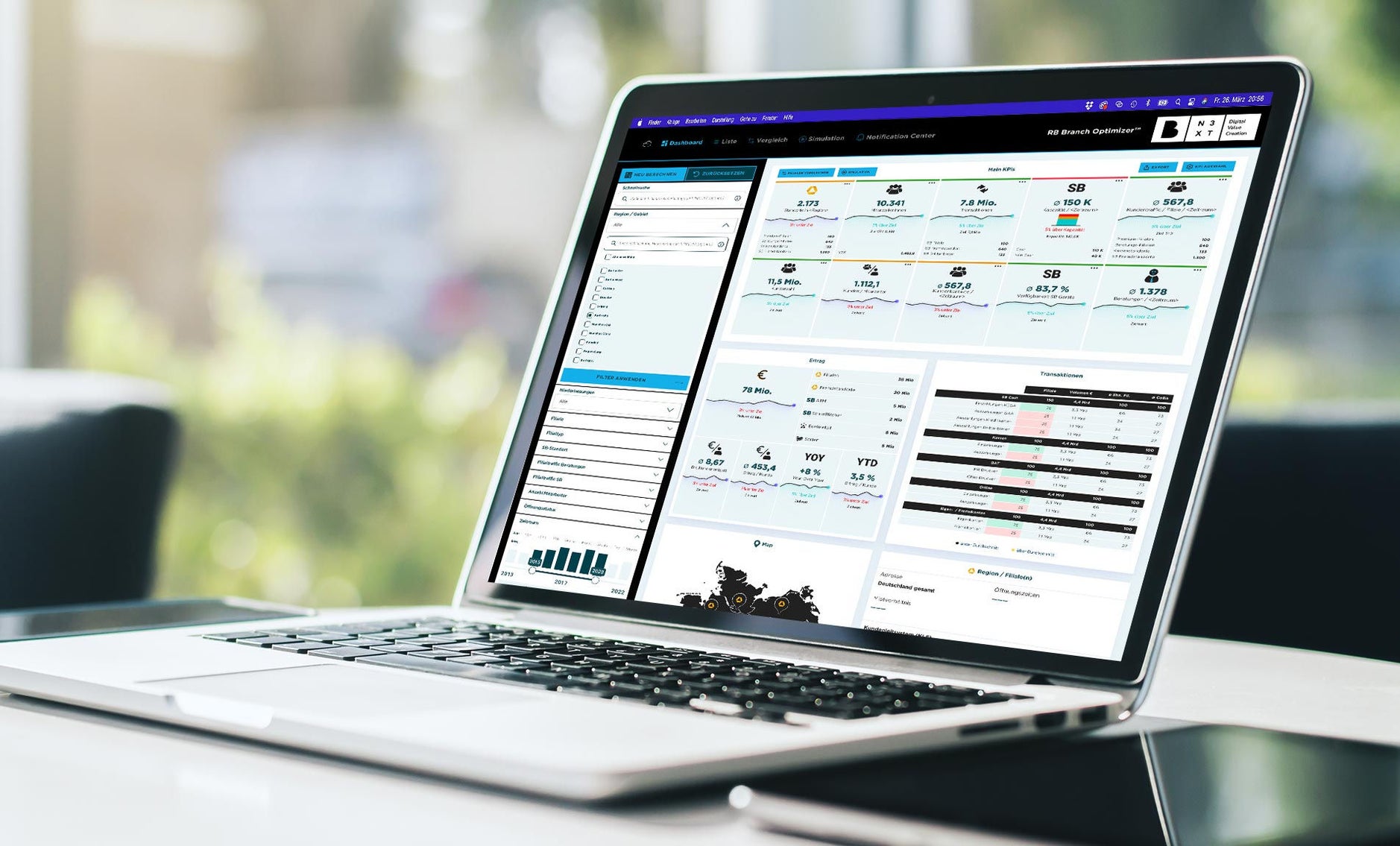
The Roland Berger Branch Optimizer™ is a proven and powerful tool that allows the holistic and data-driven definition of an optimal target branch network.
At the core of the tool lies a cutting-edge, dynamic optimization algorithm, which considers a broad set of internal data, such as revenue/profit per area, branch traffic, and branch cost. It also accounts for external data, such as regional trends, competitive situation, and attractive macro and micro locations. Optimization criteria like cost savings, churn avoidance, and traffic or market coverage can be taken into account and prioritized based on the bank's branch network strategy.