Commercial DD: Essential but different for digital-oriented targets
Commercial due diligence is an essential element of all transactions. Commercial DD typically covers an analysis of the target's business model and USPs, the market environment (including an assessment of the size and growth of the addressable market), the customer and competitive landscape, and an assessment of management's business plan.
For digital-oriented business models, further specific analysis is required. To better understand a company's sustainable growth potential, it is essential to understand the target's KPI performance and unit economics. This means assessing ability to win new customers and convert them into returning ones, as well as the customer's lifetime value (CLV) compared to the acquisition costs (CAC). The analysis of customer cohorts, marketing performance, retention/churn and conversion rates, as well as unit economics (CLV/CAC), is essential here. Companies have often purchased their growth without being able to build lasting customer relationships, for example. In addition, digital business models offer a large number of data points (such as customer files with transactional data) that can and must be leveraged and made sense of.
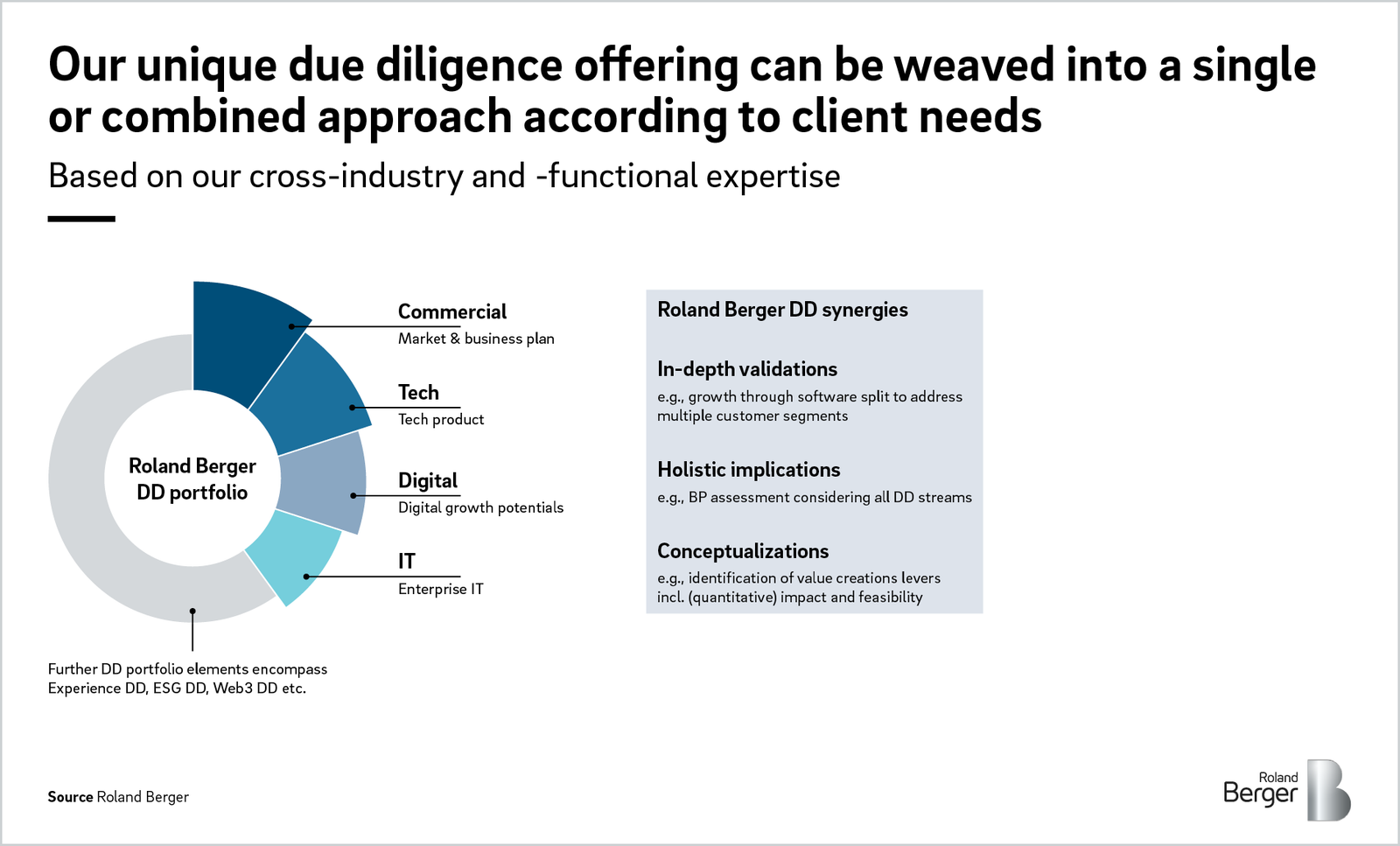
A detailed analysis that considers these KPIs, alongside a holistic view that combines the findings from the other DD streams, is critical to evaluate the target's business plan and growth perspectives.
Customer surveys are also a useful tool. They can help to better grasp and compare how the target is perceived in relation to competitors, and to analyze the needs and market potential of different customer groups. Typically, topics here include net promoter scores (NPS), brand awareness (aided and unaided), purchasing behavior, and (digital) market potential.
In addition, a commercial due diligence summarizes the key findings of all streams to ensure a holistic perspective and assessment for the client.