1. Geography: China at a crossroads
The economic slowdown is impacting major economies across the globe, albeit with varying degrees and underlying causes. China, the catalyst for economic growth during recent decades, faces challenges stemming from its restrictive Covid policies, with concerns emerging about the political climate and stability of foreign investments. The country’s domestic real estate sector, a cornerstone of economic growth, is facing serious challenges, mainly due to default risks coupled with lower demand, potentially further dampening economic prospects. China has announced several measures to bolster its economy, including an 11-point plan that targets domestic consumption.
Meanwhile, escalating tensions between China and the United States have culminated in mutual sanctions, with the future of China as a global economic driver increasingly challenged. In response to tariff threats and supply chain vulnerabilities, many global companies with primary markets in North America and the EU have begun shifting production to Southeast Asia or adopting a regionalized approach to their key markets – shifting to Mexico for the US, for instance, and Portugal or Eastern Europe for Europe.
However, Roland Berger believes these short-term instabilities should not obscure China’s promising medium- and long-term growth prospects. Investing in China remains both important and prudent during this transformative phase and still offers excellent growth potential, albeit more in the 5% CAGR dimension, rather than the double-digit growth of the past. In short:
China is normalizing as an economy.
In contrast, the US economy is facing unprecedented inflation levels while simultaneously dealing with weakened market demand. To counter these challenges, the government has introduced stringent monetary policies and enacted legislative measures under its Inflation Reduction Act aimed at boosting demand. Although there have been some recent positive developments in the job market and a modest uptick in retail sales, a cloud of uncertainty continues to loom, leading experts to express growing skepticism regarding a near-term economic rebound.
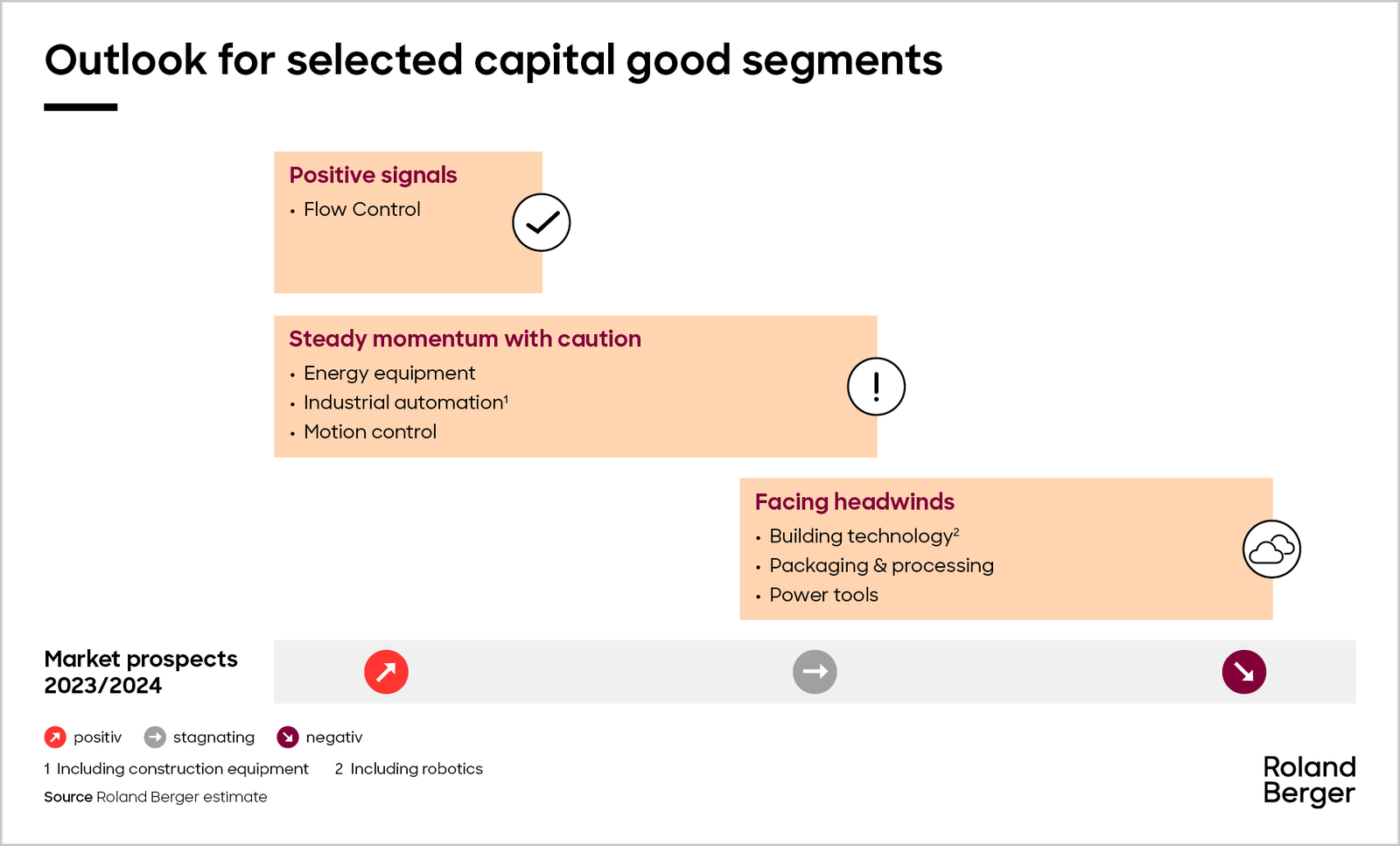
Amid these economic dynamics, it is important for DACH-based industrial firms to recognize the ongoing importance of the United States as a trade partner, particularly in sectors benefiting from government support like renewable energy and industrial automation, or from regionalization activities of companies with major market exposure to the US such as EMS or automotive.
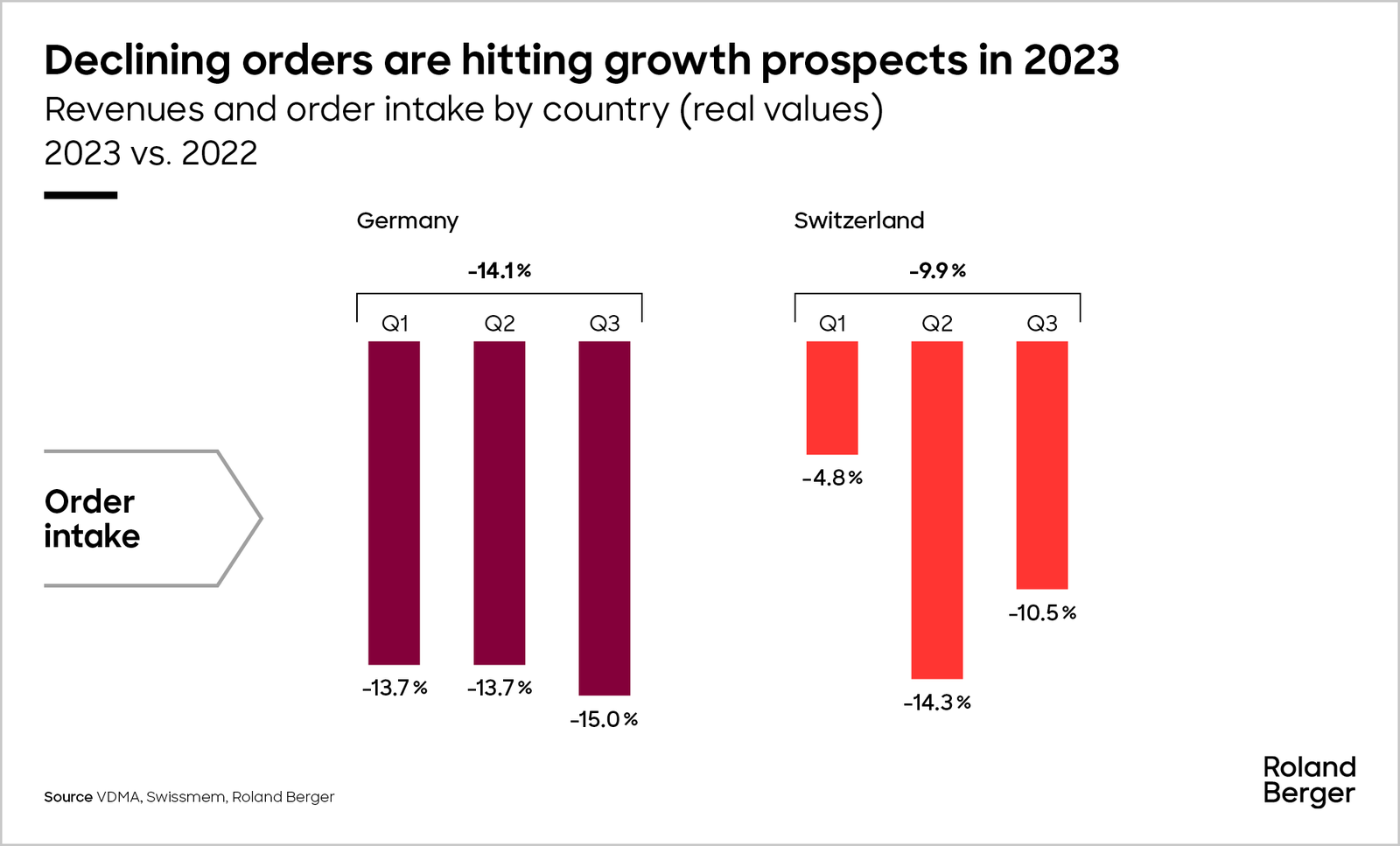
The European Union, already grappling with a range of challenges, is currently experiencing a noticeable decline in momentum. A longstanding European economic powerhouse, Germany now faces major hurdles and is on the verge of relinquishing its global dominance in the automotive industry due to the transition to electric vehicles.
According to a
recent survey by Roland Berger,
which involved more than 650 restructuring experts across the DACH region, there is growing pessimism regarding the future, and concerns are mounting that Germany may lag behind on the international stage. Key worries revolve around skilled labor shortages, elevated inflation rates, and continuously escalating energy costs. A substantial 62% of the respondents in our survey anticipate a wave of restructuring in the months ahead. Certainly, industrial companies in the DACH region will be keen to see their home economy support global growth while simultaneously reducing their reliance on domestic markets.