Turnover increases are expected in 2022, but HR costs are negatively impacting earnings
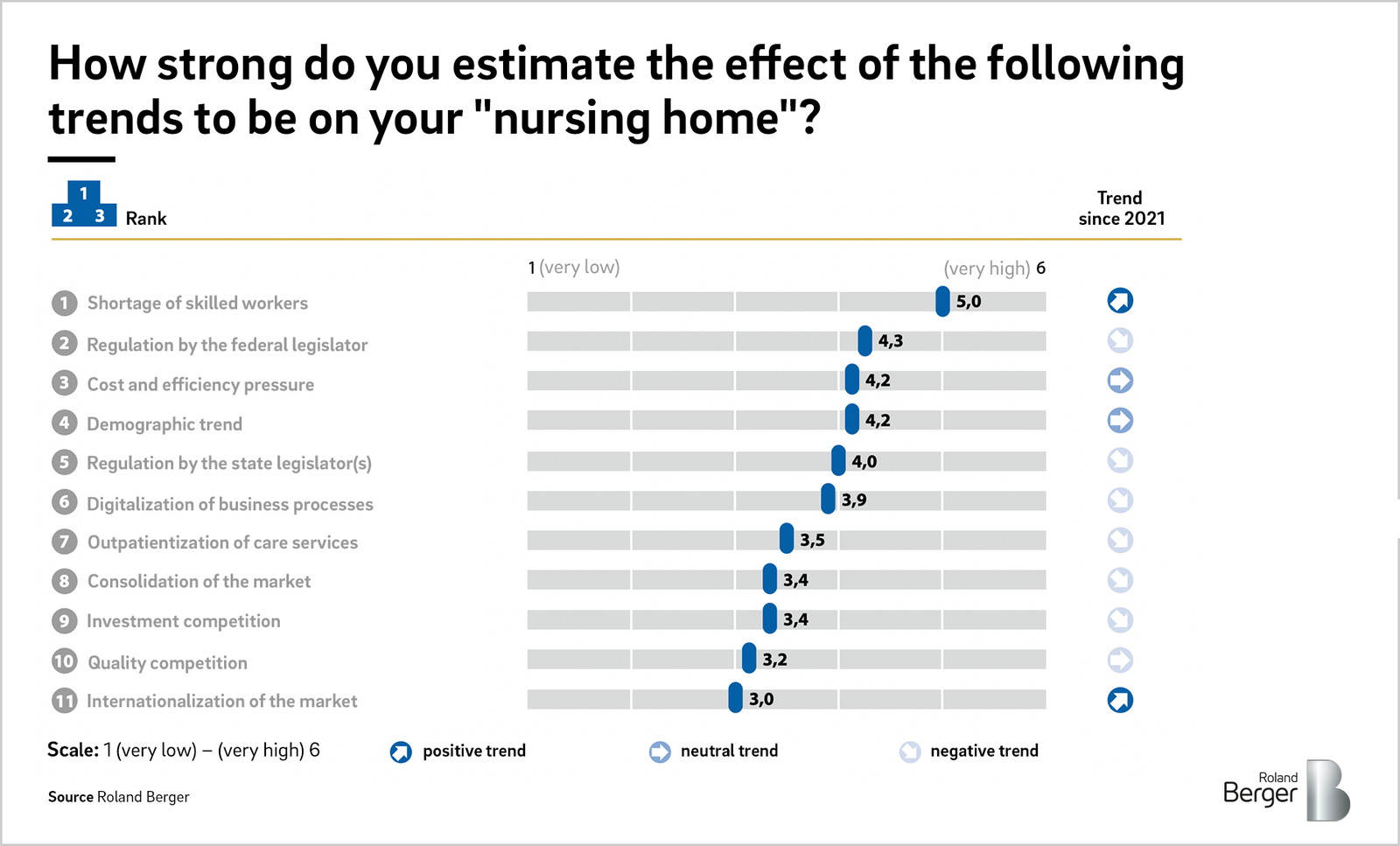
The negative effects on the development of turnover due to the COVID-19 crisis are lessening in the meantime and nearly one out of every two companies expects an increase of turnover in 2022 in comparison to the previous year. However, more than one-third of those surveyed assume that 2022 will be closed with a deficit - the highest rate since CARE Monitor began. This is not least due to increased HR costs of 6.8 percent in the meantime (in CARE Monitor 2021 they were 6.2%). The reason: Due to the shortage of skilled workers, the market for nursing professions in hospital and geriatric care already developed into an employee's market long ago. The forecast for the HR cost increases in the coming five years accordingly amounts to 5.8 percent per year.
This also has significant impacts on the amount of the facility-wide co-payment or "EEE" (amount of nursing expenses that the residents of care facilities must pay themselves for their care). According to the survey, the facility-wide co-payment or "EEE" will increase by an average of EUR 150 to 200 in 2022 for the refinancing of the increased nursing staff costs. However, this increase only covers 81 percent of the HR cost increases and thereby places additional pressure on the companies. In order to close this financing gap, additional services beyond conventional care services are being offered more intensively and are intended to thereby contribute to improving the economic situation. In parallel, costs are being reduced further: 62 percent of companies want to cut down on the costs of materials in particular, i.e. through the formation of purchasing pools. Cutting down on HR costs, in contrast, is not an option in view of the shortage of skilled workers.