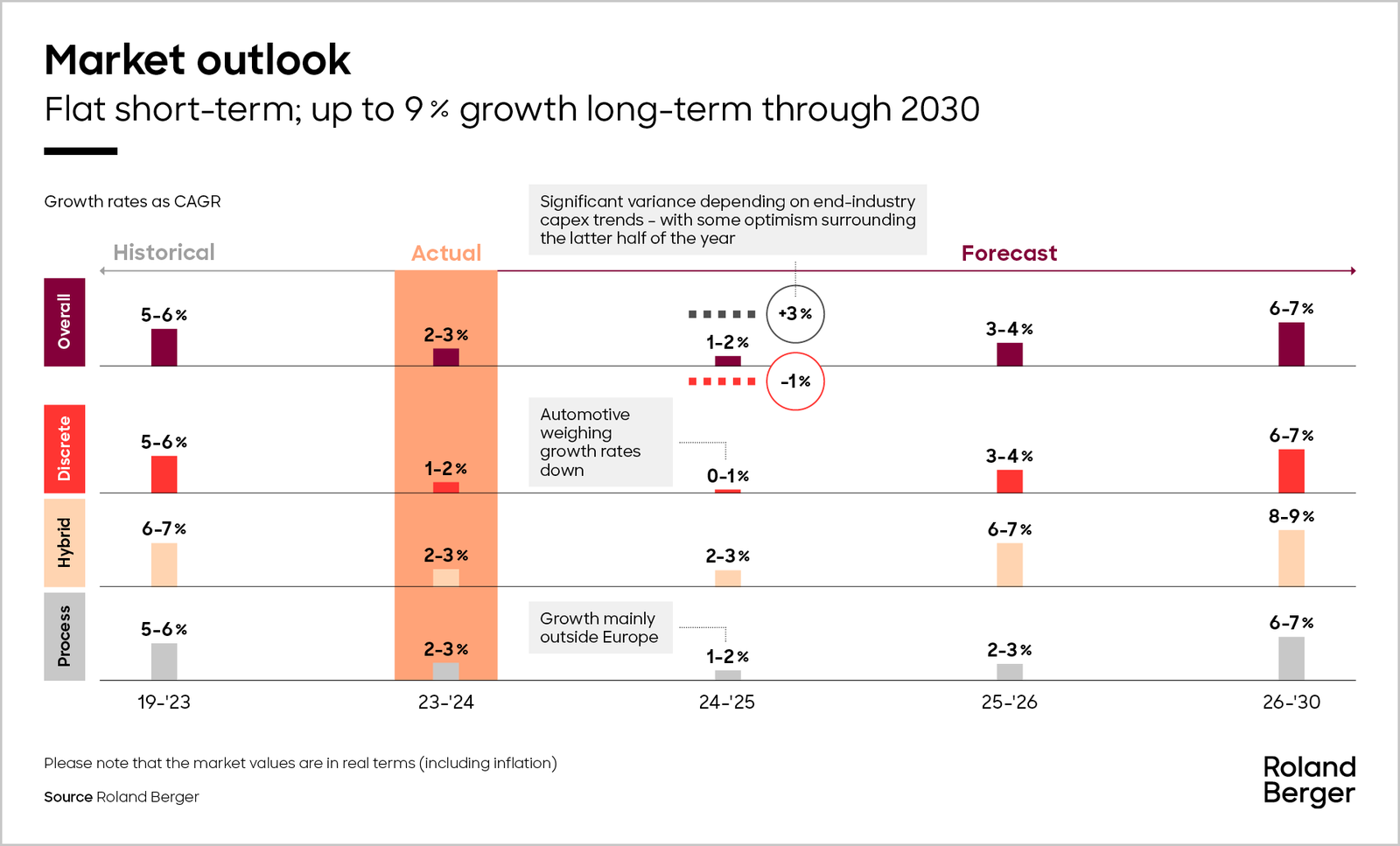
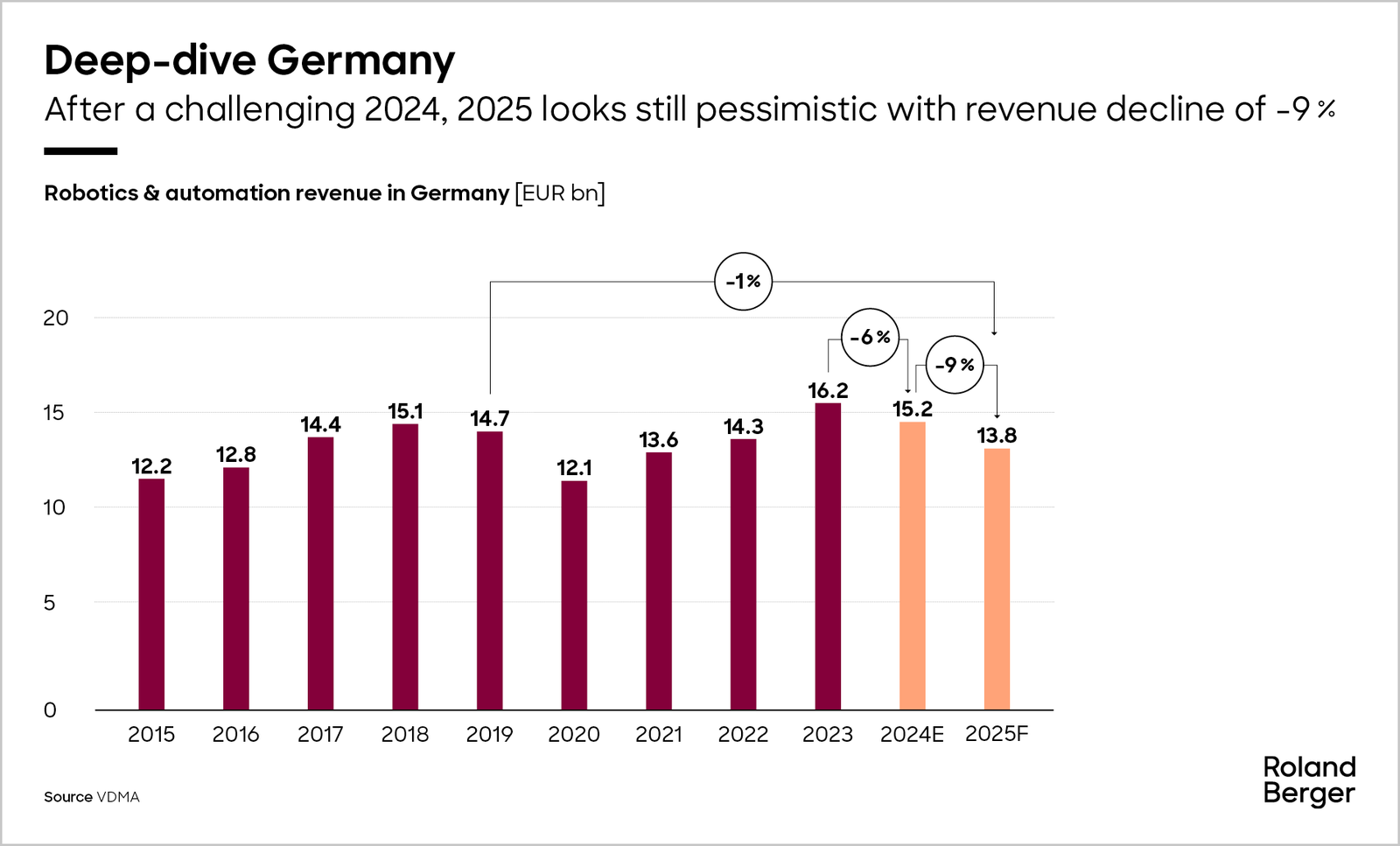
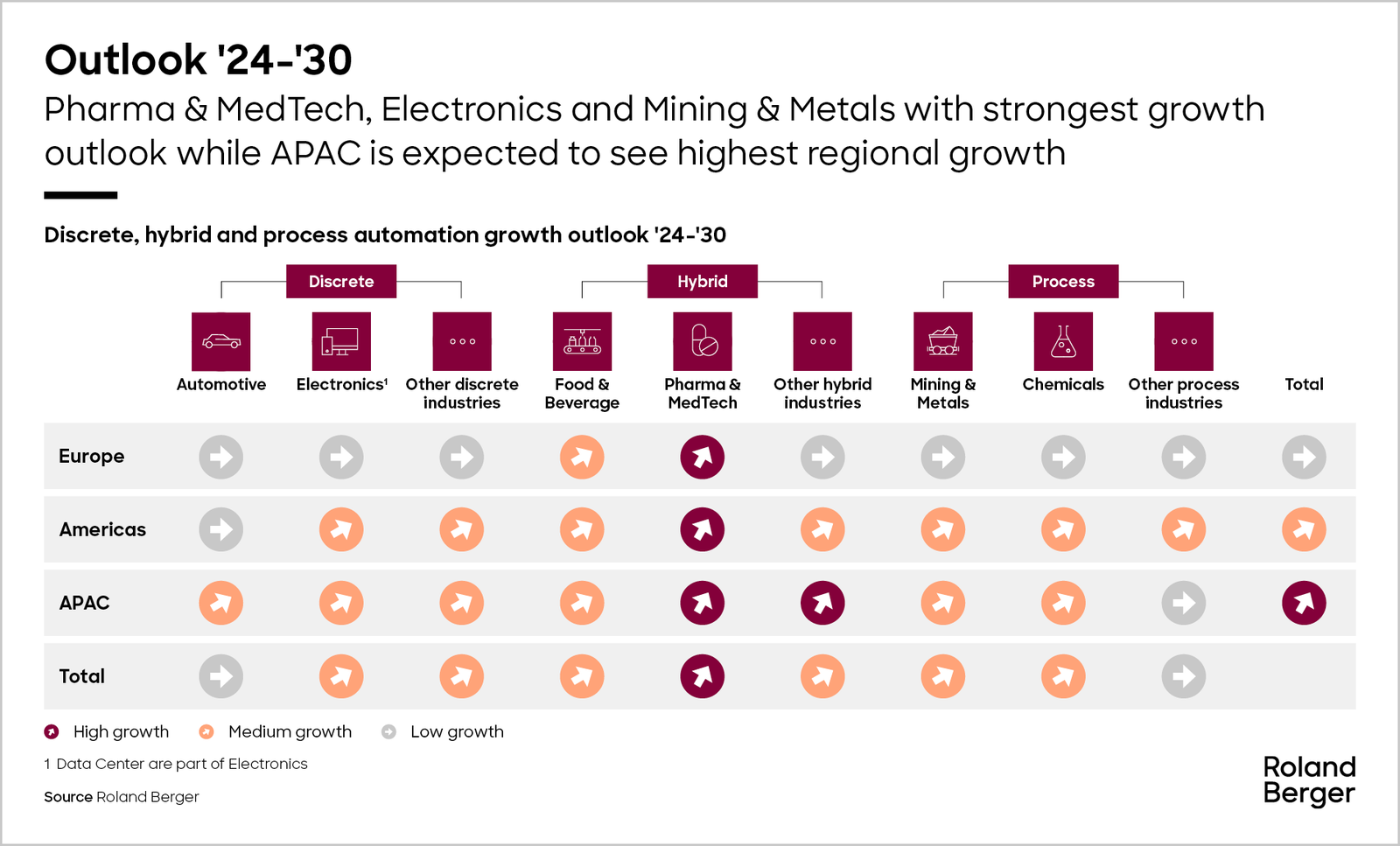
The current phase of low growth, as we have seen, should precede a return to stronger expansion in the years up to and including 2030. Companies keen to seize the attractive opportunities that lie ahead must therefore act now to lay a firm and healthy foundation on which to profitably move forward.
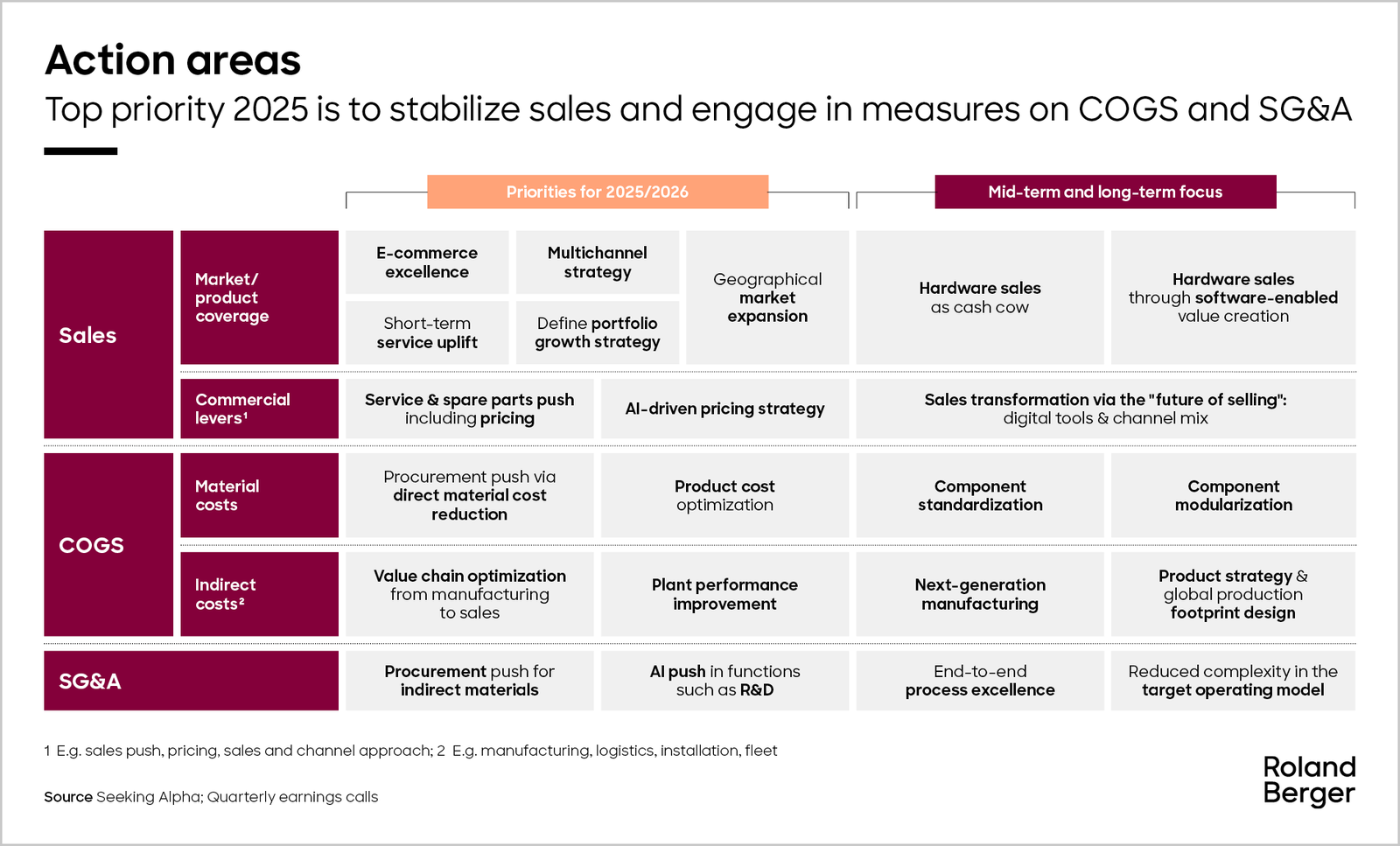
As growth remains meager through the end of 2025, the first priority should be to stabilize
sales
by optimizing sales strategies, delivering excellence in e-commerce in particular and, where possible, preparing the ground for geographical market expansion. At the same time, short-term commercial levers such as the sale of services and spare parts must be activated. In addition, it is important to flesh out an AI-driven pricing strategy.
Looking further ahead, hardware sales can continue to serve as a “cash cow” while software is deployed to add value. Meanwhile, sales must be transformed towards a digital and multichannel focus.
The cost of goods sold (COGS) can be enhanced by targeting material expenses, i.e. reducing direct costs by optimizing product costs. On the other hand, value chains must be optimized and plant performance improved in order to lower indirect costs.
With the longer-term in mind, the focus can then shift to standardizing and modularizing components, preparing for next-generation manufacturing and realigning each company’s product strategy and global production footprint design.
Lastly, selling, general and administrative expenses (SG&A) must be improved in the short-term by streamlining the procurement of indirect materials and actively driving forward the deployment of AI in functions such as R&D. At the same time, end-to-end process excellence and less complex target operating models will stand any company in good stead as growth returns in the medium to long term.