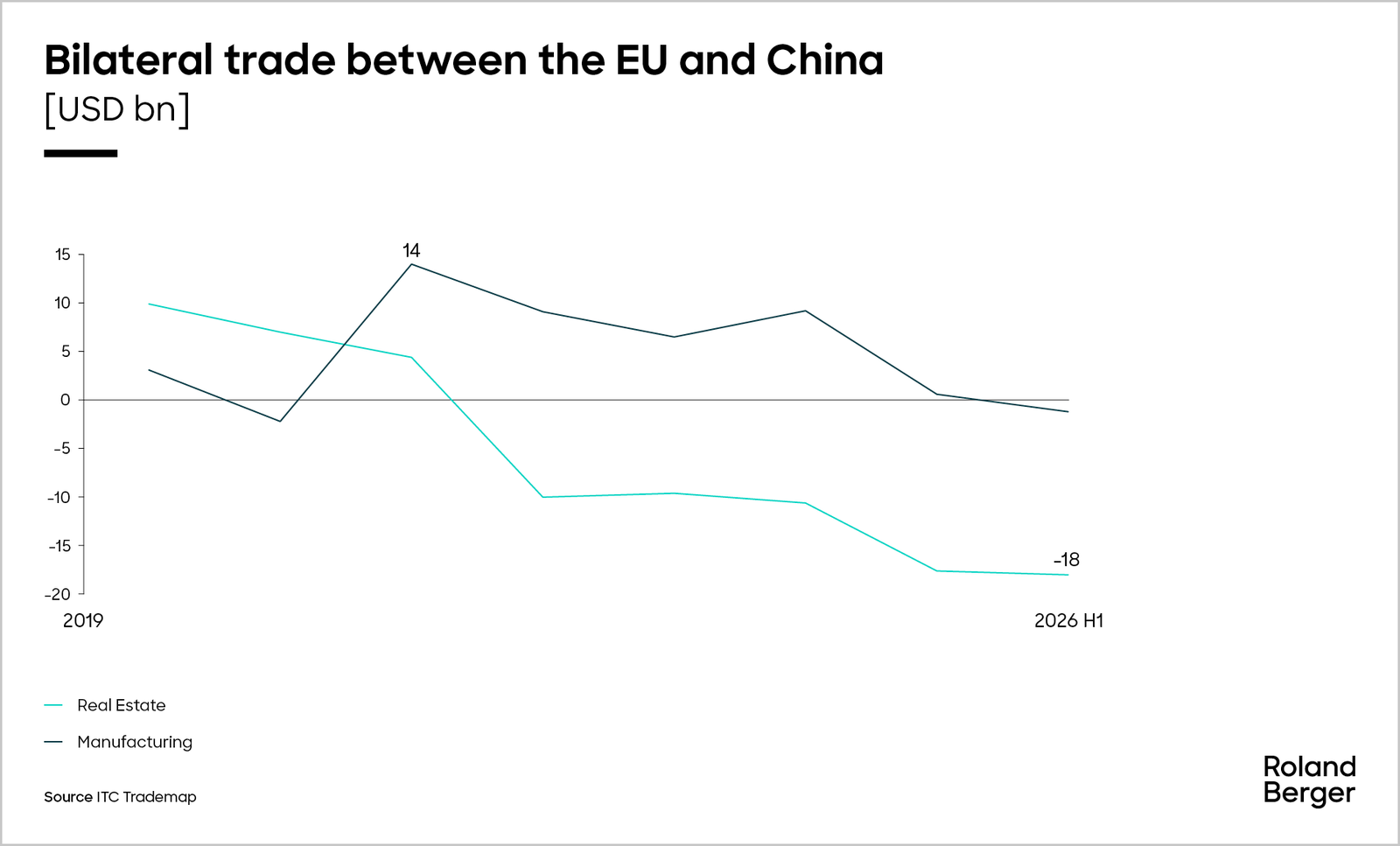
Meanwhile, households and businesses have prioritized deleveraging over spending, creating dynamics often described as a balance sheet recession. At the same time, continued policy support for strategic industries such as electric vehicles, batteries and
renewable energy equipment
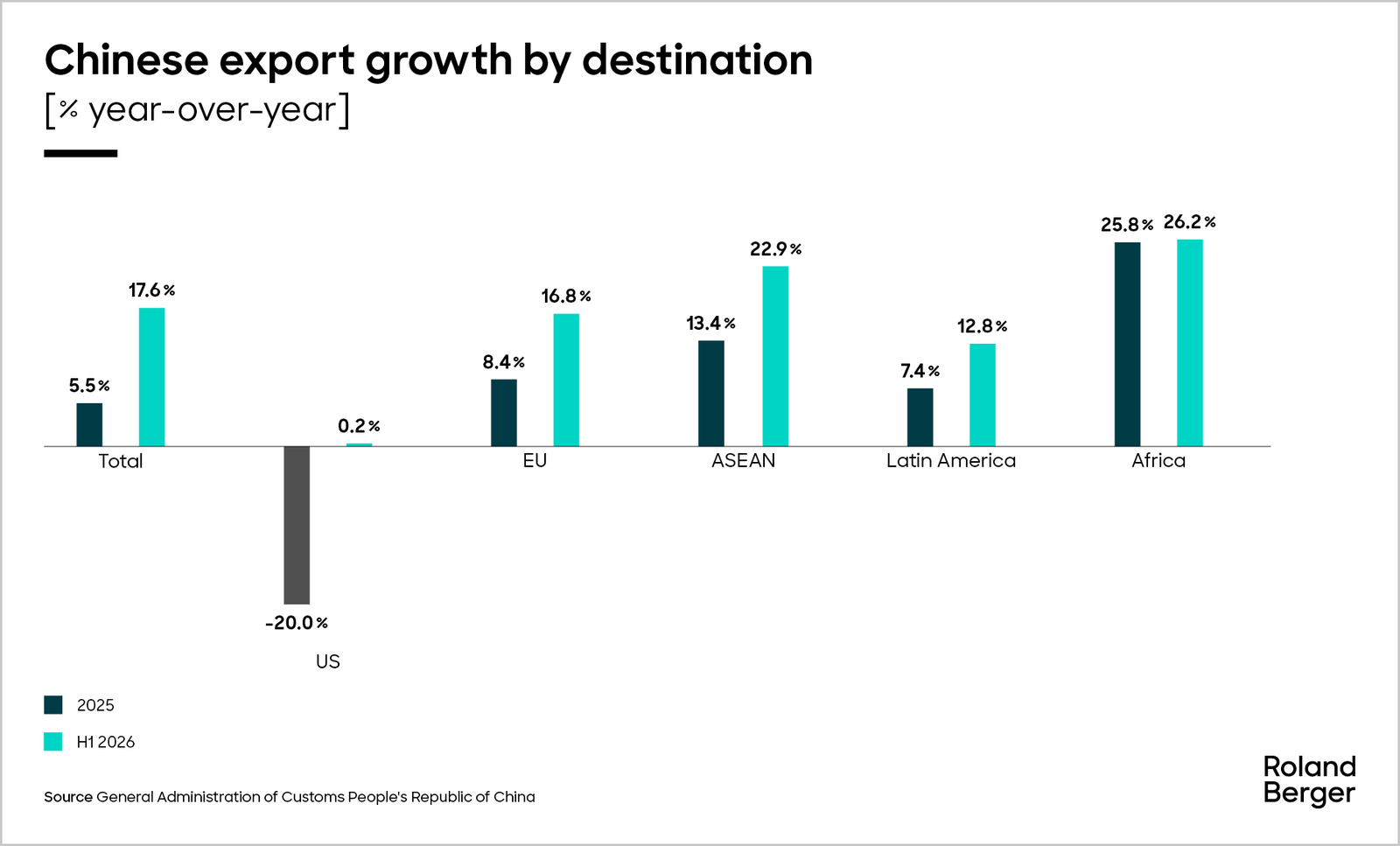
encouraged investment and production. The combination of weak domestic demand and expanding industrial capacity generated excess output that increasingly had to be absorbed by foreign markets.
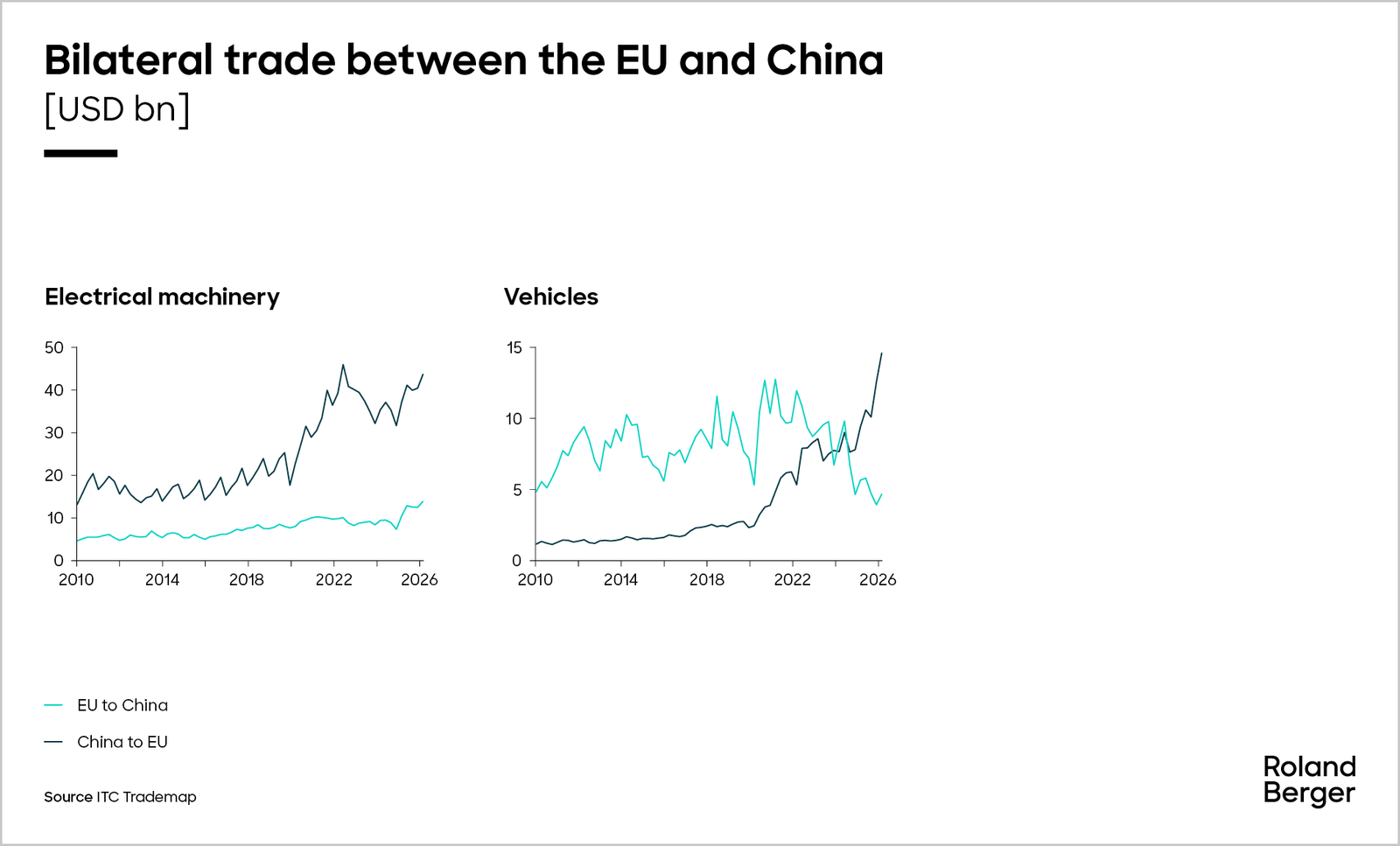
The before-mentioned ECB analysis provides the details: Since 2022, sectors with weak domestic sales, including textiles, steel, machinery and automobiles, increased export volumes by around 75%, compared with roughly 30% in sectors where domestic demand remained stronger. The gap suggests that exports increasingly serve as an outlet for excess capacity in sectors where domestic demand is weak.
Export prices fell most strongly in sectors with the fastest export growth, suggesting that firms expanded market share by accepting shrinking margins or even operating at a loss. This gave Chinese producers a significant price advantage in international markets. In addition, advantages in scale, vertical integration and supply-chain depth enabled producers to sustain output despite weak domestic demand, reinforcing the shift towards foreign markets.
These effects are exacerbated by an undervalued currency. Overall, the IMF estimates that the renminbi remains 17% to 21% below fair value. Although the renminbi appreciated during 2026, export growth continued to accelerate, suggesting that structural factors currently outweigh exchange-rate effects.
On the other hand, China’s export success cannot be explained by subsidies alone. It also reflects a fundamentally lower-cost model: vertical integration, leaner organizations and lower overheads. The result is a remarkable ability to commoditize features once reserved for premium products, while moving at a pace few competitors can match. Two examples capture the scale of this advantage: China installed 354,000 industrial robots in 2025, almost three in five of all installations worldwide. Then there are lidar sensors: once priced at €44.000, they now cost Chinese suppliers around €180 a piece.