The
idea of the circular economy
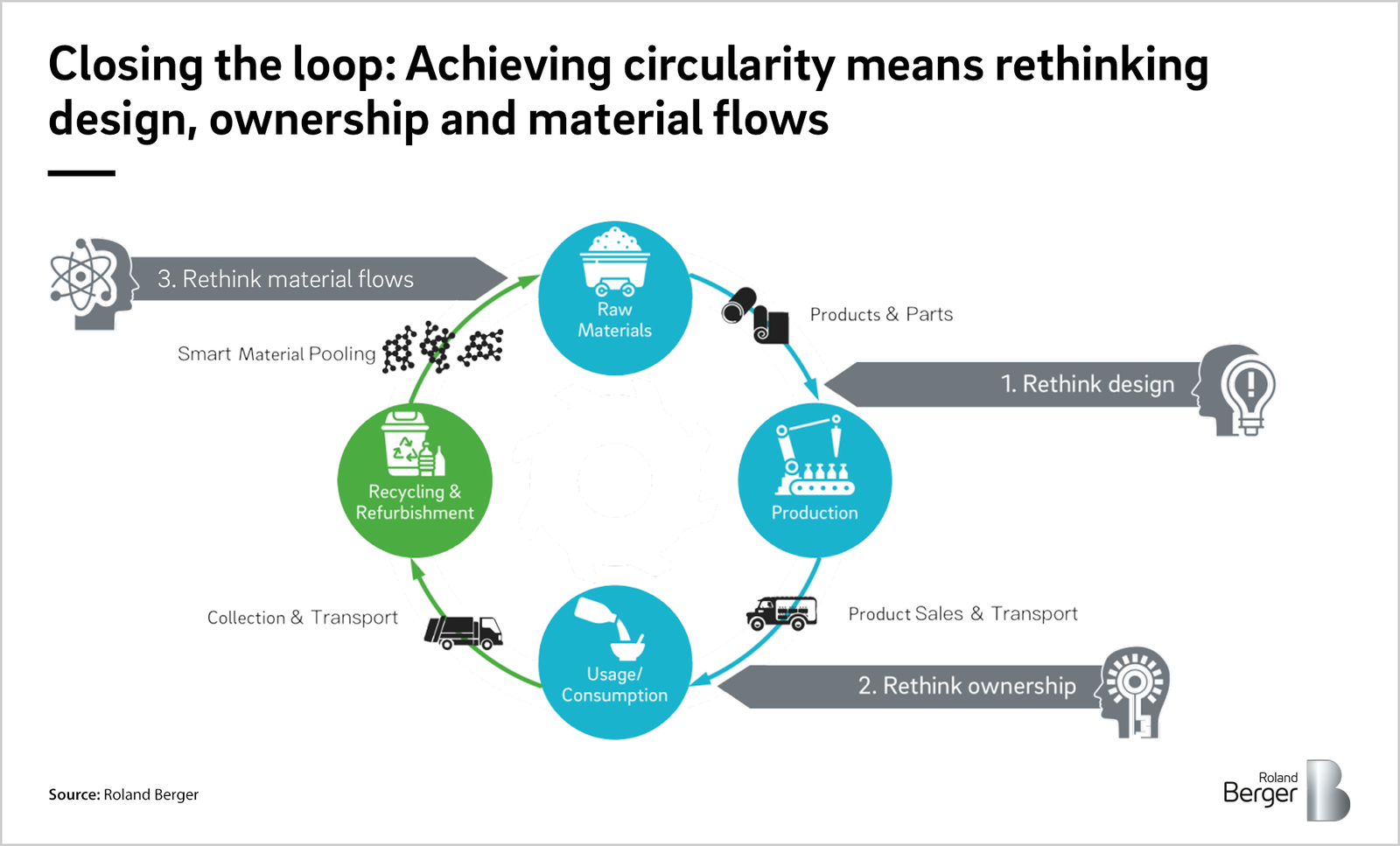
is to close the loop in this cycle thereby removing the need to extract (or cut off) new virgin products. Instead of disposal, goods and materials are reused so the cycle can start with recycled or refurbished materials rather than virgin ones. Yet, by focusing on the reuse, the traditional focus has been set on decreasing energy consumption and driving down emissions as a key to its success.
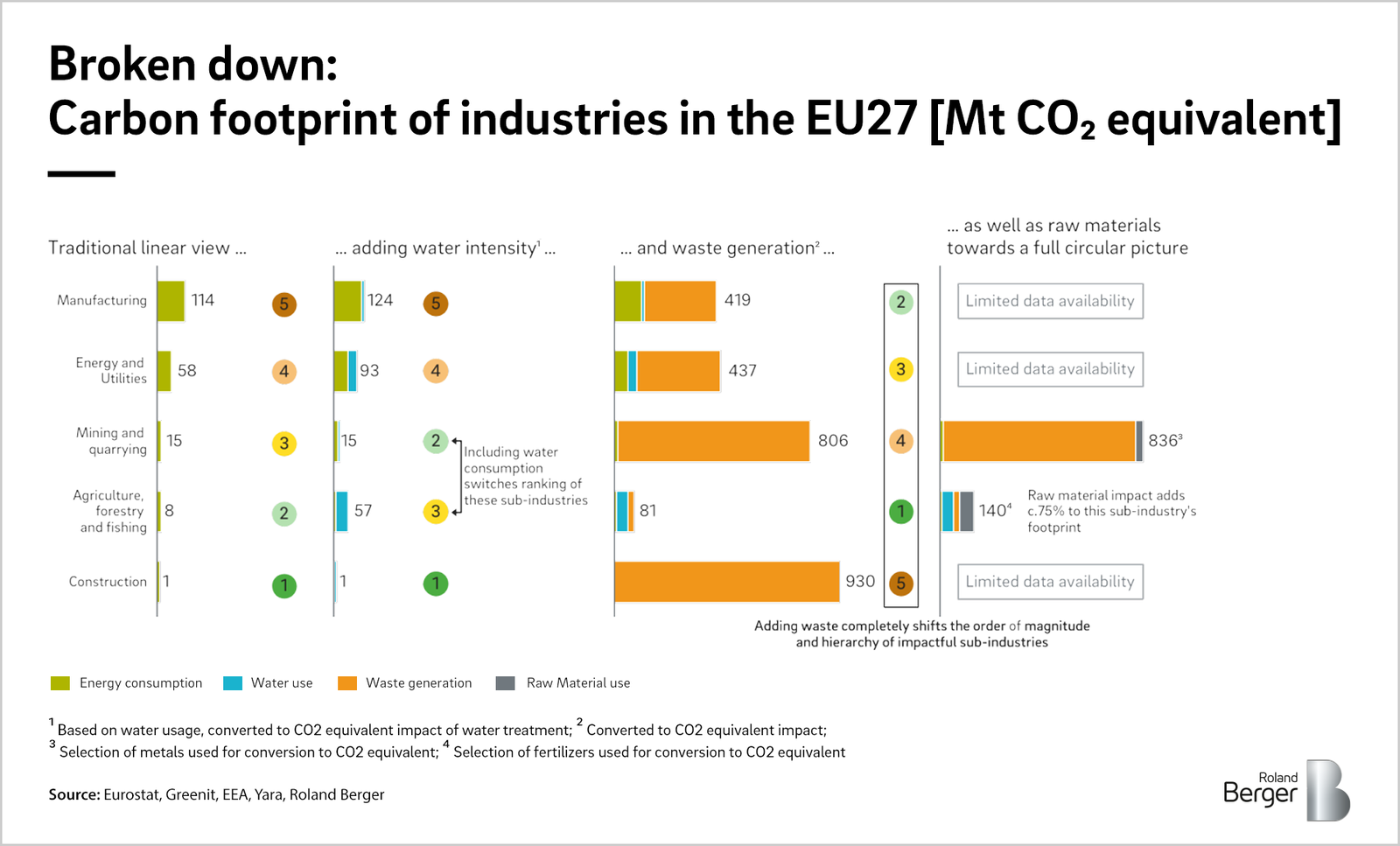
But this isn’t the whole story. To achieve true circularity, raw material use, waste generation and water usage must also be factored in. There are two main reasons to include these dimensions into the circularity concept: water is arguably one of the scarcest resource and the most vital to human survival and extracting virgin material, treating water or waste are also energy-intensive activities that add to the total emission footprint that needs to be brought down to zero.
As a matter of fact, the use of virgin raw materials often goes hand in hand with technological evolution (for example, rare earth for batteries) which stresses the need for proper accounting. Regarding waste, a fully circular approach should encompass all outputs of industrial processes and systems, including waste streams linked to, for instance, by-products or scrap. Lastly, clean water, even at the less-purified levels tolerated by industrial applications, is increasingly scarce and requires energy-intensive treatment to make it circular.
To close the loop and achieve a truly holistic circularity, society must therefore rethink design, ownership and material flows. Many companies have already embarked on this journey.