Good for planet, people and business
From water and electricity to steel and concrete, it takes a vast amount of resources to build our homes, offices and roads. But at what cost? In Europe, construction makes up more than a third of total energy consumption. And when buildings reach the end of their lifetime, only 40% of construction waste is recycled or reused. Most of these recycled materials are downcycled for second-grade construction like roads, rather than new buildings.
It’s no surprise, then, that construction features most frequently in European countries’ circular economy strategies. These aim to minimize (or even eliminate) waste and pollution by improving efficiency and keeping products and materials in use. For construction, this encompasses everything from the design phase through building, usage and eventually deconstruction and recycling.
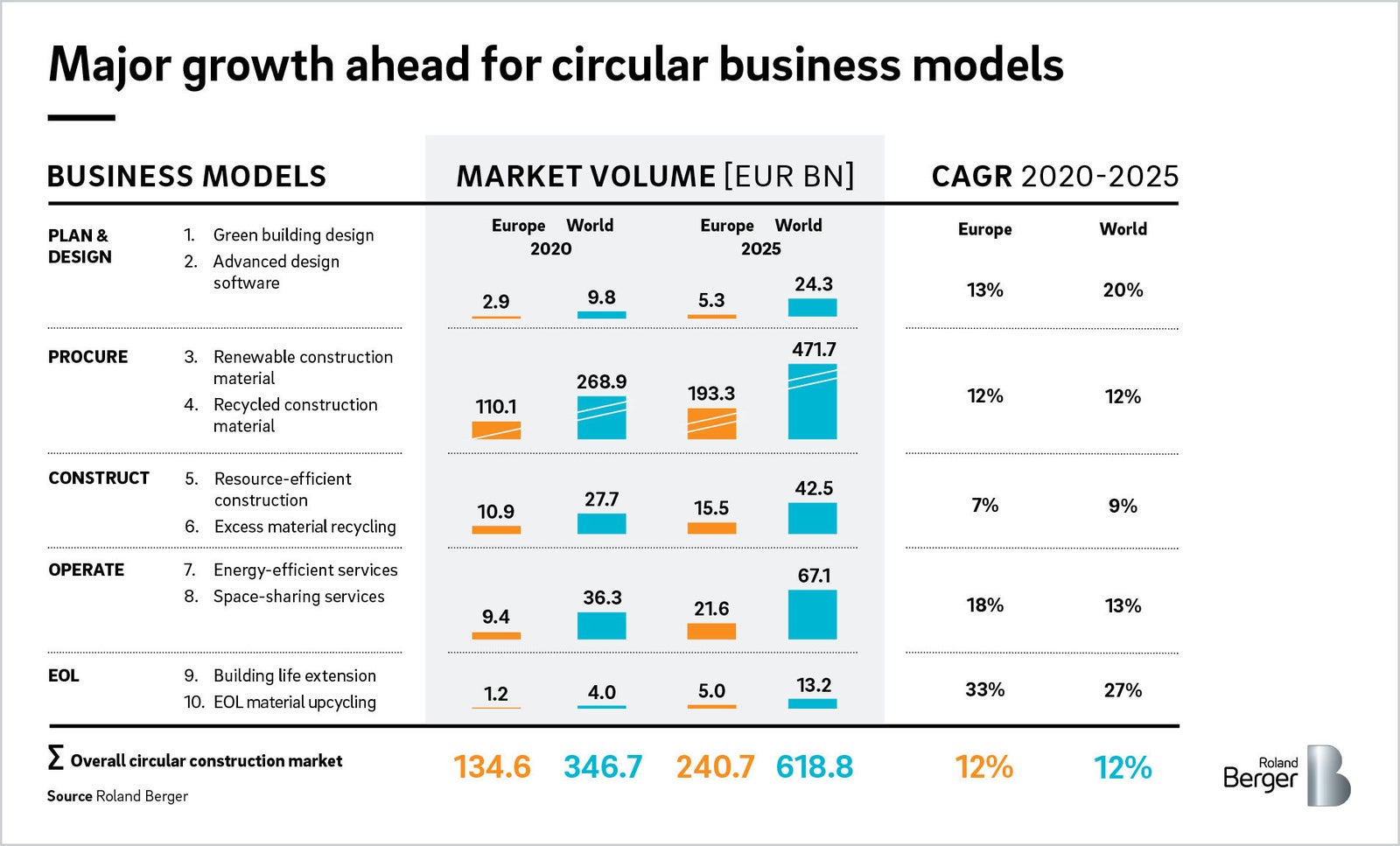
However, the benefits of a circular approach go far beyond just the ecological. It can also bring significant social and economic gains. Using environmentally friendly construction materials has positive impacts on wellbeing, for example, and has been shown to increase productivity by up to 10%. By innovating business models along the entire value chain, we expect an additional global market of more than EUR 600 billion by 2025 with an annual growth rate of 12%. Europe will play a leading role in this circular economy with a market share of EUR 240 billion.
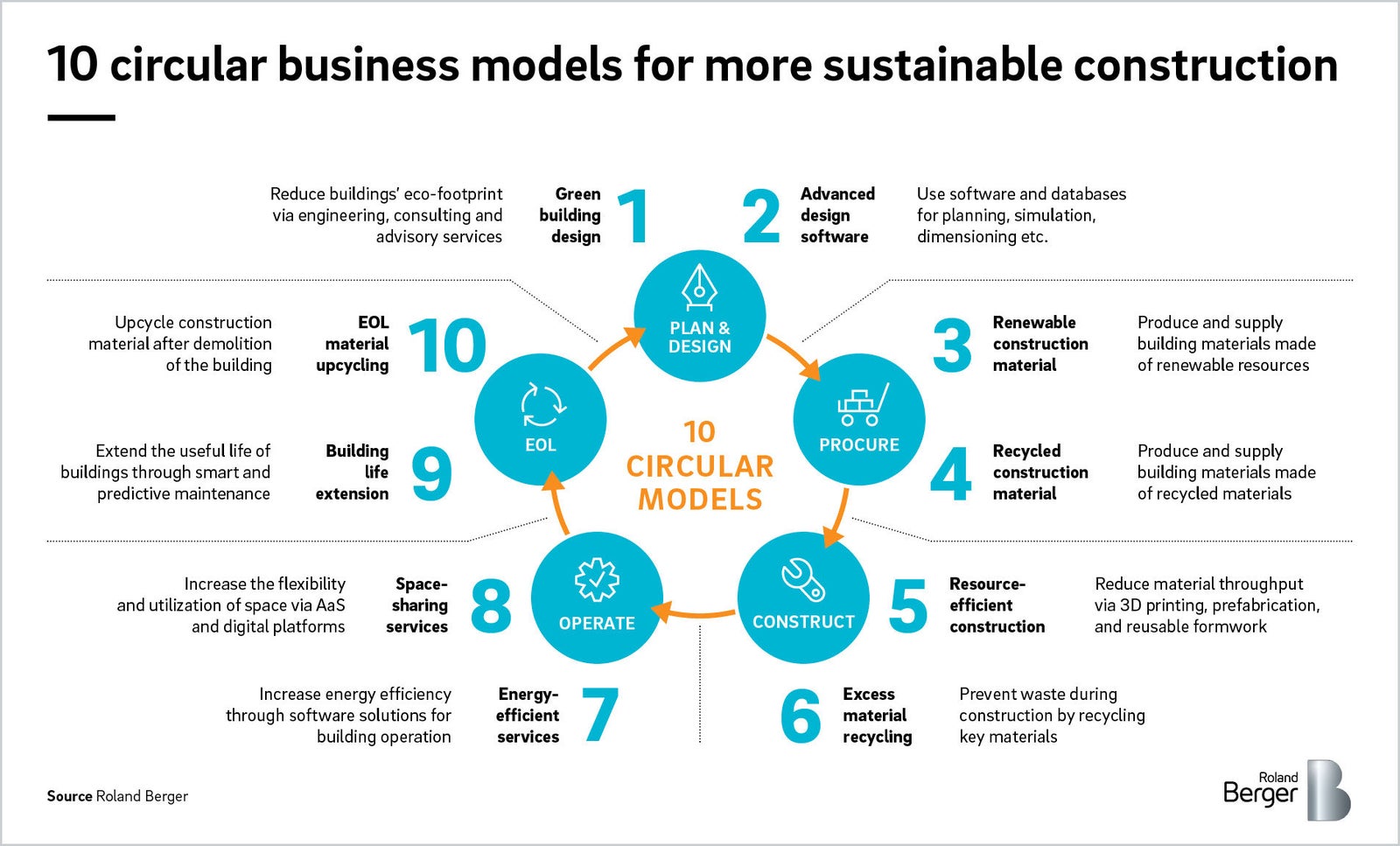
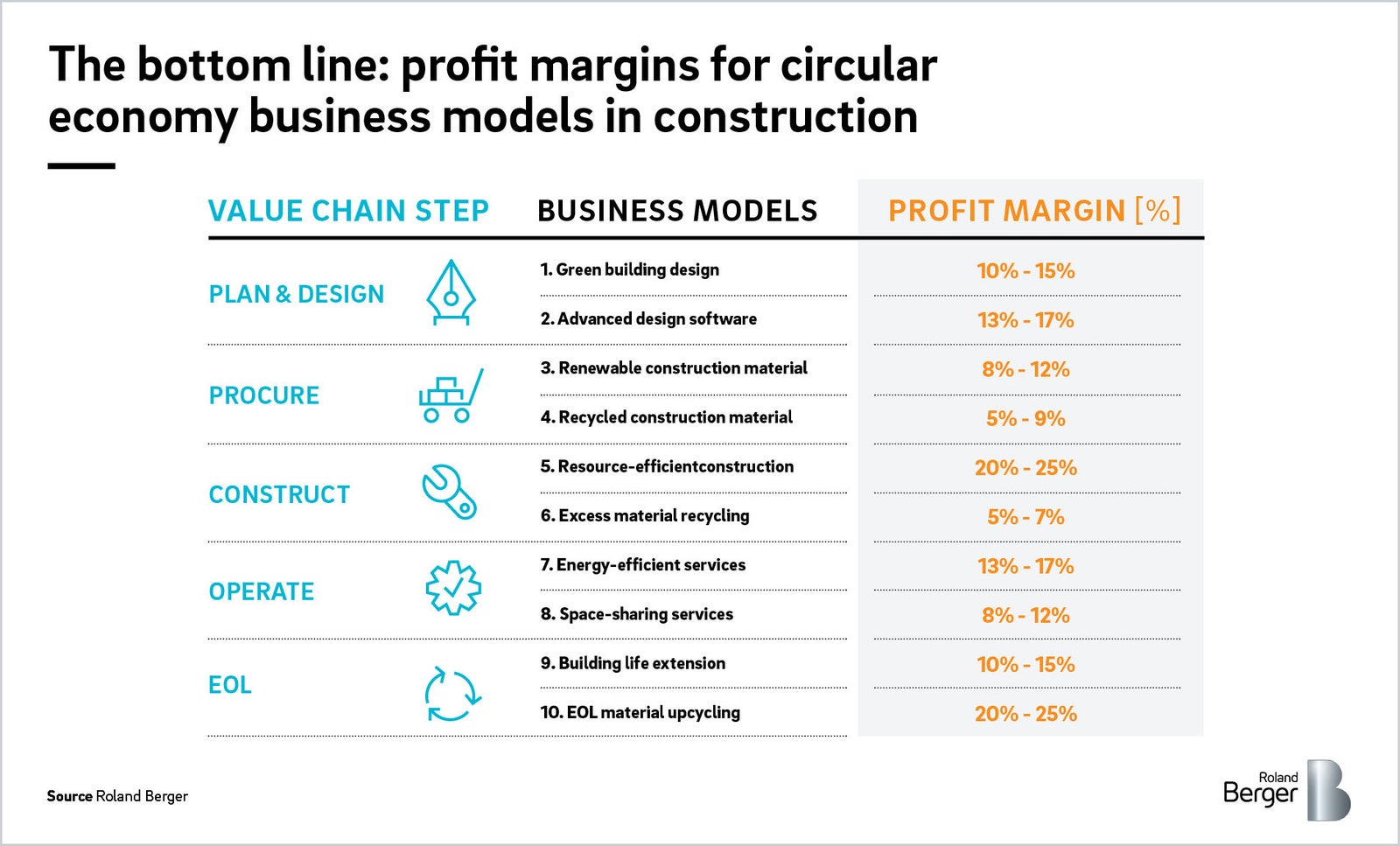
We have identified 10 innovative circular economy business models throughout the construction value chain that will drive sustainable development and growth in the industry. These start in the planning phase, where advanced software and eco-focused engineering and consulting services can optimize design. From there, a rapidly growing portfolio of renewable and recycled materials can be combined with efficient new construction methods such as 3D printing and prefabrication. Recycling of key materials at all stages can minimize waste. During operation, digital tools can drastically
improve energy efficiency
and utilization of space, as well as enabling smart predictive maintenance to extend a building’s life. At the end of life, upcycling keeps materials in use.