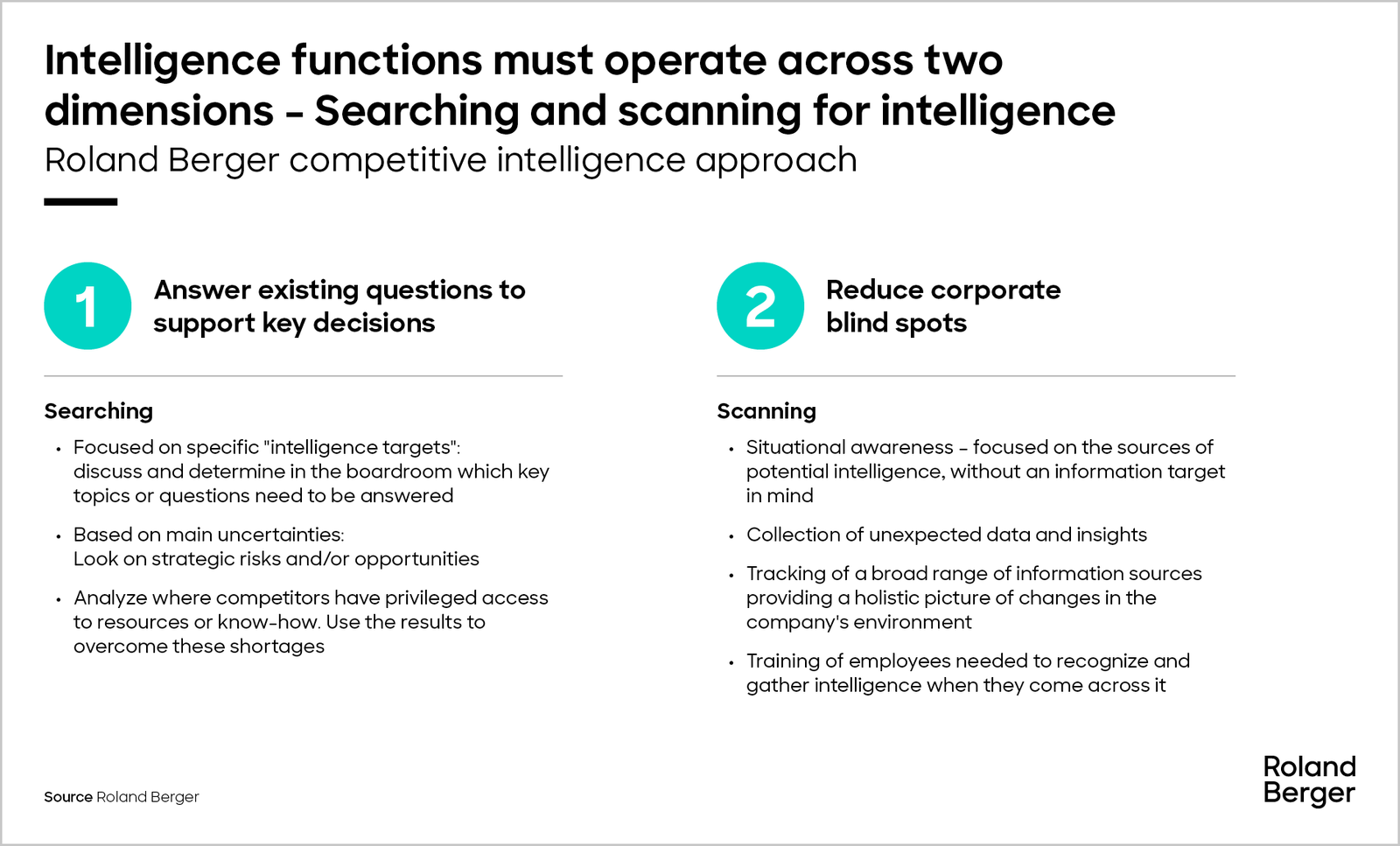
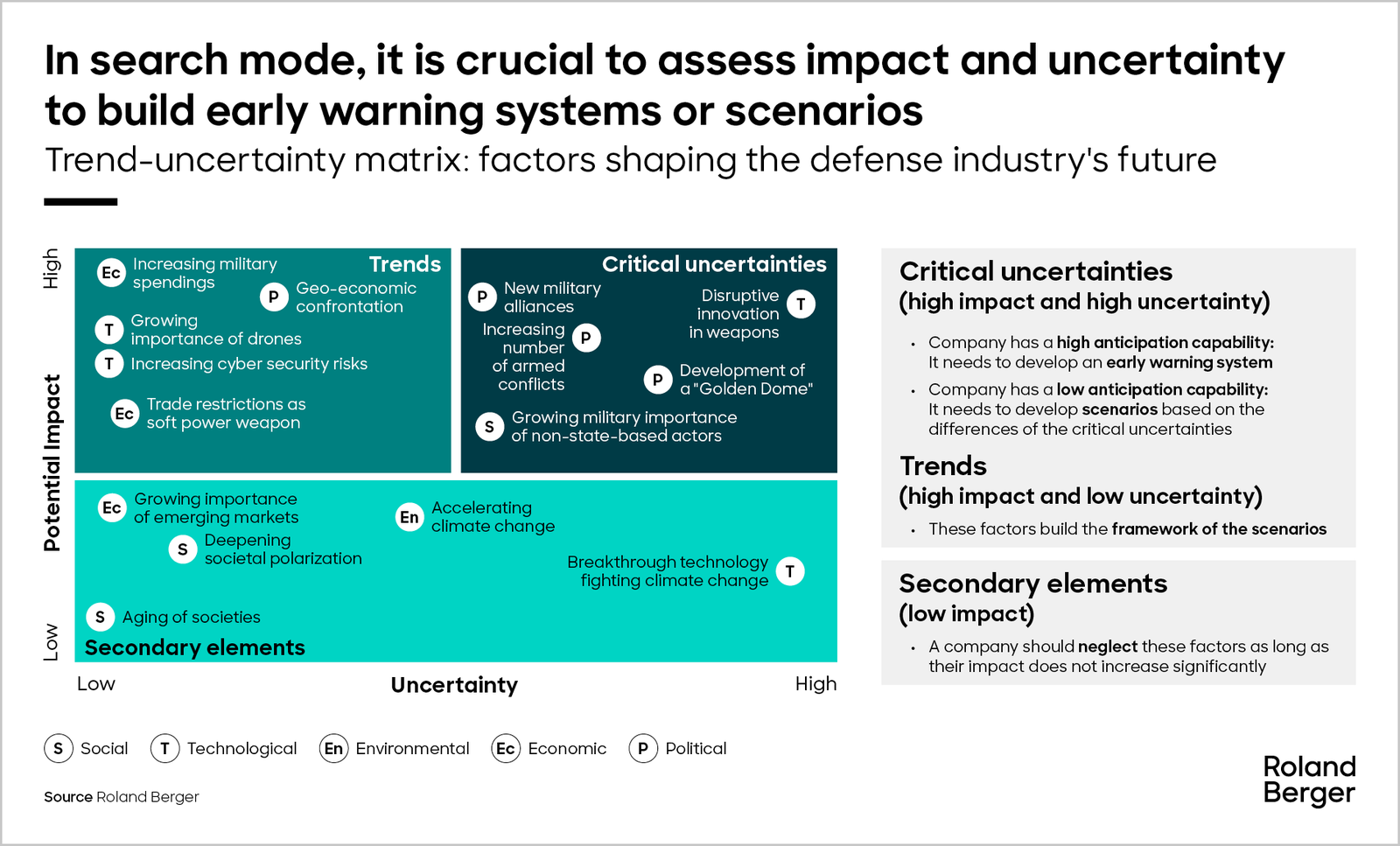
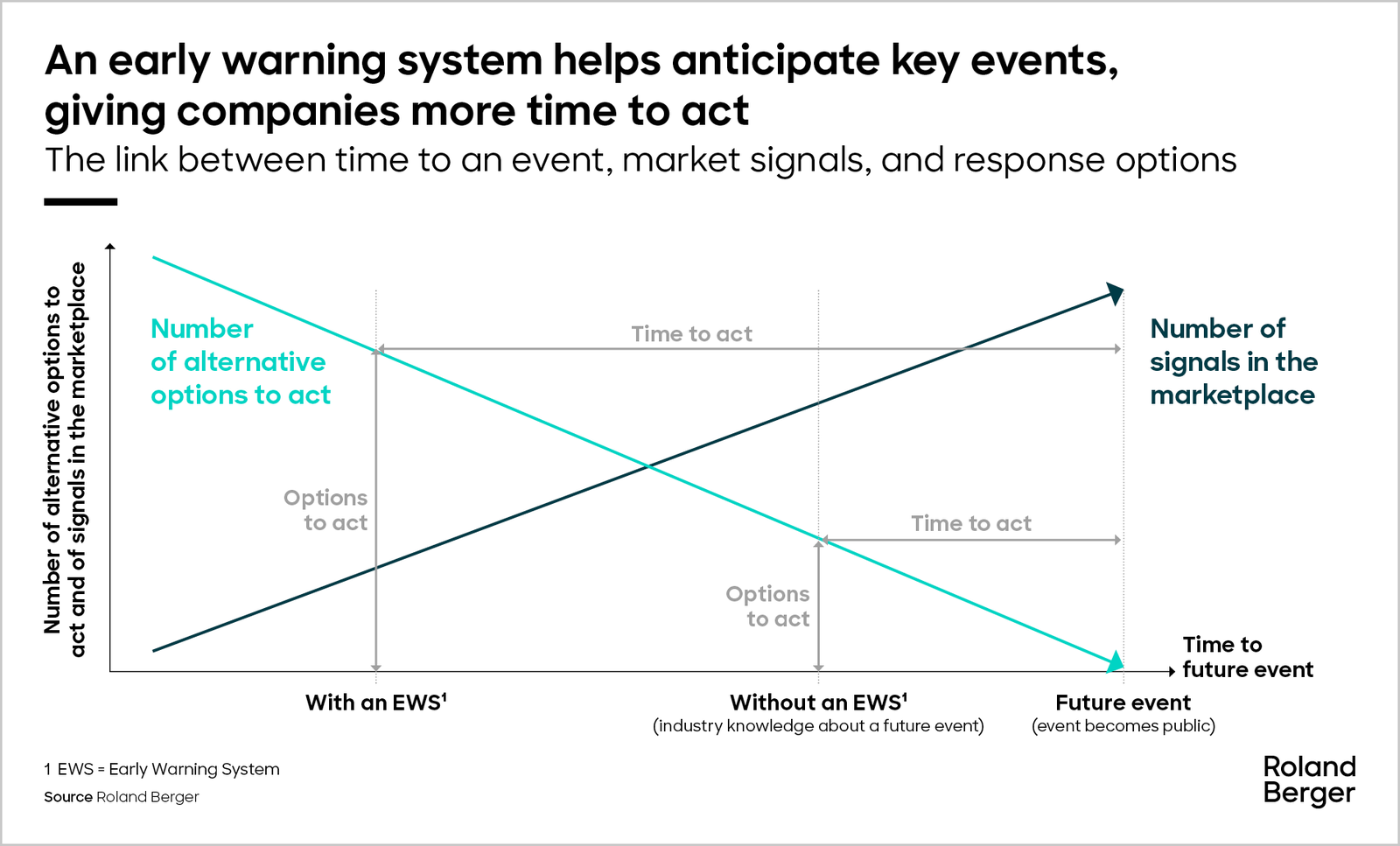
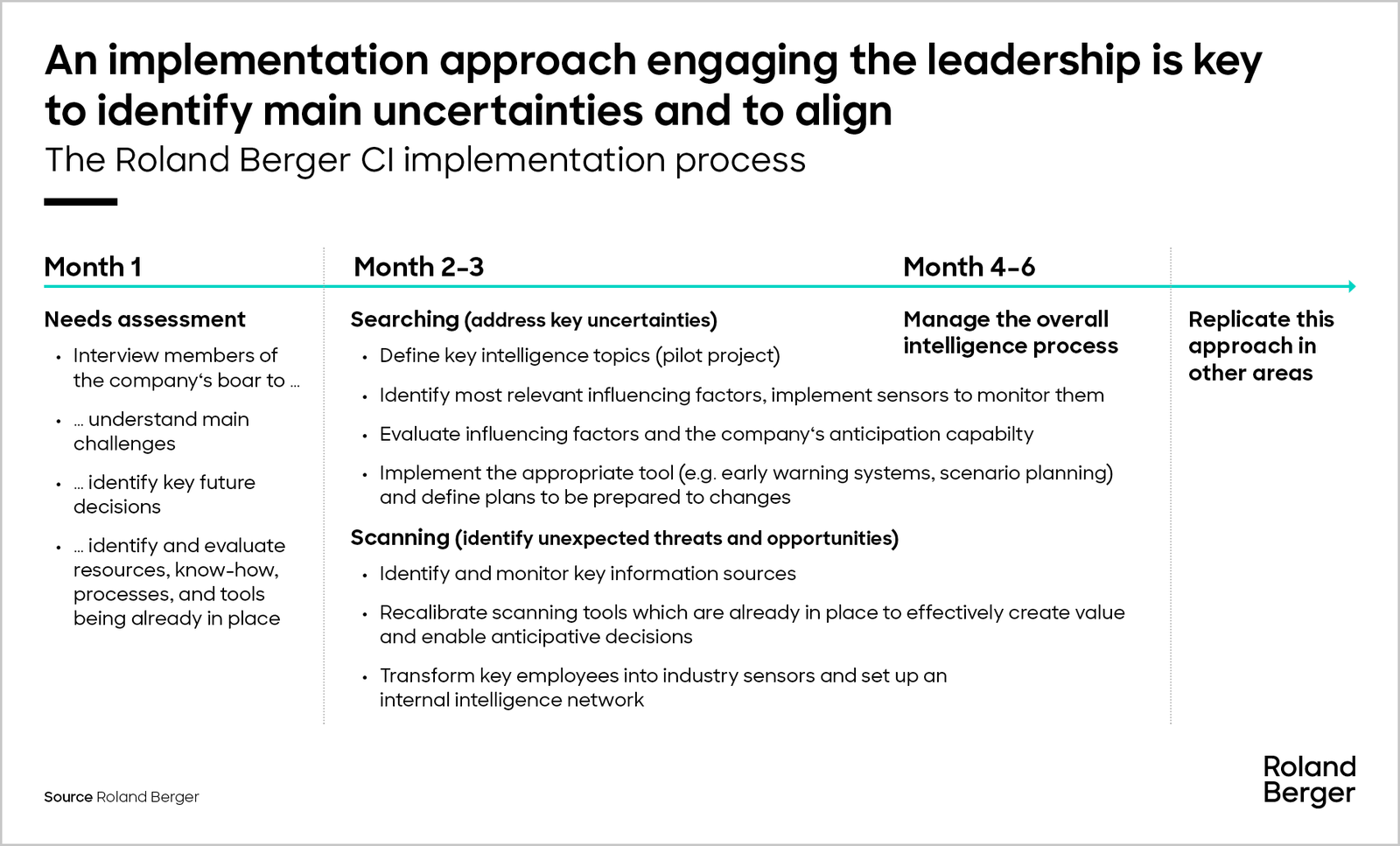
At the end of the process, the company will have a comprehensive approach for anticipating environmental changes and proactively adjusting its strategic direction, product positioning or any other key topic the company is focusing on.
CI offers considerable advantages
Competitive Intelligence provides actionable insights into competitors, markets, and emerging trends. E.g., for a globally active freight forwarder, we, together with the board, identified the most important topic towards 2030
(visibility in logistics)
, developed scenarios identifying blind spots and tipping points of indicators to be monitored, created transparency on market dynamics and customer needs, and developed necessary strategic moves. For a leading aircraft manufacturer, we implemented a CI process including a broad set of tools like wargaming and weak signal analysis and established a global internal network to understand and predict the competitor’s most likely movements, turning employees into industry sensors. In both cases, key to success was the close involvement of the C-level executives during the process and the transfer of methodological know-how.
Beyond risk mitigation, CI enhances operational efficiency and long‑term profitability. It supports cross-functional teams in identifying market gaps, refining positioning, and leveraging AI-driven tools for
predictive analytics
, ensuring agility in dynamic and complex environments. Ultimately, companies embedding CI gain stronger advantages, higher market share, and superior strategic outcomes.
For some risks you have insurance, for strategic risks you have CI.