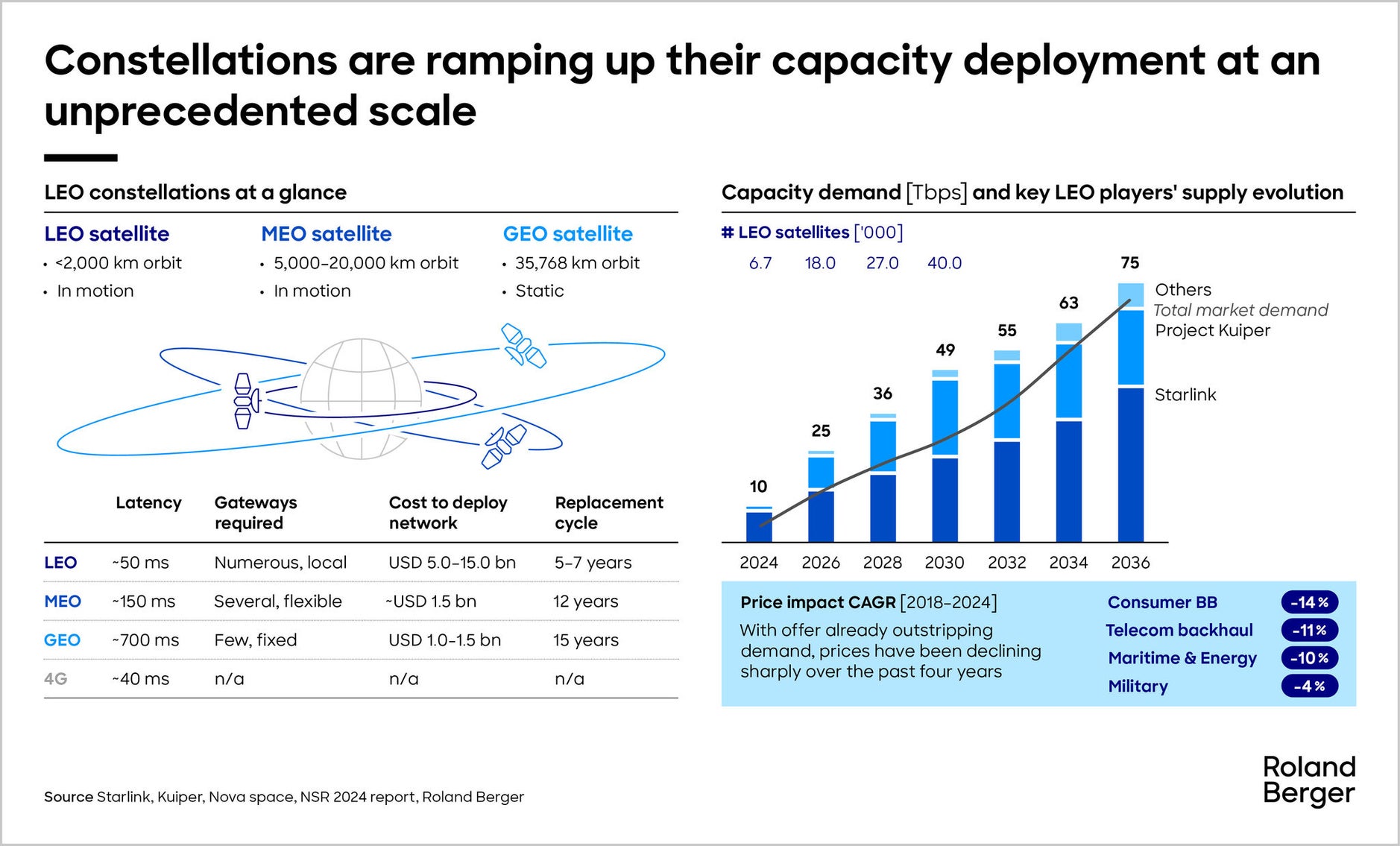
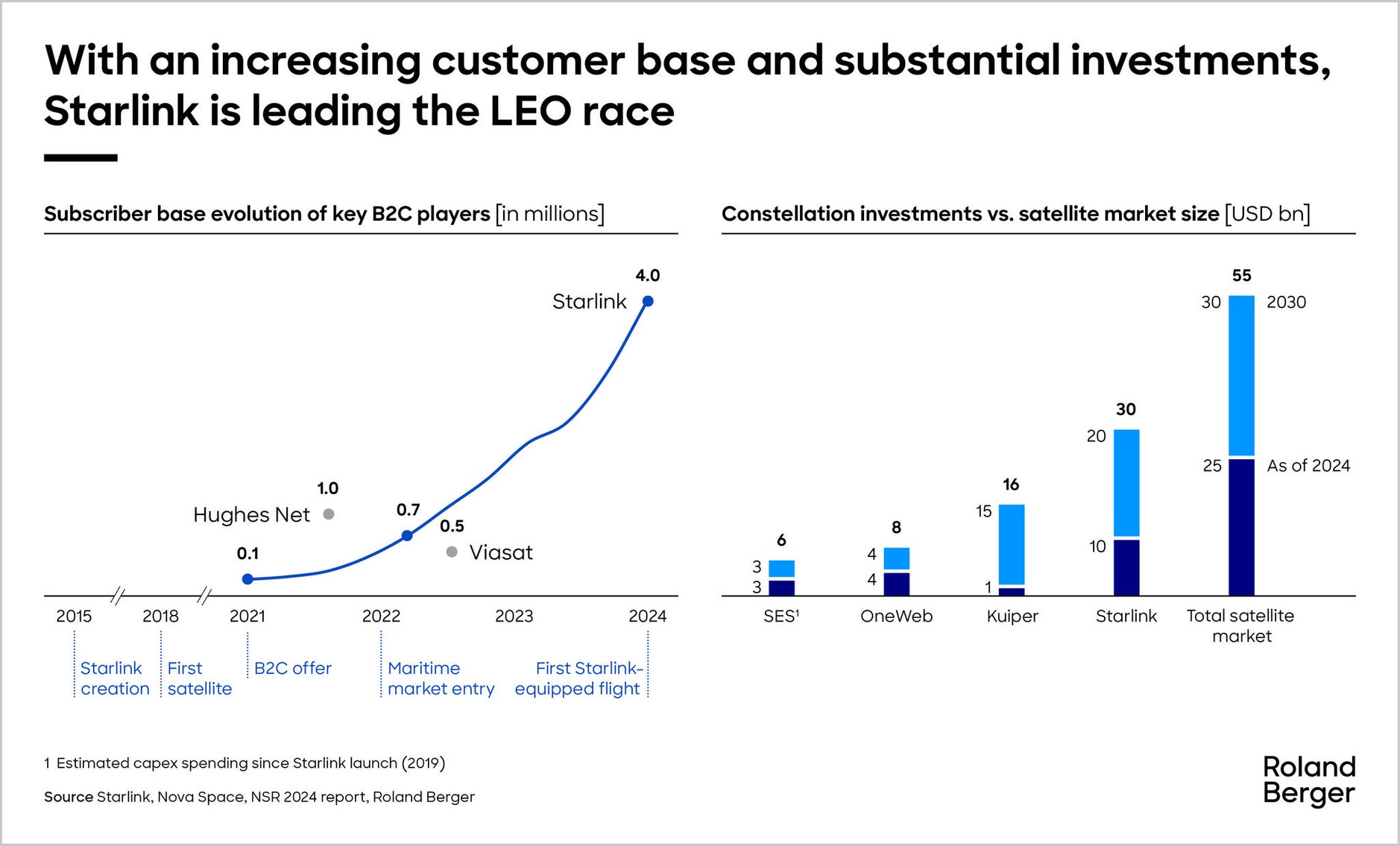
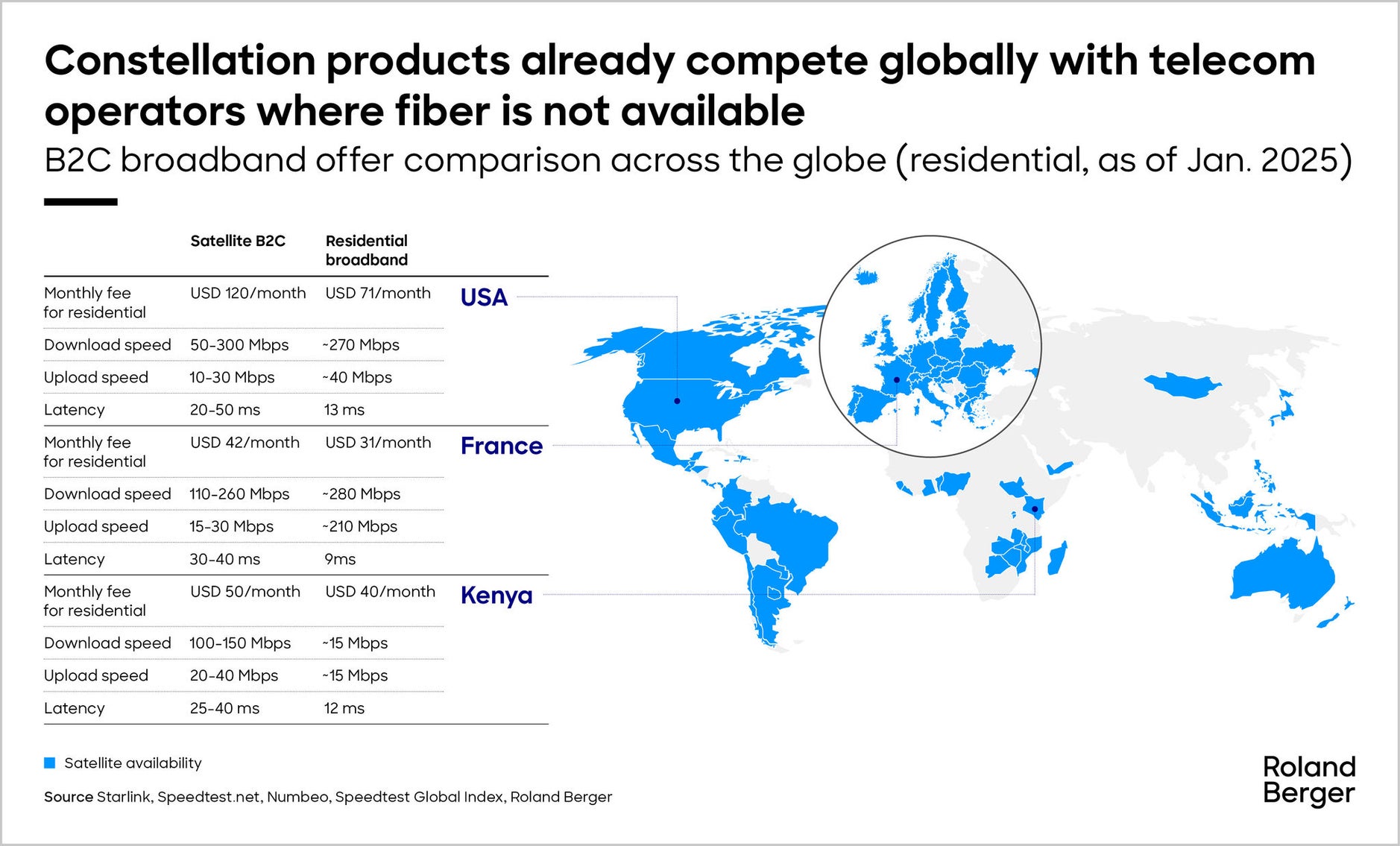
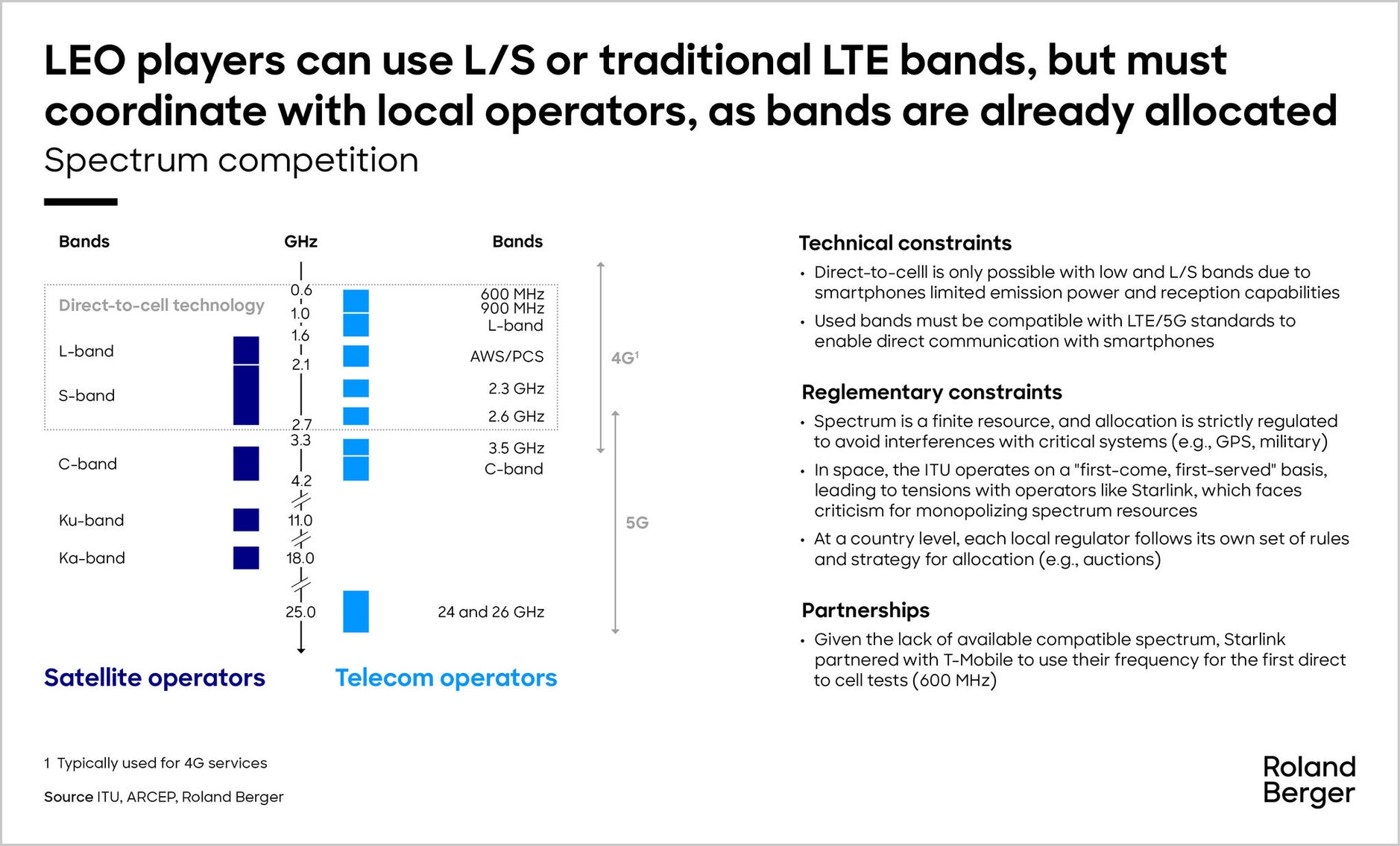
Satellite constellations, led by Starlink, are turning satellite connectivity into a mainstream solution through massive investments (USD 10-30 bn) and disruptive LEO technology. With costs dropping (-15% per year since 2021), adoption is surging, especially in rural U.S. areas lacking fiber, where 4 million customers now rely on it. Next, direct-to-cell and eSIM are expected to enable seamless mobile coverage, letting smartphones connect via satellite. This shift depends on access to scarce low-band spectrum (600–900 MHz), pushing constellations to secure deals with local operators. The fragmented telecom landscape favors them, as at least one operator per country is likely to cooperate. In response, telecom players will have to decide whether to block entry, partner with satellite providers, or develop their own solutions—shaping the industry's future.

Article
Constellations: Telco Race in outer space
How satellite constellations are reshaping the telecommunications landscape
Published March 2025. Available in