Develop a comprehensive portfolio strategy focused on scalable biological products
The agri-inputs market is undergoing a period of transition, driven by the
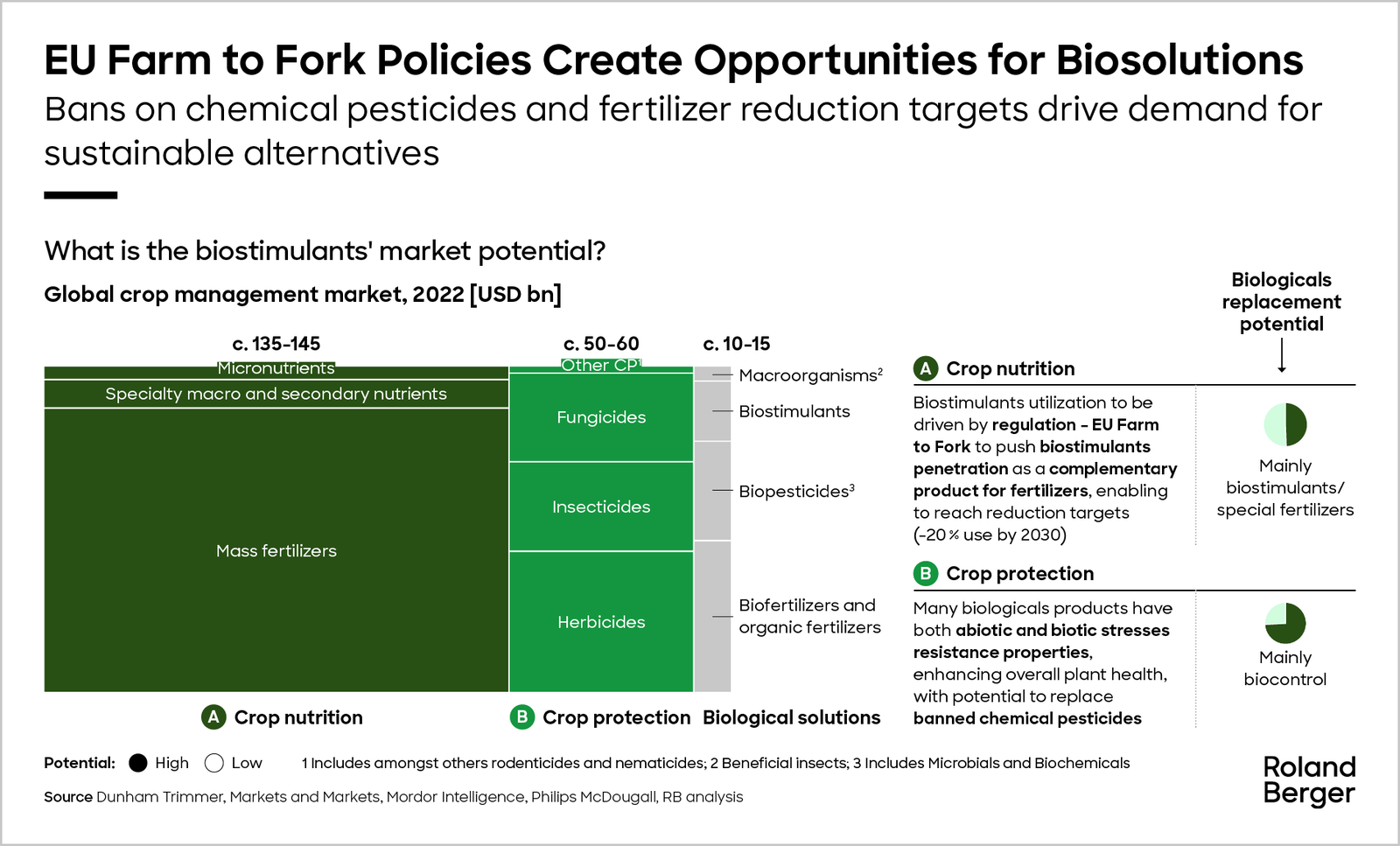
demand to reduce the use of chemical pesticides and fertilizers , especially on relevant importing regions such as Europe, and North America. For instance, the EU Farm to Fork strategy aims to reduce chemical fertilizer use by 30% by 2030, and the EU Commission regularly updates the list of banned chemical pesticide molecules.
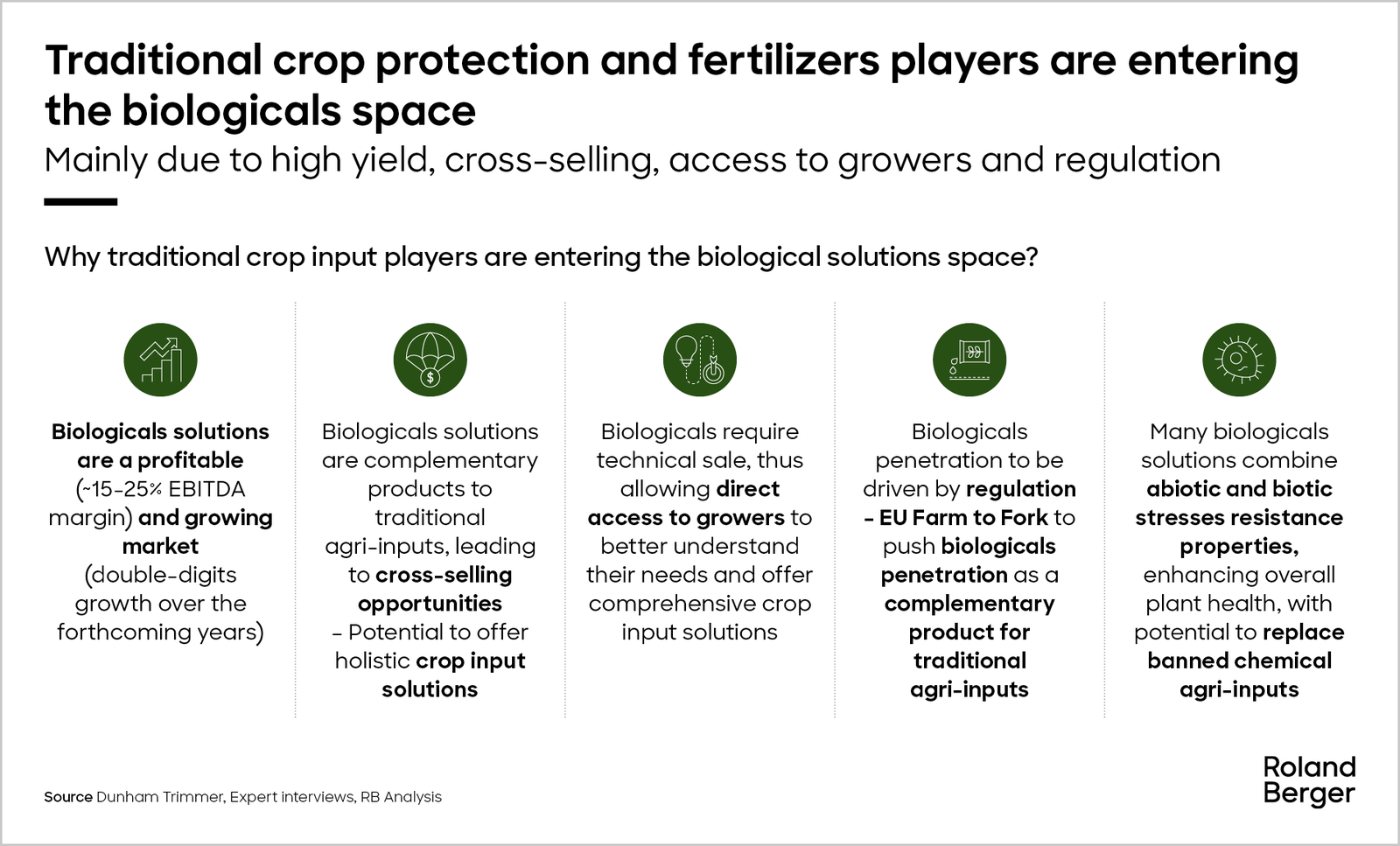
Spanish agri-inputs players must navigate this complex scenario and are striving to replace chemical products with biological alternatives. This trend is evidenced by the recent wave of mergers and acquisitions, with multinational chemical companies (e.g., BASF, Bayer) and large agri-inputs providers (e.g., UPL, Syngenta, Corteva) investing in biological companies to access innovative and scalable technologies, market knowledge, and market access for new products.
However, challenges arise as many current technologies are not yet scalable, are more expensive, less effective, and less accepted by traditional farmers. For these reasons, the market has also seen several partnerships focused on developing new products and technologies (e.g., Bayer and Kimitec in Spain collaborating on new microbial biostimulants solutions).
Successful agri-inputs players are strategically developing their product portfolios, prioritizing scalable technologies, focusing on efficacy tests, and emphasizing farmer education.