Electrification – one of the four PACE megatrends highlighted in the Roland Berger Automotive Outlook 2040 – will be a key topic for automotive players over the next decade and a half. The direction of change cannot now be reversed: The share of BEVs (battery-electric vehicles) is expanding rapidly around the globe, albeit with some regional variation. The growing share of electric vehicles has a knock-on effect on supply chains, downstream business and target markets, creating challenges and opportunities. For example, exciting new business models are emerging such as V2G (vehicle-to-grid) and V2H (vehicle-to-home) systems, creating cost savings for customers and new potential for automakers and suppliers.
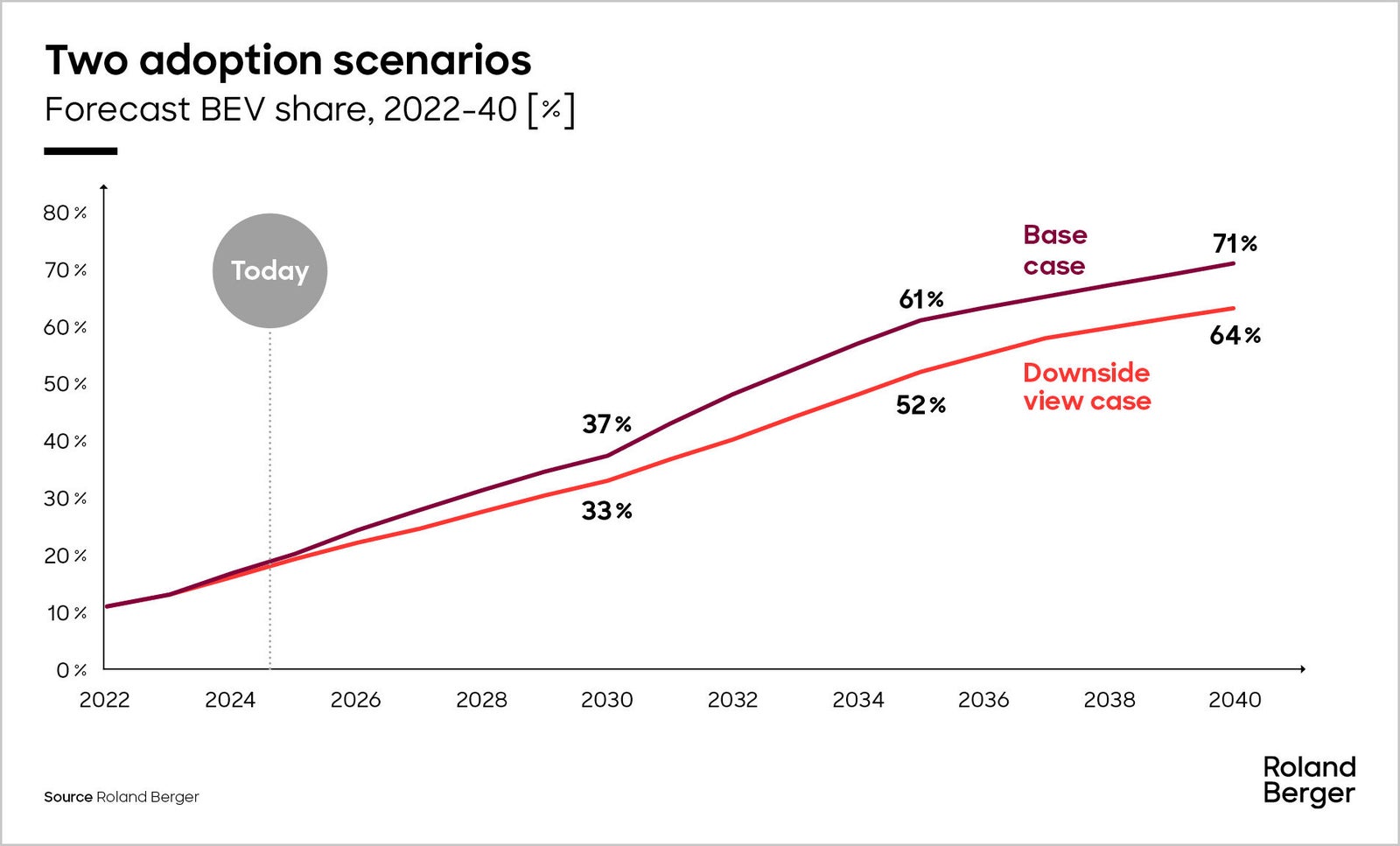
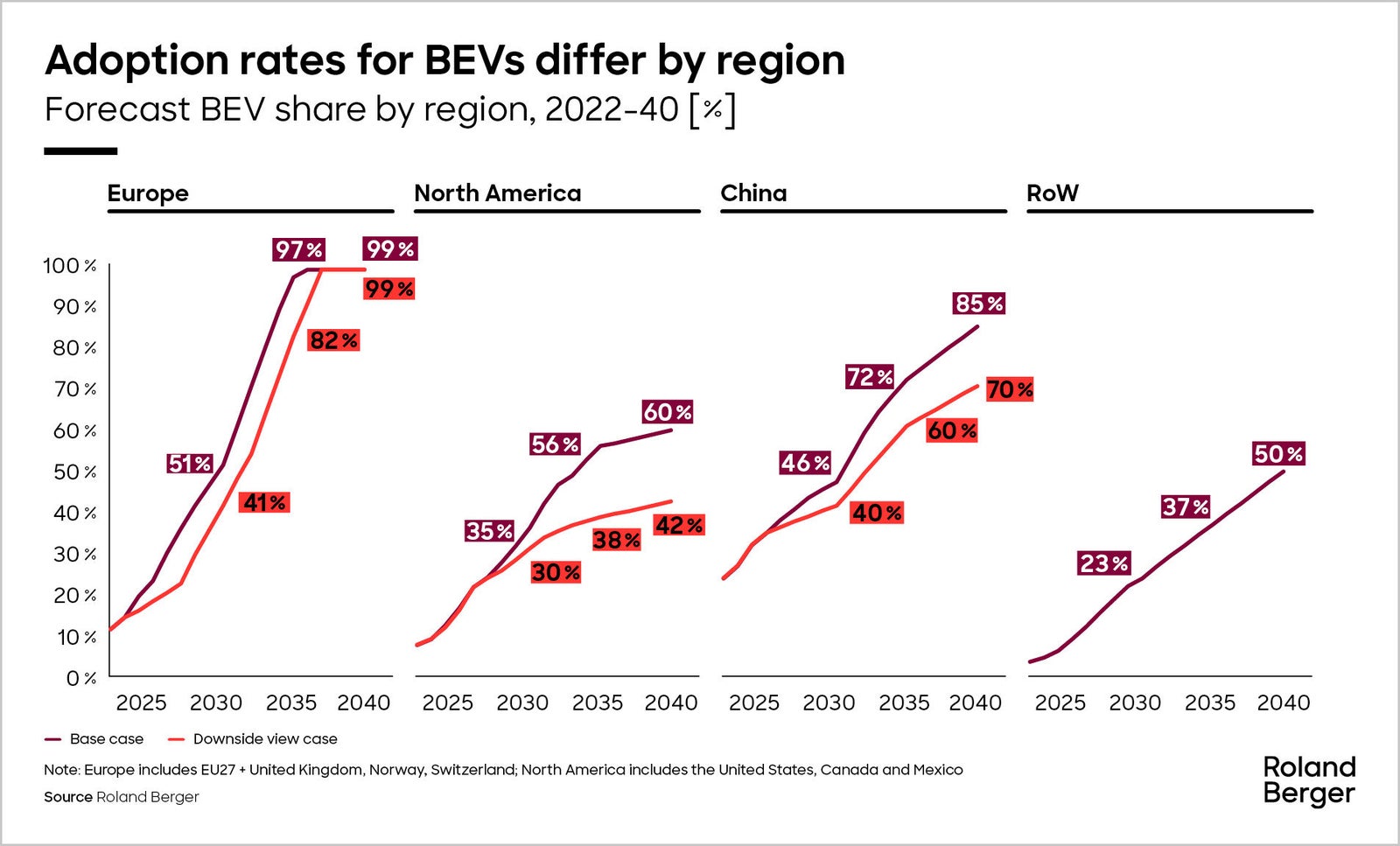

Battery-electric vehicles will enjoy a share of somewhere between 64 and 71 percent in 2040, with levels varying substantially by region.
Markus Baum
Senior Partner
Stuttgart Office, Central Europe